
Finding the right medium length hairstyles for thin hair can feel like searching for a needle in a haystack. Go too long, and your hair falls flat within hours. Go too short, and you lose styling options. But medium length — typically from the chin to the collarbone — offers the perfect compromise. The challenge is choosing a cut that works with thin hair instead of against it.
The eleven styles below have been specifically chosen because they address the unique needs of thin hair: lack of density, difficulty holding volume, and ends that can look transparent or stringy. Each cut uses shape, texture, or optical illusion to create the appearance of fullness without heavy products or complicated routines.
Here are eleven medium length hairstyles for thin hair that actually deliver.
1. The Blunt Medium Lob
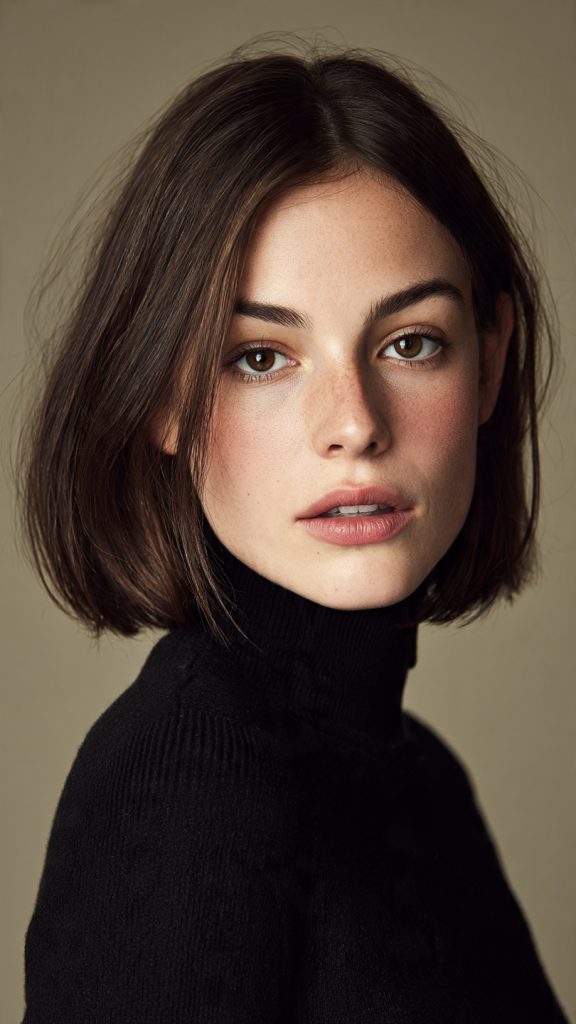
The blunt medium lob is the most reliable option for thin hair. It hits between the chin and collarbone — true medium length — and features a straight, unlayered perimeter across the bottom.
Why does blunt work so well for thin hair? Because a clean, straight line tricks the eye into seeing thickness. When hair is cut evenly across the bottom, the ends gather together and appear denser than they actually are. It is a simple optical illusion, and it never fails.
The blunt medium lob requires minimal styling. Air dry with a lightweight leave-in conditioner for a sleek, polished finish, or add a soft bend with a flat iron for gentle movement. Just avoid any internal layers. A truly blunt lob has no layering whatsoever.
Who it flatters most: Oval and heart-shaped faces. The straight line adds subtle width at the jaw.
Styling time: Five minutes for air drying, ten for a flat iron finish.
2. The Layered Cut with Face-Framing Pieces

Layers on thin hair have a bad reputation — and often for good reason. Bad layers leave gaps that make thin hair look even thinner. But long, soft layers placed correctly can add significant movement and the illusion of fullness.
In this cut, the overall length stays at medium (chin to collarbone), while the front pieces are cut slightly shorter to frame the jawline and cheekbones. Those face-framing pieces create the illusion of fullness around your face, even if the back remains relatively thin. The rest of the hair receives very light internal layering — just enough to remove weight without creating visible gaps.
The key is keeping layers long. Nothing shorter than the chin. No choppy, disconnected pieces. Just soft, graduated length that blends seamlessly.
Who it flatters most: Round and square face shapes. The face-framing pieces soften angular jawlines.
Styling time: Eight minutes. Blow-dry with a round brush, focusing on turning the face-framing pieces slightly outward.
3. The Textured Medium Shag
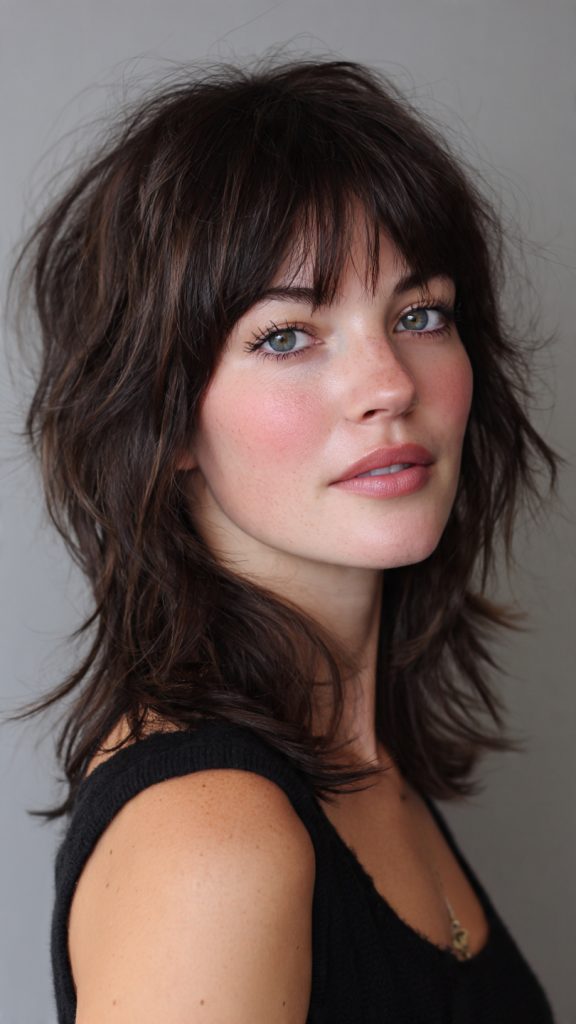
The shag has evolved far beyond its 1970s reputation. The modern medium length shag for thin hair is light, airy, and surprisingly sophisticated.
This cut features gentle, elongated layers throughout the entire head, plus a soft fringe (bangs) that can be worn straight across or swept to the side. The layers are cut using a technique called point cutting, where the scissors snip vertically into the ends rather than horizontally across them. That creates soft, wispy edges that catch light and create movement.
The shag works best on thin hair that has a little natural wave. Straight hair can also work, but you may need to add texture with a salt spray or texturizing mist. The overall effect should be slightly undone — never stiff or over-styled.
Who it flatters most: Women with strong facial features. The shag has enough visual interest to balance a bold face.
Styling time: Four minutes. Flip head upside down, blast with warm air, flip back, and finger-comb.
4. The Inverted Medium Bob
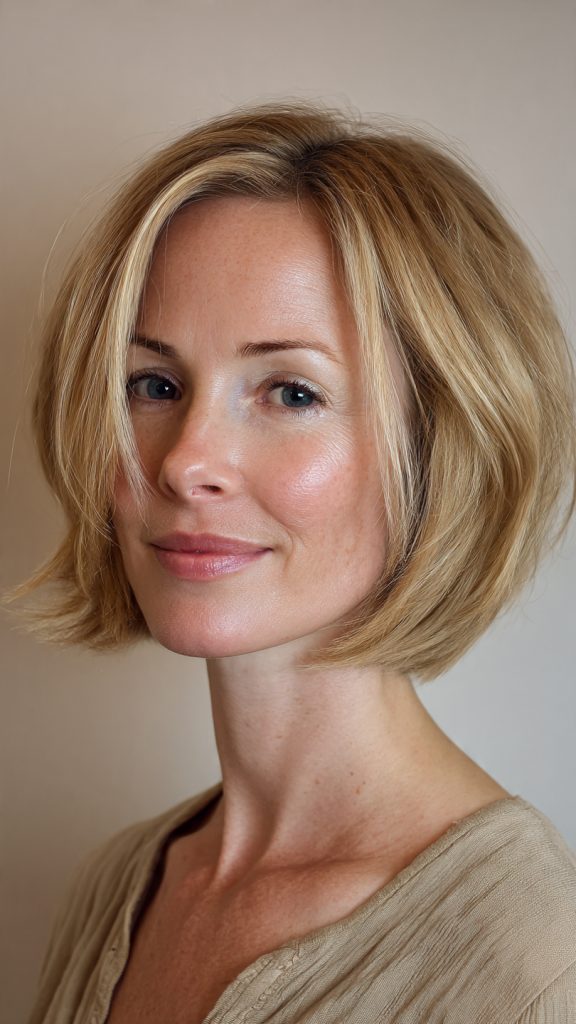
The inverted bob is shorter in the back and gradually longer in the front, creating a stacked silhouette at the nape of the neck. When done at medium length, the front pieces reach the collarbone while the back sits significantly shorter — sometimes at the mid-neck.
That stacking in the back is the secret weapon for thin hair. The shorter layers underneath push the longer top layers upward, creating natural volume at the crown without any product. It is built-in lift, engineered by the cut itself.
The inverted bob does require regular maintenance. The stacked back grows out quickly and loses its shape after about six weeks. But for women willing to commit to frequent trims, the volume payoff is unmatched.
Who it flatters most: Women with longer necks. The exposed nape area looks elegant and elongated.
Styling time: Seven minutes. Blow-dry the back upward with a round brush to enhance the stacked volume.
5. The One-Length Curtain Cut (No Bangs)
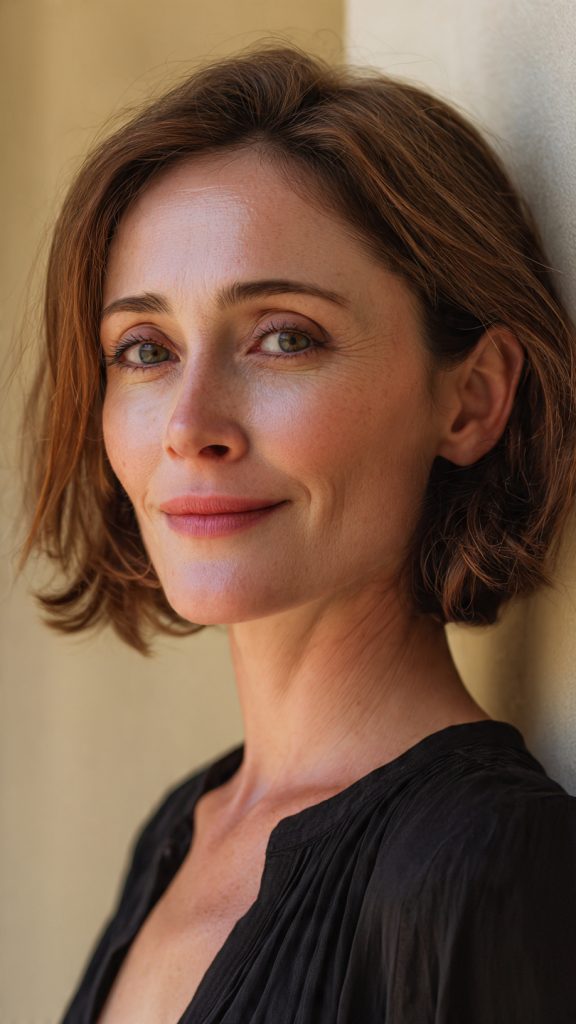
The curtain cut became famous for its face-framing bangs, but the technique works beautifully at medium length even without them.
In this style, the hair is cut to one length at the collarbone, with the front pieces left slightly longer than the back. Those longer front pieces are then styled to sweep away from the face on both sides, creating a soft, open curtain effect. The result is warm, welcoming, and flattering for almost every face shape.
The one-length curtain cut works best on thin hair that has a little natural bend. Straight hair can also work, but you may need to add a soft wave to the front pieces with a flat iron to achieve the curtain effect. Because there are no layers, the perimeter remains solid and dense-looking.
Who it flatters most: Almost every face shape. The open front is universally flattering.
Styling time: Six minutes. Flat iron the front pieces away from the face.
6. The Wispy Ends Medium Cut
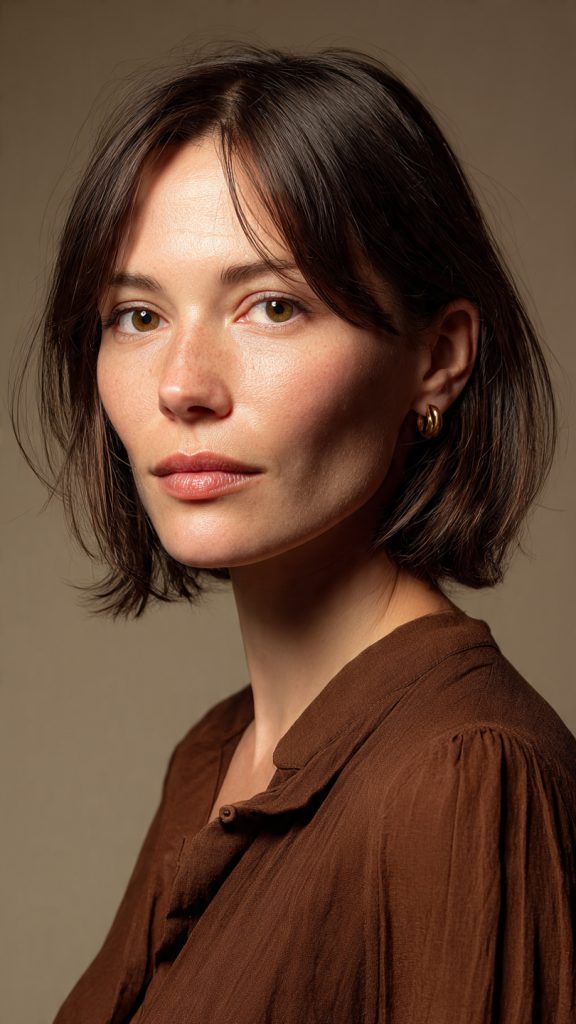
This cut keeps most of the hair at medium length with minimal internal layering, then adds visible texture only to the last inch of the ends. Those wispy ends are cut with point shears to create soft, feathered tips that separate slightly.
Why does this work for thin hair? Because thin hair often develops uneven, see-through ends when cut bluntly. Wispy ends disguise that transparency. The soft tips blend together instead of sitting in a heavy, unforgiving line that reveals every gap.
The wispy ends cut is ideal for women who want to keep medium length but need help avoiding the stringy look that thin hair can develop as it grows longer.
Who it flatters most: Women with fine, straight thin hair that tends to show every uneven end.
Styling time: Five minutes. Air dry or rough dry with fingers — no round brush needed.
7. The Deep Side Part Volume Cut
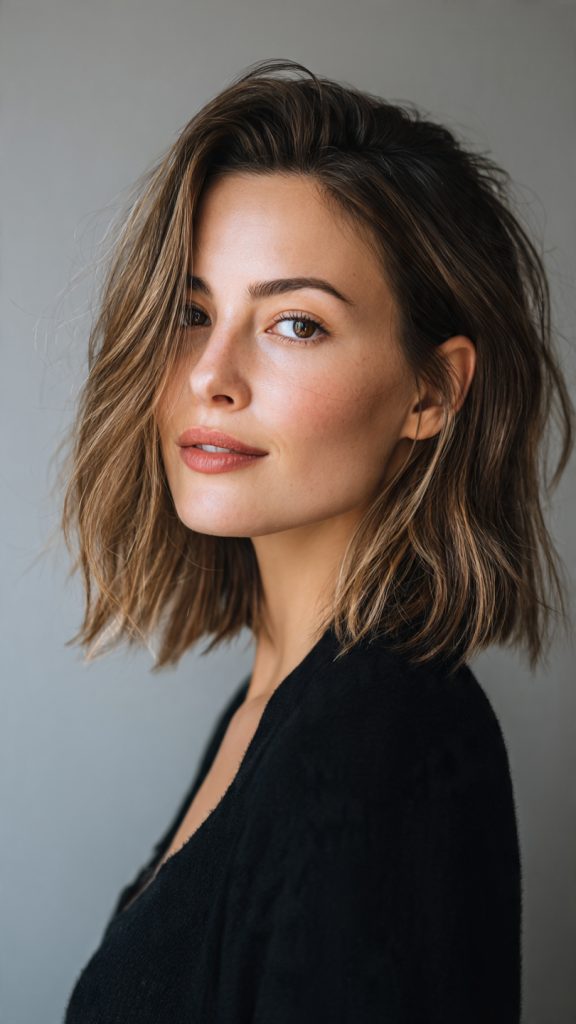
Sometimes the most effective change is also the simplest. This cut is just a medium blunt lob — but worn with an extreme deep side part.
The deep side part instantly lifts the roots on the lighter side. When thin hair is pushed to one side, the lighter side stands up naturally, creating genuine volume without any product. The deeper the part, the more dramatic the lift.
To maximize the effect, ask your stylist to cut the lob with a slight asymmetry: slightly shorter on the heavier side of the part, slightly longer on the lighter side. That subtle difference enhances the volume even further.
Who it flatters most: Women with round faces. The deep side part breaks up facial symmetry.
Styling time: Three minutes. Create the deep side part with a tail comb, then blow-dry the roots on the lighter side upward.
8. The Soft Waves Cut (Heatless Method)
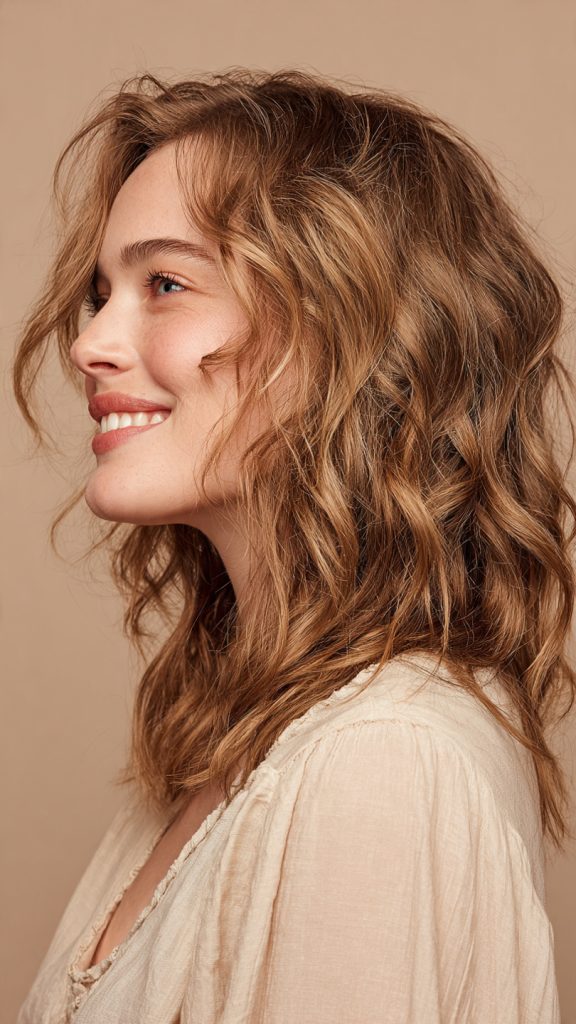
Some hairstyles for thin hair rely on the cut alone. This one relies on a specific styling approach combined with a wave-friendly shape.
Ask your stylist for a medium length cut with long, invisible layers — layers so subtle you can barely see them when the hair is straight. Then, instead of blow-drying straight, create soft waves using a heatless method: braid damp hair overnight, or twist sections into pin curls and sleep on them. In the morning, shake out loose, gentle waves.
The cut works because the invisible layers prevent the waves from looking bulky or triangular. Thin hair takes waves beautifully when the weight is properly distributed. The result is soft, romantic volume that lasts all day.
Who it flatters most: Women with oval or long face shapes. Waves add width and softness.
Styling time: Five minutes in the morning, plus overnight preparation.
9. The Choppy Layered Cut (Carefully Done)
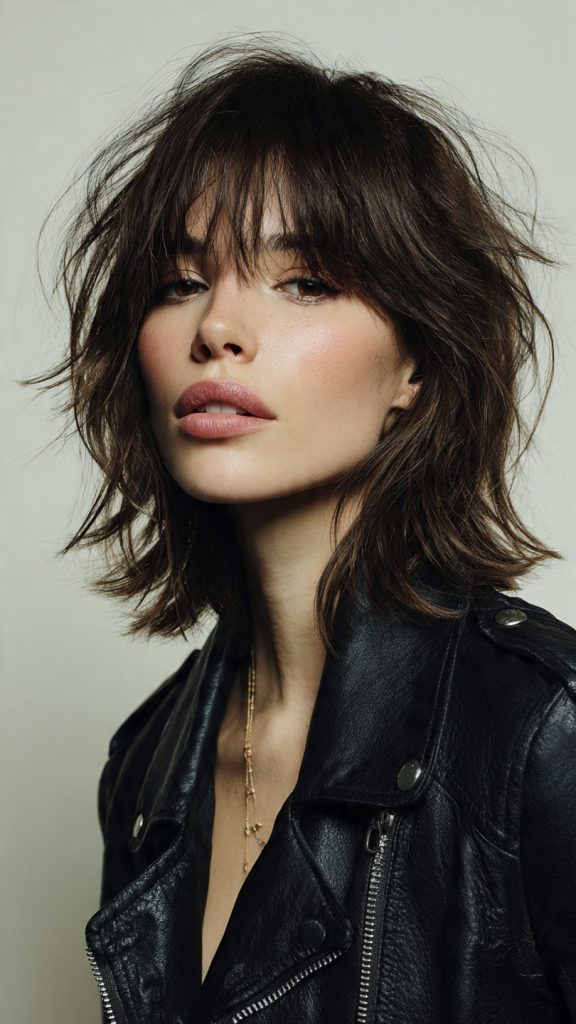
Choppy layers sound risky for thin hair, and they can be — if done poorly. But the right kind of choppy layering adds deliberate, visible texture that reads as edgy and full, not sparse and damaged.
In a proper choppy cut for thin hair, the layers are uneven in length but not dramatically so. Some pieces might be an inch shorter than others. The ends are cut at slightly different angles, creating a broken, piece-y effect. That irregularity catches light differently across the head, which tricks the eye into seeing more density.
The key warning: find a stylist who understands thin hair. Choppy layers on thick hair look very different from choppy layers on thin hair. Bring reference photos of women with thin hair, not thick-haired models.
Who it flatters most: Women with angular face shapes. The choppy texture echoes sharp bone structure.
Styling time: Five minutes. Rub a pea-sized amount of texture paste between palms and rake through dry hair.
10. The Sleek Straight Medium Cut
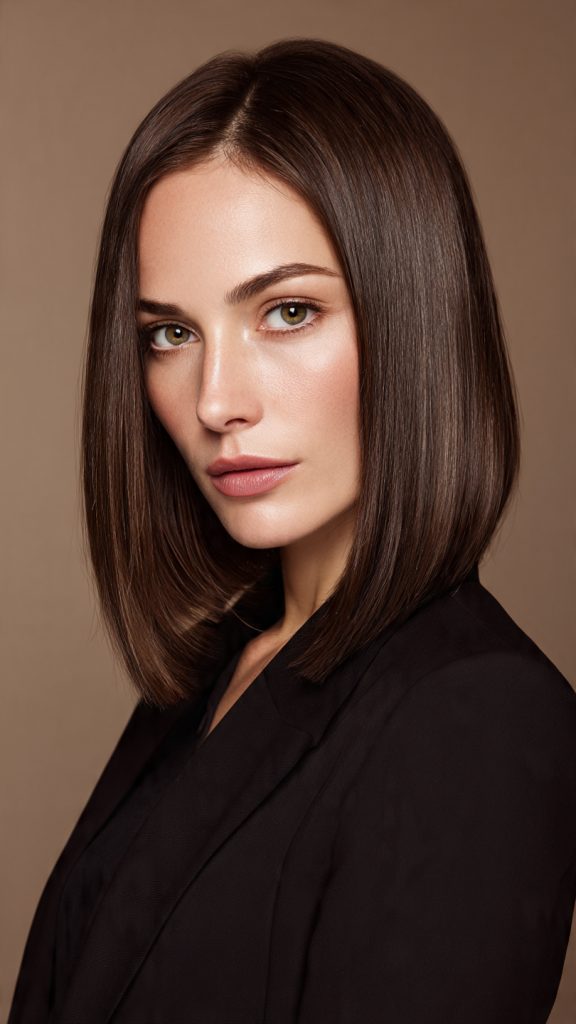
Sometimes the most powerful statement is simplicity. The sleek straight medium cut requires no layers, no texture, no waves — just mirror-smooth, glass-like hair cut precisely at medium length.
This style works because it embraces thin hair's natural tendency toward sleekness instead of fighting it. Thin hair can achieve a level of smoothness that thick, coarse hair never can. That glassy finish looks expensive, polished, and modern. The absence of layers keeps the perimeter solid and dense.
To achieve the sleek straight medium cut, you will need a high-quality flat iron and a heat protectant. Section the hair and flat iron in small subsections, working from root to tip. Finish with a few drops of lightweight serum applied to the mid-lengths and ends only (never the roots).
Who it flatters most: Women with strong jawlines. The sleek shape highlights bone structure.
Styling time: Twelve to fifteen minutes for flat ironing.
11. The Tucked Under Medium Cut
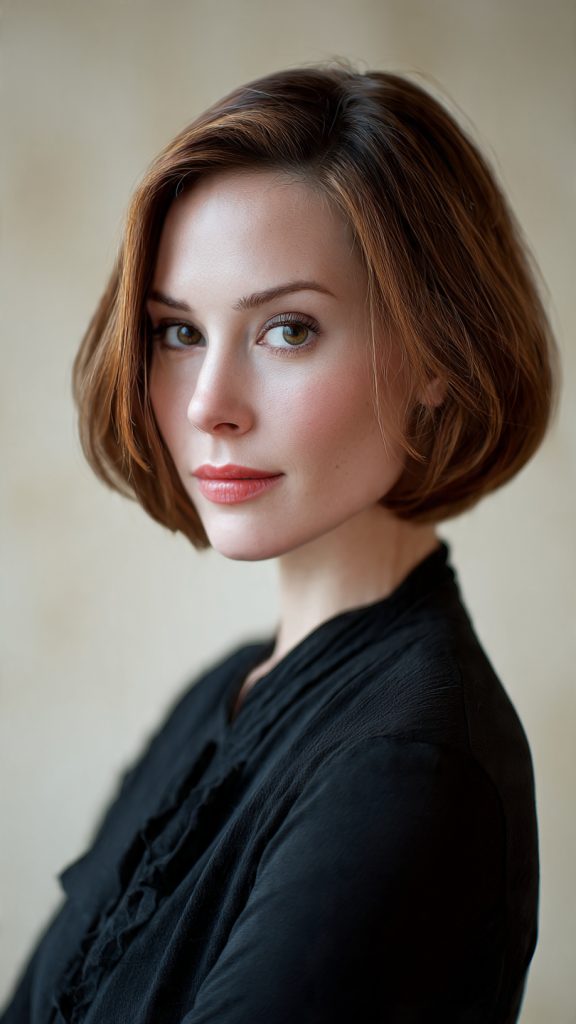
The tucked under style is less about the cut and more about the styling technique — but the cut matters. You need a medium length blunt cut with no layers whatsoever.
To style, flat iron the hair completely smooth. Then, tuck the ends under on both sides, as if you were creating a soft inward roll. Secure the tucked sections with small clear elastics or bobby pins hidden beneath the top layer of hair. The result is a polished, faux-bob effect that lasts all day.
This style gives you two looks in one: wear it loose for a sleek medium cut, or tucked under for a faux bob. For thin hair, the tucked version creates the illusion of thickness because the ends disappear, leaving only the fuller mid-lengths visible.
Who it flatters most: Women who want versatility without committing to a shorter cut.
Styling time: Ten minutes for flat ironing plus two minutes for tucking and pinning.
Final Thoughts
The eleven medium length hairstyles above share one common thread: they work with thin hair instead of fighting it. None of them rely on teasing, backcombing, or heavy products. Instead, each cut uses shape, texture, or optical illusion to create the appearance of fullness.
Medium length is truly the sweet spot for thin hair. It is long enough to style in multiple ways, short enough to maintain volume at the roots, and universally flattering across face shapes. The key is choosing the right cut for your specific texture and lifestyle.
Bring pictures to your stylist. Be honest about how much time you are willing to spend styling. And remember: the best haircut is the one that makes you feel confident the moment you walk out of the salon — and every morning after.
Leave a Reply