
The Bangs That Changed Everything
10 curtain bangs for women over 50 offer a solution that is both stylish and flattering. Curtain bangs have taken the beauty world by storm in recent years, and for good reason. Unlike the heavy, blunt bangs of the past, curtain bangs are soft, parted down the middle or slightly off-center, and gently frame the face like, well, curtains framing a window. They are universally flattering, low-commitment, and surprisingly easy to style.
For women over 50, curtain bangs are a game-changer. As we age, our faces naturally change. Skin loses some elasticity, fine lines appear, and features that once seemed sharp may soften. The right haircut can work with these changes rather than against them. Curtain bangs are ideal because they soften the forehead, draw attention to the eyes, and create the illusion of lift and height. They can also disguise forehead wrinkles, balance a long face, or add volume to thinning hair.
In this guide, we explore 10 curtain bangs for women over 50, tailored to different hair textures, face shapes, and lifestyle needs. Whether you have fine hair, thick hair, curly hair, or straight hair, there is a curtain bang style here for you. We will discuss how to style them, how to maintain them, and how to communicate with your stylist to get the perfect result.
1. Classic Curtain Bangs on a Shoulder-Length Cut
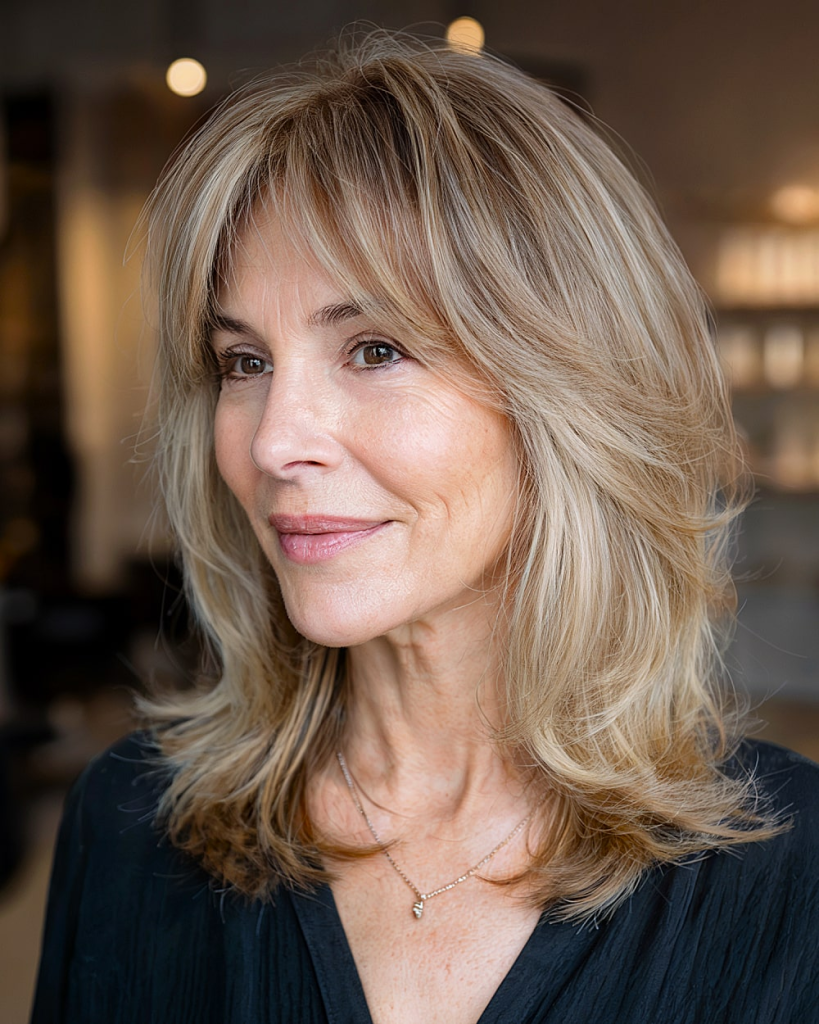
The classic curtain bang is soft, wispy, and parted in the middle. When paired with a shoulder-length cut, this combination is elegant, timeless, and incredibly flattering for women over 50.
Why it works: The shoulder-length cut provides enough weight to keep the hair from looking too thin, while the curtain bangs add softness around the face. The middle part draws the eye downward, creating a lengthening effect that balances round or heart-shaped faces.
How to style: After washing, blow-dry your bangs using a round brush, rolling the hair away from your face. The goal is a gentle curve that sweeps to the sides, not a heavy curl. The rest of the hair can be blown straight, waved, or left natural. A light-hold hairspray will keep the bangs in place without making them stiff.
Best face shapes: Oval, round, and heart. The length of the cut balances wider faces, while the bangs soften the forehead.
Maintenance: Trims every 4-6 weeks to keep the bangs at the ideal length (just below the eyebrows or at the cheekbones).
2. Curtain Bangs with a Long Bob (Lob)
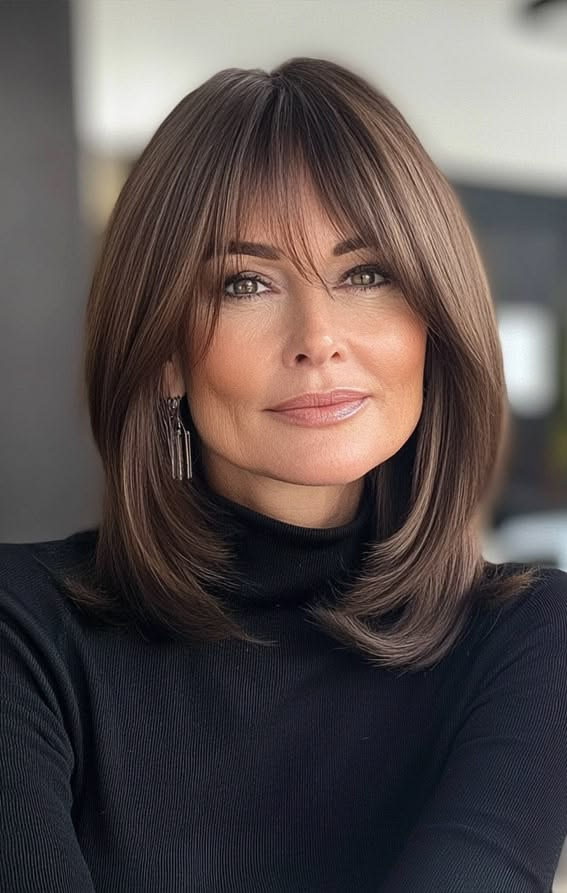
The long bob, or lob, falls somewhere between the chin and the collarbone. Adding curtain bangs to a lob creates a chic, modern look that is perfect for women over 50 who want something stylish but not overly high-maintenance.
Why it works: The lob is one of the most flattering cuts for mature women because it lifts the face without looking severe. Curtain bangs add an extra layer of softness. Together, they create a look that is polished, youthful, and incredibly easy to style.
How to style: Apply a volumizing mousse to damp hair. Blow-dry the lob with a round brush, adding gentle bends at the ends. For the bangs, use a small round brush to create the signature curtain sweep. For a more relaxed look, let the hair air dry with a texturizing spray.
Best face shapes: Oval, square, and long. The lob's length softens a square jaw, while the bangs shorten the appearance of a long face.
Maintenance: Trims every 6-8 weeks for the lob, every 4-5 weeks for the bangs.
3. Curtain Bangs on Fine, Thin Hair
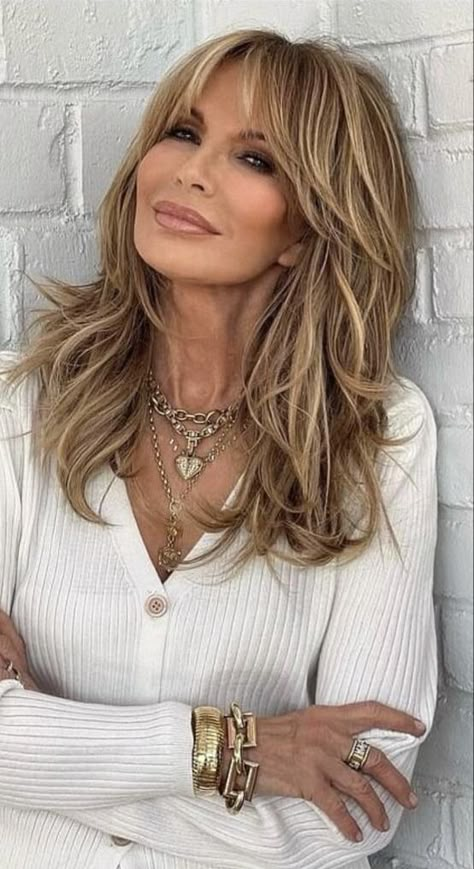
Many women over 50 experience thinning hair. The good news is that curtain bangs can actually make fine hair look fuller and more voluminous.
Why it works: Curtain bangs add density exactly where you want it—around your face. The soft, parted style creates the illusion of more hair because the bangs are not heavy or blunt. They blend into the rest of your hair, adding movement and texture without weighing anything down.
How to style: Use a lightweight volumizing mousse or spray at the roots. Blow-dry the bangs with a small round brush, lifting at the roots for volume. Avoid heavy products like creams or butters, which will flatten fine hair. Dry shampoo at the roots can add texture and grip.
Best face shapes: All face shapes. The softness of curtain bangs is universally flattering, especially for fine hair.
Maintenance: Trims every 4-5 weeks. Fine hair shows grow-out more quickly than thick hair.
4. Curtain Bangs with Layered Hair
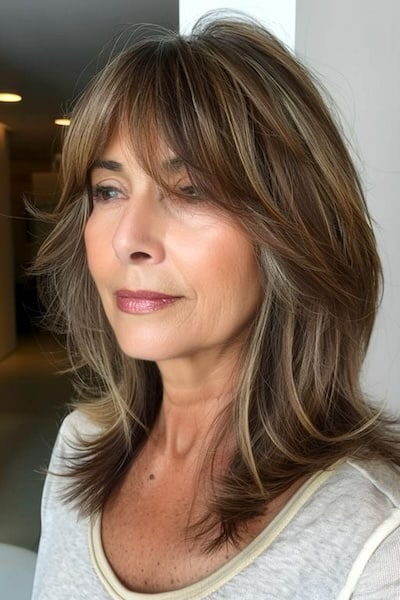
Layers and curtain bangs are a match made in heaven. The layers add movement and volume throughout the hair, while the bangs frame the face.
Why it works: As hair ages, it can lose its natural bounce and body. Layers help restore that bounce by removing weight and allowing the hair to move freely. Curtain bangs add the finishing touch, drawing the eye to your best features.
How to style: Apply a volumizing mousse or texturizing spray to damp hair. Blow-dry using a round brush, lifting the layers as you go. The bangs should be dried away from the face, creating the curtain effect. For curly or wavy hair, a diffuser will enhance the natural texture.
Best face shapes: Oval, round, and heart. The layers add volume where needed, while the bangs soften the forehead.
Maintenance: Trims every 6-8 weeks for the layers, every 4-5 weeks for the bangs.
5. Curtain Bangs on Curly Hair
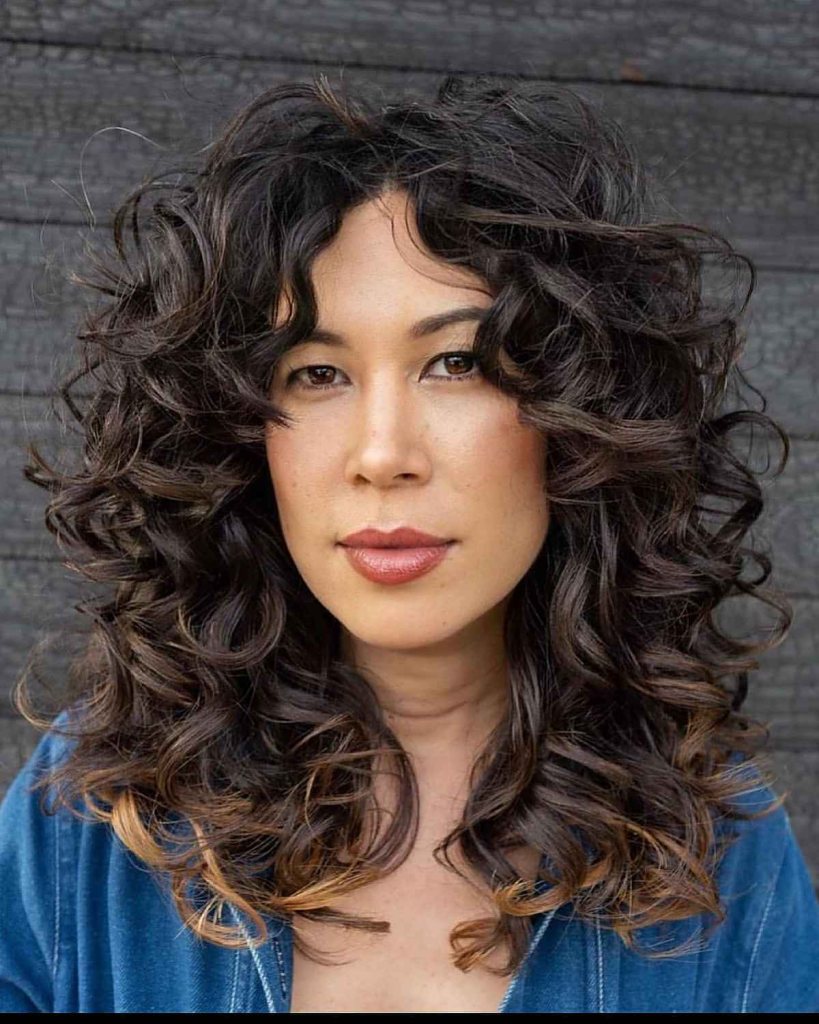
Curtain bangs are not just for straight hair. On curly hair, they create a soft, romantic, effortlessly chic look that is perfect for women over 50.
Why it works: Curly curtain bangs blend seamlessly into the rest of your curls, creating a unified, natural shape. Unlike blunt bangs, which can look awkward on curly hair, curtain bangs work with your curl pattern instead of fighting it. They add softness around the face and can make your curls look fuller.
How to style: Apply a curl cream or gel to soaking wet hair. Use your fingers to define the bangs, guiding them to fall to the sides rather than straight down. Diffuse on low heat or air dry. Do not brush—use your fingers to separate and fluff. The bangs should look like soft, face-framing curls.
Best face shapes: Oval, heart, and diamond. The softness of the curls flatters most face shapes.
Maintenance: Trims every 6-8 weeks. Curly hair hides grow-out well, but the bangs should be trimmed when they start to fall into your eyes.
6. Curtain Bangs with a Chin-Length Bob
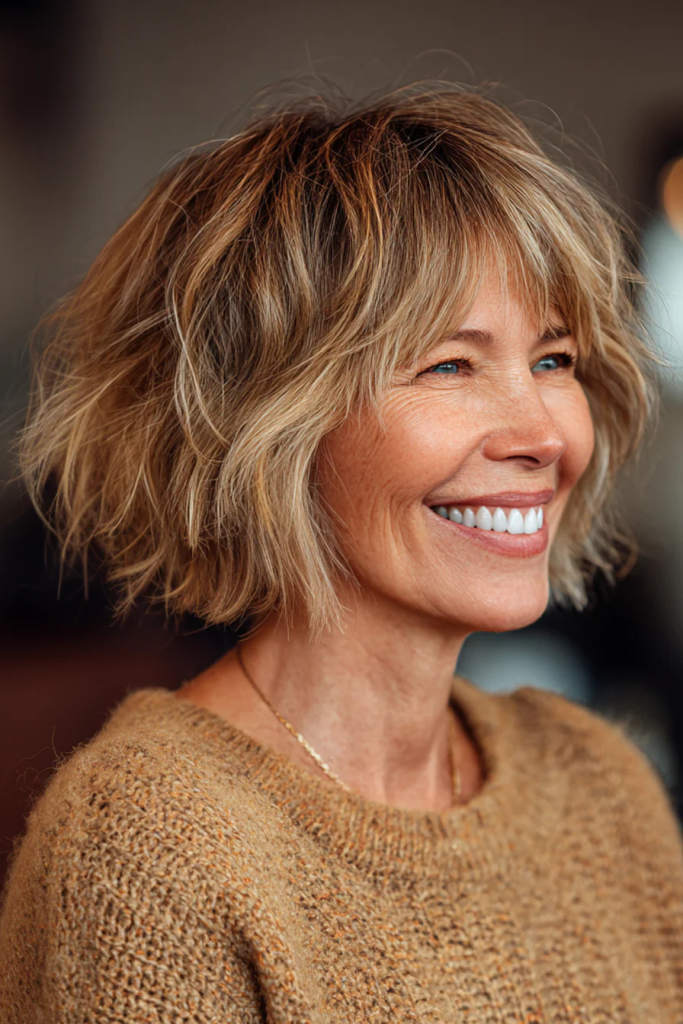
A chin-length bob is a classic, sophisticated cut. Adding curtain bangs transforms it into something softer, more modern, and more playful.
Why it works: The chin-length bob highlights the jawline, while curtain bangs soften the forehead and draw attention to the eyes. Together, they create a balanced, face-framing effect that is both elegant and youthful. This is an excellent choice for women over 50 who want a polished, put-together look.
How to style: Blow-dry the bob with a round brush, tucking the ends under for a classic shape. For the bangs, use a small round brush to create the curtain sweep. A shine spray will add polish and make the hair look healthy.
Best face shapes: Oval, square, and heart. The chin-length bob balances a wider forehead, while the bangs soften a square jaw.
Maintenance: Trims every 4-6 weeks for the bob, every 4 weeks for the bangs.
7. Curtain Bangs with a Pixie Cut
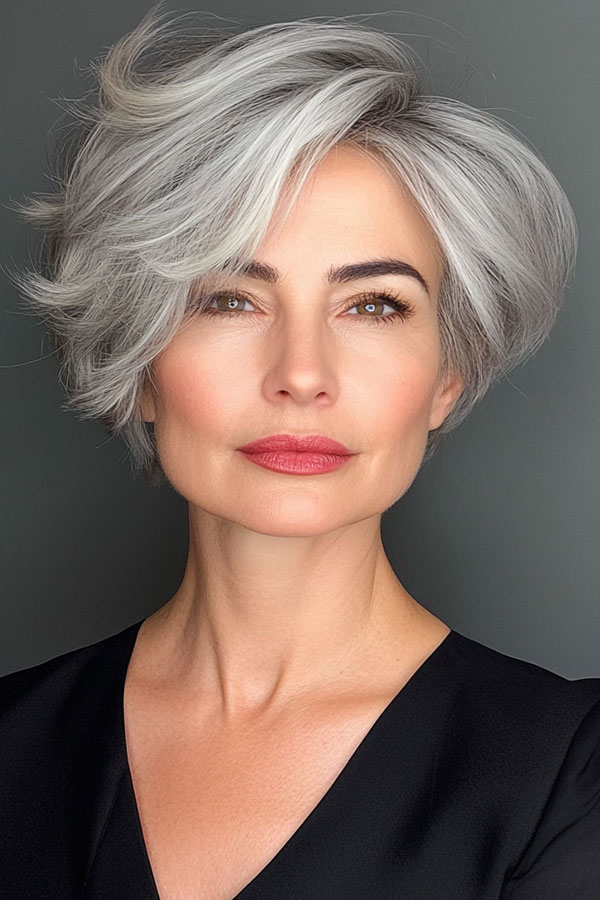
Yes, you can have curtain bangs with a pixie cut! On a short pixie, curtain bangs are longer pieces at the front that sweep across the forehead, creating softness and movement.
Why it works: A pixie cut is bold and modern. Adding curtain bangs softens the look, making it more feminine and approachable. This combination is perfect for women over 50 who want short hair but still want something soft and face-framing.
How to style: Apply a small amount of pomade or texturizing paste to dry hair. Use your fingers to sweep the bangs to the sides, creating the curtain effect. The rest of the pixie can be left textured or smooth. The key is keeping the bangs long enough to sweep but short enough to stay out of your eyes.
Best face shapes: Oval, heart, and diamond. The pixie highlights your bone structure, while the bangs add softness.
Maintenance: Trims every 4-5 weeks. The pixie requires regular maintenance, and the bangs will grow out quickly.
8. Wispy Curtain Bangs (Low-Density)
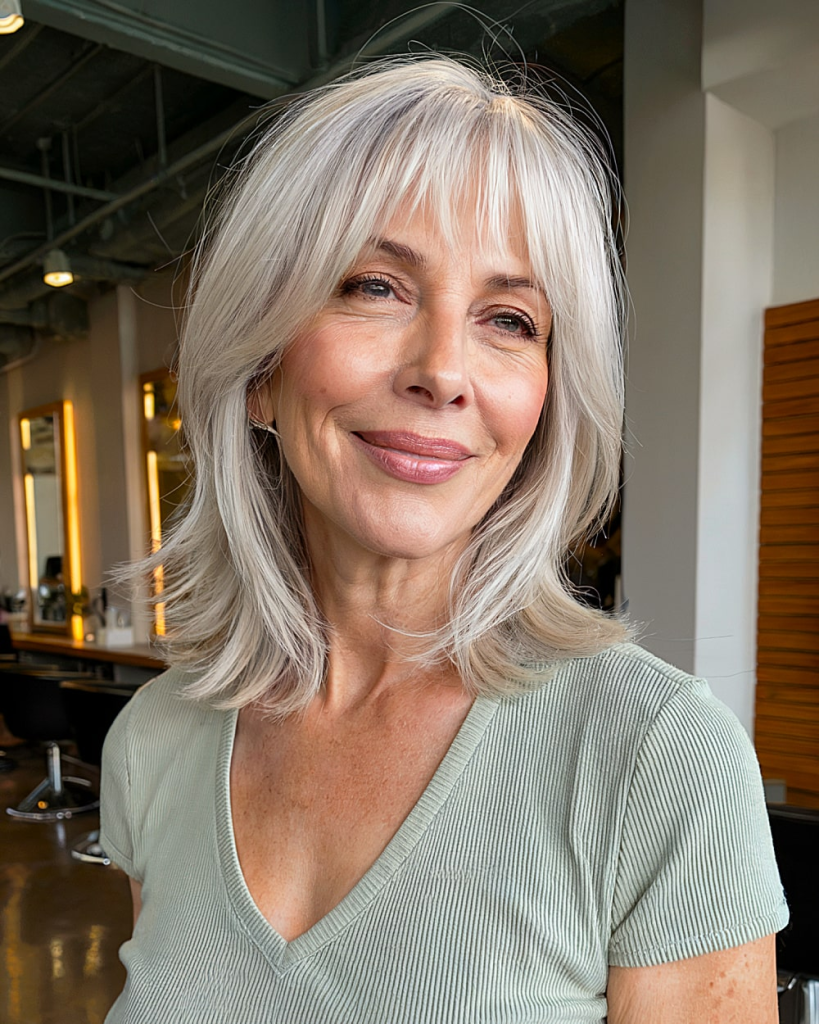
Wispy curtain bangs are lighter, thinner, and more piece-y than traditional curtain bangs. They are an excellent choice for women over 50 who want a very soft, low-commitment look.
Why it works: Wispy bangs are less dense, which means they are easier to style and grow out more gracefully. They add just a hint of softness around the face without overwhelming your features. For women with fine or thinning hair, wispy bangs are ideal because they do not remove too much density from the front.
How to style: Apply a lightweight texturizing spray to damp bangs. Blow-dry with a small round brush, but do not over-style—the goal is a soft, airy look. A small amount of dry shampoo can add texture and separation.
Best face shapes: All face shapes. The wispy, lightweight nature of these bangs makes them universally flattering.
Maintenance: Trims every 5-6 weeks. Wispy bangs are more forgiving than blunt bangs as they grow out.
9. Curtain Bangs with Gray or Silver Hair
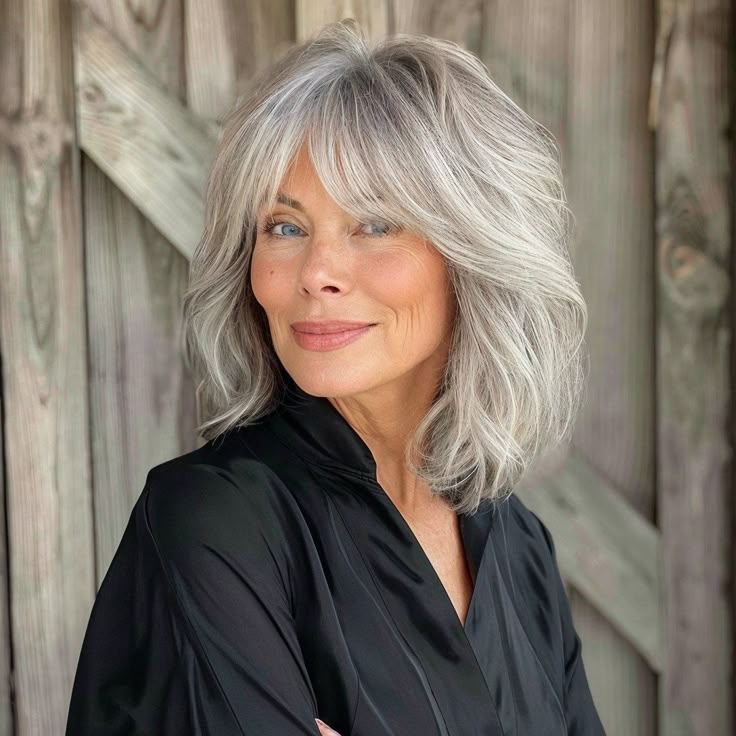
Gray and silver hair are beautiful, but they can sometimes look flat or one-dimensional. Curtain bangs add movement, softness, and dimension to gray hair, making it look vibrant and modern.
Why it works: The soft, sweeping lines of curtain bangs catch the light differently than the rest of your hair, creating natural highlights and shadows. This adds depth and interest to gray or silver hair. Plus, the softness of the bangs counteracts any harshness in the color.
How to style: Use purple shampoo once a week to keep gray hair bright and free of yellow tones. Style the bangs with a round brush, creating the signature curtain sweep. A shine spray will make silver hair look glossy and healthy.
Best face shapes: Oval, heart, and square. The softness of the bangs balances the features.
Maintenance: Trims every 4-6 weeks. Gray hair can be coarser than pigmented hair, so use moisturizing products to keep the bangs soft.
10. Curtain Bangs with a Textured Shag
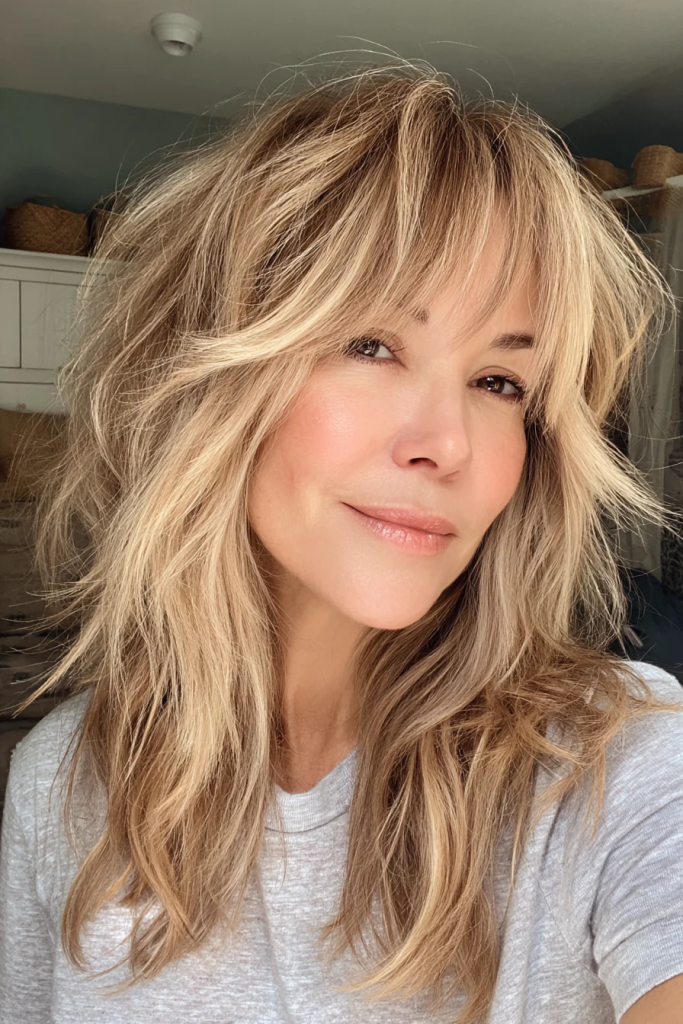
The shag haircut is back in style, and it pairs beautifully with curtain bangs. A textured shag features choppy layers, lots of movement, and an intentionally messy, lived-in look.
Why it works: The shag is effortlessly cool. The choppy layers create volume and texture, which is especially flattering for women over 50 with fine or thinning hair. Curtain bangs blend perfectly into the shag's layered structure, creating a cohesive, face-framing shape.
How to style: Apply a texturizing spray or sea salt spray to damp hair. Scrunch and air dry or diffuse. Do not over-brush—the goal is a messy, piece-y texture. Use your fingers to separate the bangs and sweep them to the sides.
Best face shapes: Oval, round, and heart. The shag's softness flatters most face shapes.
Maintenance: Low. The shag grows out gracefully. Trims every 6-8 weeks for the layers, every 5-6 weeks for the bangs.
Why Curtain Bangs Are Perfect for Women Over 50
Curtain bangs offer several unique benefits for mature women:
They soften forehead wrinkles. The soft, sweeping hair across the forehead naturally disguises fine lines and wrinkles without the need for heavy foundation or concealer.
They draw attention to your eyes. By framing the face, curtain bangs naturally guide the viewer's gaze to your eyes—often the most expressive and beautiful feature on a mature face.
They create the illusion of lift. The parted, sweeping shape of curtain bangs adds vertical lines to the face, creating the appearance of lift and height.
They are low-commitment. Unlike blunt bangs, curtain bangs grow out gracefully. If you decide you do not like them, you can simply sweep them to the sides and let them blend into your hair.
They work with thinning hair. Because curtain bangs are soft and wispy, they do not require a lot of density. They can actually make thin hair look fuller by adding volume at the front.
How to Style Curtain Bangs (Step-by-Step)
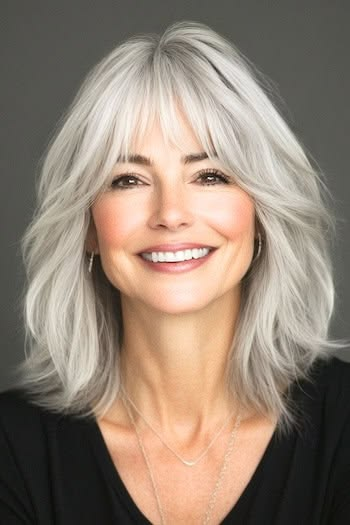
Regardless of which style you choose, here is a simple step-by-step guide to styling curtain bangs:
Step 1: Start with damp, towel-dried hair.
Step 2: Apply a heat protectant and a lightweight styling product (mousse, texturizing spray, or a small amount of gel).
Step 3: Part your hair in the middle or slightly off-center. This is the "curtain" part.
Step 4: Using a small round brush (about 1 inch in diameter), take a section of your bangs and place the brush under the hair at the roots.
Step 5: Blow-dry, rolling the brush away from your face. The hair should curve gently to the side, not curl under.
Step 6: Repeat on the other side. The two sides should sweep away from each other, like curtains.
Step 7: For a more relaxed look, let the bangs cool for a minute, then run your fingers through them to break up the shape.
Step 8: Finish with a light-hold hairspray or a small amount of dry shampoo for texture.
Talking to Your Stylist
Clear communication is essential for getting the perfect curtain bangs. Here is what to say:
- "I want curtain bangs that are soft, wispy, and parted in the middle or slightly off-center."
- "I want the bangs to hit just below my eyebrows or at my cheekbones. Nothing shorter."
- "I have [fine, thick, curly, straight] hair. How should we adjust the bangs for my texture?"
- "I am over 50 and want something that softens my forehead and draws attention to my eyes."
- "How often will I need to come in for bang trims?"
Bring photos! Find 2-3 images of women over 50 with curtain bangs. This is much more effective than describing the cut with words alone.
Common Mistakes to Avoid
Mistake #1: Cutting the bangs too short. Curtain bangs should hit at or below the eyebrows. Any shorter, and they lose their soft, sweeping effect.
Mistake #2: Making them too thick. Curtain bangs are meant to be soft and wispy. Thick, heavy bangs will look dated and harsh.
Mistake #3: Skipping trims. Bangs grow faster than the rest of your hair. Plan to visit your stylist every 4-6 weeks just for a bang trim.
Mistake #4: Using too much product. Heavy gels, waxes, or creams will make curtain bangs look greasy and stiff. Stick to lightweight mousses, texturizing sprays, and dry shampoo.
Mistake #5: Giving up too soon. It may take a few days or a week to learn how to style your new bangs. Be patient. Watch YouTube tutorials if needed.
Final Thoughts: Soft, Flattering, and Age-Defying
Curtain bangs are not a trend that will disappear next season. They have earned their place as a modern classic because they work for almost everyone. For women over 50, they offer a unique combination of softness, sophistication, and subtle youthfulness. They do not try to hide your age—they simply make you look like the best version of yourself.
So whether you choose wispy bangs on fine hair, bold bangs on a lob, or romantic bangs on curly hair, these 10 curtain bangs for women over 50 will leave you feeling refreshed, confident, and beautiful. Take the plunge. The curtain is waiting to open.
Leave a Reply