
Finding the right hairstyles for thin fine hair over 50 can feel like a frustrating search. You want volume that lasts past noon, shape that flatters your features, and a cut that doesn't require forty minutes of hot tools every morning. The good news? The perfect style exists — and it starts by working with your texture, not against it.
If you've spent years feeling like your hair is working against you, here's a shift in perspective worth trying: fine, thin hair after 50 isn't a limitation. It's an invitation to become more intentional.
At this stage, you know what doesn't work. Heavy layers that go nowhere. Long, limp strands that cling to your neck. Overly teased styles that announce themselves before you enter a room. The right haircut can deliver something far better than false volume. It can deliver shape, movement, confidence, and a quietly polished look that never shouts for attention.
Below are ten hairstyles specifically designed for thin, fine hair over 50. Each one has been chosen because it works with your texture, not against it. No miracle products required. No complicated routines. Just smart architecture.
1. The Textured Pixie
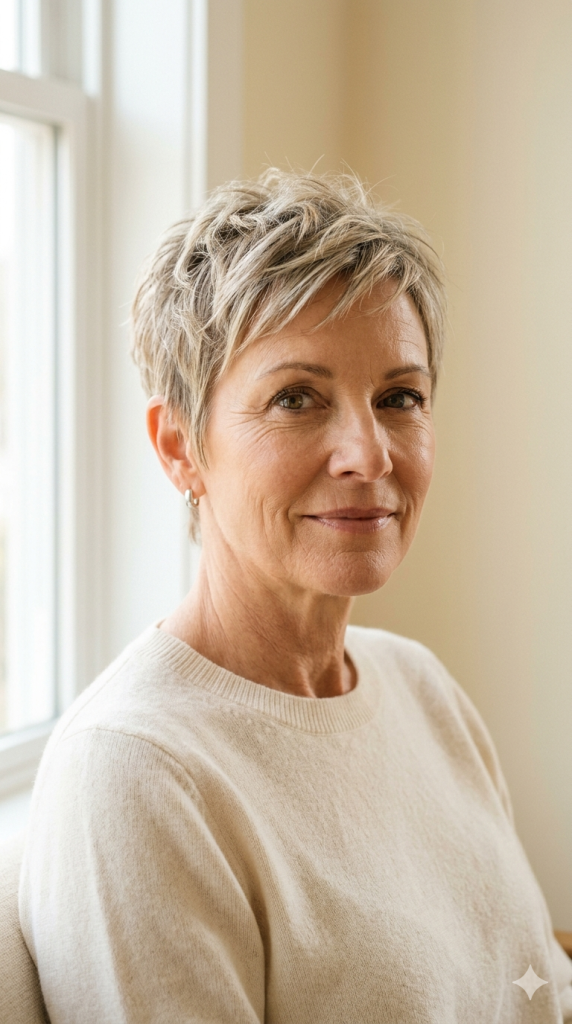
The textured pixie is arguably the most reliable option for fine hair. Why? Because it removes length — the single biggest enemy of limp strands — while adding something even better: deliberate, visible texture.
A proper textured pixie stays short on the sides and back, then leaves slightly more length on top. That extra inch or two on the crown is where the magic happens. When cut with a technique called point cutting (where the stylist holds the scissors vertically and snips into the ends), the top pieces gain separation and movement. Instead of lying flat, each section seems to have its own gentle direction.
This is not the uniform, helmet-like pixie of decades past. The modern version is softer, more piece-y, and infinitely more forgiving. It also grows out beautifully. As the sides lengthen, the shape simply shifts from cropped to textured without entering that awkward in-between phase that plagues other short cuts.
Best of all, the textured pixie puts the focus exactly where it belongs: on your eyes, your bone structure, and your expression. When the hair recedes from the face, the face itself becomes the center of attention.
Who it flatters most: Oval, heart, and square face shapes. Works beautifully with glasses.
Styling time: Under five minutes. A pea-sized amount of light pomade or texture paste, rubbed between palms and raked through the top, is all you need.
2. The French Bob

The French bob has enjoyed a well-deserved revival, and for fine-haired women over fifty, it might be the most elegant option on this list. This cut sits at chin length — never shorter, rarely longer — with a soft, barely-there bend at the ends.
What makes the French bob different from a standard bob is its attitude. It rejects perfection. The ends should not curl under uniformly. Instead, they flick slightly outward, or bend in different directions, or simply follow the natural fall of your hair. That relaxed finish is the entire point. Fine hair that tries too hard to be smooth and round often looks thinner than it is. Hair that accepts its own gentle imperfections looks fuller.
The French bob also avoids heavy internal layers. While other bobs rely on layering to create shape, the French bob keeps the perimeter clean and solid. That solid line tricks the eye into seeing more density. It’s a classic optical illusion, and it works every time.
To style, let your hair air dry about eighty percent of the way, then run a small round brush through the ends while hitting them with low heat. Or skip the heat entirely. A salt spray applied to damp hair, followed by scrunching and air drying, creates that effortless Parisian finish.
Who it flatters most: Round and long face shapes. The chin-length line balances fullness and length beautifully.
Styling time: Five to ten minutes, or zero if air drying.
3. The Long Pixie with Micro Bangs
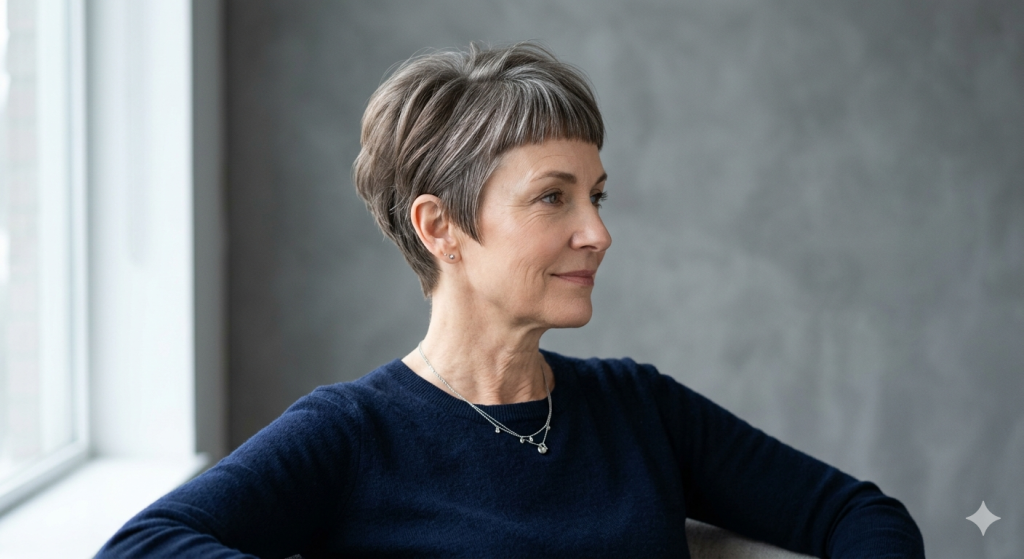
The long pixie keeps more coverage on top and at the crown than a traditional short pixie, which is excellent news if you prefer not to go extremely short. The back and sides remain neat and close to the head, but the top grows longer — sometimes two to three inches — allowing for softness and versatility.
Adding micro bangs (bangs cut well above the eyebrows) transforms this cut from simple to striking. Micro bangs serve two important purposes for fine hair. First, they draw the eye upward, which cleverly disguises any thinning along the hairline or part line. Second, they add a graphic, deliberate element that makes the rest of the cut look intentional rather than merely short.
Women over fifty sometimes hesitate before trying micro bangs, worrying they will read as childish or severe. The opposite is true. On fine hair, micro bangs look modern, confident, and slightly edgy — in the most sophisticated way possible. They also require very little maintenance. A quick snip every two to three weeks keeps them at the ideal length, and they dry in seconds.
Who it flatters most: Women with strong brows or good eye definition. The bangs frame the eyes directly, so make sure that frame is worth highlighting.
Styling time: Three minutes. A bit of lightweight mousse at the roots, blow-dry the top forward, and go.
4. The Blunt Lob with Invisible Layers
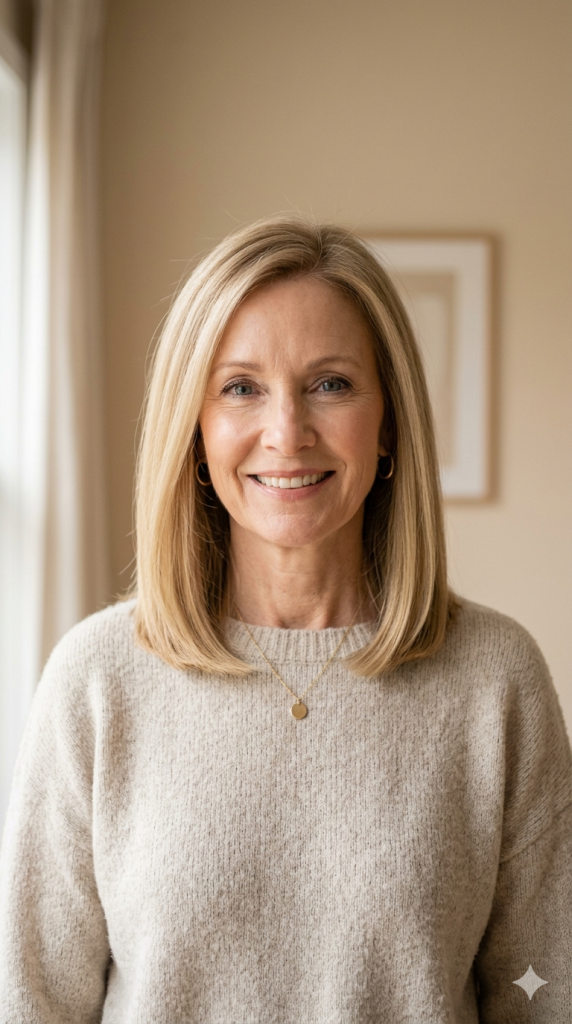
The lob (long bob) has become a staple for good reason. It hits the sweet spot between short and long, offers styling flexibility, and works on almost every face shape. But for fine hair, a standard lob can fall flat — literally. The weight of the hair pulls down, eliminating any chance of volume.
The solution is the blunt lob with invisible layers. Here’s how it works: the outer perimeter of the cut remains completely blunt, giving the illusion of thick, healthy ends. But beneath that solid exterior, your stylist cuts very light, long layers that exist only on the interior of the hair. Those hidden layers remove just enough weight to allow movement and lift without sacrificing the clean bottom line.
Invisible layers are the opposite of the choppy, heavily textured cuts that were popular a decade ago. Those cuts often left fine hair looking gap-toothed and sparse. Invisible layers leave the surface smooth while the inside breathes.
This cut works best when the length falls just above the collarbone. Any longer, and the weight becomes an issue again. Any shorter, and you lose the elegant elongation that makes the lob so flattering.
Who it flatters most: Women with longer necks or narrower faces. The blunt line adds width at the jaw, balancing length.
Styling time: Ten minutes. Focus your blow-dry on the roots for lift, then let the ends air dry or give them a quick pass with a flat iron for polish.
5. The Asymmetrical Bob
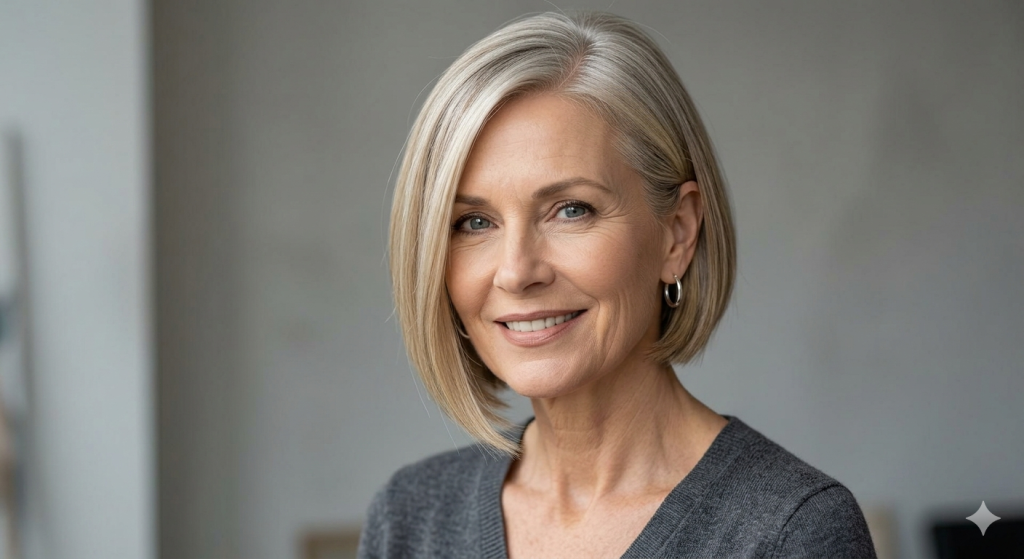
If you want to add volume without adding product, change the geometry instead. The asymmetrical bob achieves precisely that.
In this cut, one side sits noticeably longer than the other — typically by one to two inches. The shorter side is often tucked behind the ear, while the longer side sweeps forward toward the collarbone. That imbalance does something unexpected for fine hair: it tricks the eye into seeing more density on one side, which makes the overall head of hair appear fuller than it actually is.
Think of it like a visual sleight of hand. When the eye registers asymmetry, it stops looking for uniform thickness and starts appreciating the shape instead. Fine hair always benefits when the focus shifts from density to design.
The asymmetrical bob also allows you to play with your part. A deep side part on the longer side creates instant lift at the root, while a center part on the same cut creates a sleek, severe look that works beautifully for evening.
Who it flatters most: Round and square face shapes. The diagonal line of the cut breaks up the horizontal lines of a round face or softens the angles of a square jaw.
Styling time: Five to seven minutes. Flat iron the ends slightly to define the asymmetry, then mist with a flexible hold hairspray.
6. The Cropped Shag
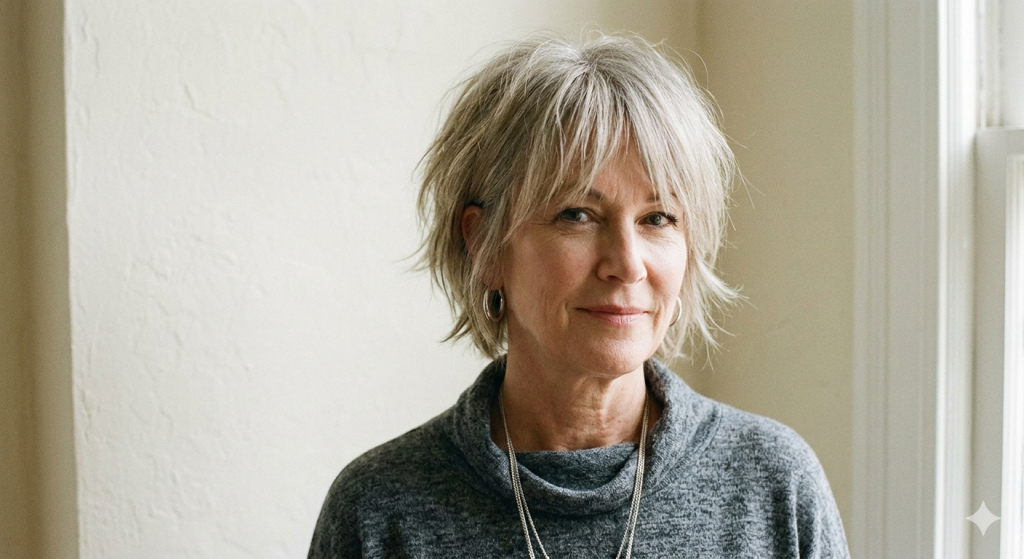
The word "shag" might conjure images of the 1970s — big, fluffy, and absolutely wrong for fine hair. The modern cropped shag could not be more different.
Today’s version is light, wispy, and carefully restrained. The cut features gentle, elongated layers throughout, with a soft fringe (bangs) that can be worn straight across or swept to the side. The key difference between a bad shag and a good shag for fine hair is texture density. A good stylist will use a technique called "slithering" — running the closed scissors down the length of the hair to remove a small amount of weight without creating visible gaps. The result is movement without emptiness.
The cropped shag works exceptionally well for women who prefer a slightly undone, lived-in look. It does not require precision styling. In fact, it looks best when it is a little messy, a little tossed, and completely natural. That makes it an ideal choice if you want to minimize heat styling and maximize your morning routine.
One caution: avoid over-texturizing. Some stylists, eager to please, will take thinning shears to fine hair and accidentally remove too much. Be clear that you want light, internal movement — not visible chunks or missing sections.
Who it flatters most: Women with strong facial features. The shag has a lot of visual interest, so it pairs best with a face that can hold its own.
Styling time: Four minutes. Flip your head upside down, blast with warm air for thirty seconds, flip back, and finger-comb.
7. The Side-Swept Pixie Bob
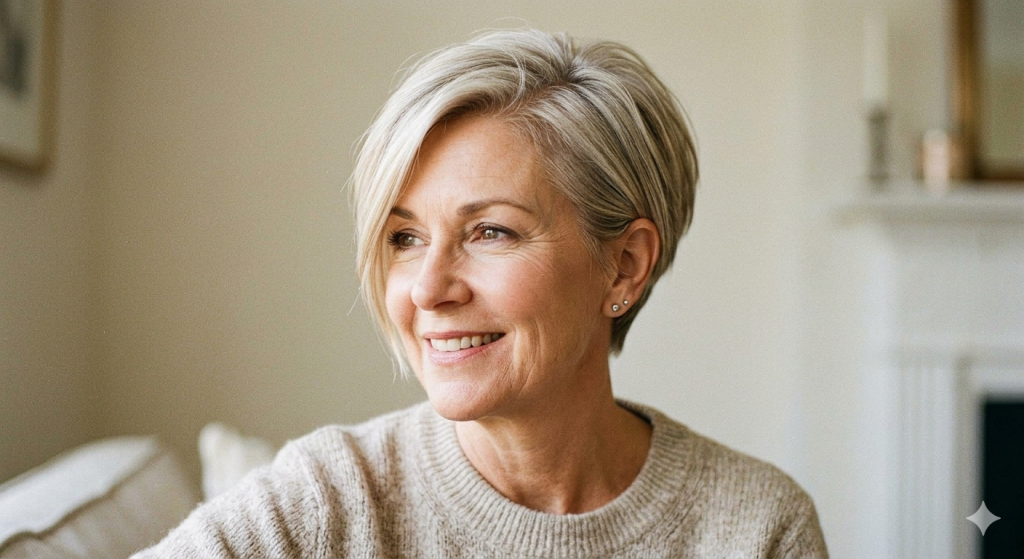
The pixie bob hybrid is exactly what it sounds like: a pixie in the back, a bob in the front. The back is cropped short and close to the head, while the front sections lengthen gradually until they reach the chin or jawline. Then — and this is the crucial step — everything is swept deeply to one side.
That deep side sweep does more than add drama. It physically lifts the hair at the root. When fine hair is pushed to one side, the roots on the lighter side stand up naturally, creating genuine volume without teasing, backcombing, or products. Gravity does the work for you.
The side-swept pixie bob also offers versatility. On days when you want more coverage, you can sweep the longer pieces across your forehead. On days when you want more openness, tuck the longer side behind your ear. One cut, multiple moods.
This style works best on hair that is naturally straight or has only a slight wave. Curly or very wavy textures may not hold the side sweep as effectively without significant product.
Who it flatters most: Women with high foreheads or longer face shapes. The deep side part and sweeping front pieces break up vertical length.
Styling time: Three minutes. Apply a root-lifting spray to damp hair, blow-dry in the direction of the sweep, and secure with a single bobby pin if needed.
8. The Wispy Layered Cut
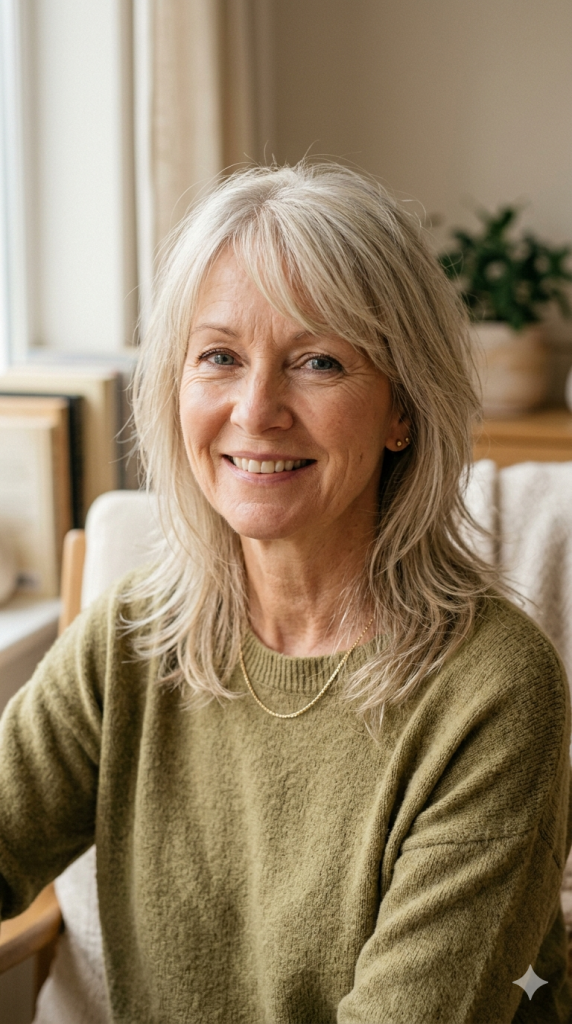
Layers on fine hair have a bad reputation, and unfairly so. Bad layers — short, choppy, uneven — will absolutely ruin fine hair. But good layers, specifically wispy layers, can save it.
Wispy layers are long, soft, and feather-light. They begin no shorter than the earlobe and continue to the ends, with each layer only slightly shorter than the one below it. The effect is gentle graduation, not dramatic steps. When light hits wispy layers, it catches the edges and creates the illusion of movement and depth. Flat, one-length hair reflects light uniformly, which often emphasizes thinness. Wispy layers scatter light, which disguises it.
This cut works best on hair that falls between the ears and the shoulders. Any longer, and the layers lose their lift. Any shorter, and you might as well commit to a pixie. The wispy layered cut is for women who want to keep some length but need help creating body.
A note on styling: use the lightest products possible. Heavy creams, oils, or butters will weigh down wispy layers and defeat their purpose. A lightweight mousse or a volumizing spray is plenty.
Who it flatters most: Women with fine, straight hair. Wavy textures can also work, but curly hair may not show the wispy effect clearly.
Styling time: Eight to ten minutes. Blow-dry with a round brush, focusing on lifting the roots and turning the ends under slightly.
9. The Rounded Bob
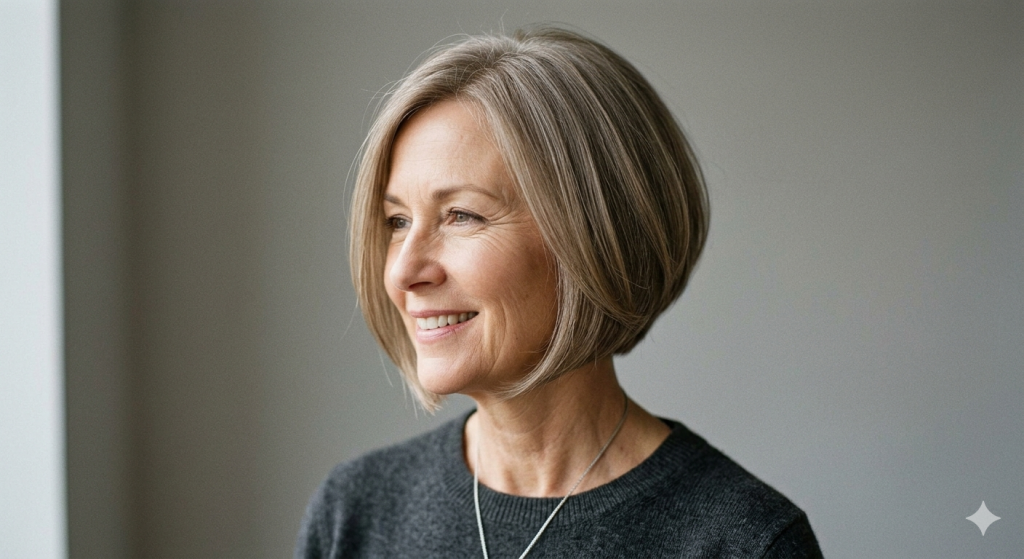
The rounded bob is often misunderstood. Inexperienced stylists hear "rounded" and reach for the curling iron. That is not what this cut is about.
A proper rounded bob is cut to follow the natural curve of your head. The back is shorter — usually right at the nape of the neck — and the hair gradually lengthens toward the front until it reaches the chin. When viewed from the side, the silhouette forms a gentle C-curve. That curve mirrors the softness of a mature face, which is why the rounded bob looks so harmonious on women over fifty.
What the rounded bob does not do is curl under artificially. The shape comes from the cut itself, not from styling. When you wash and air dry a well-cut rounded bob, the ends should fall into a soft inward curve naturally. If you need a round brush and a blow dryer to create the shape, the cut is wrong.
For fine hair, the rounded bob offers a significant advantage: it keeps the heaviest part of the hair (the ends) close to the jawline, where the hair can appear thickest. Meanwhile, the shorter back removes weight from the crown, allowing for natural lift.
Who it flatters most: Women with softer jawlines or rounder face shapes. The C-curve echoes what is already there.
Styling time: Five minutes. Rough dry the roots with your fingers, then use a paddle brush to smooth the ends into their natural curve.
10. The Tucked Under Lob
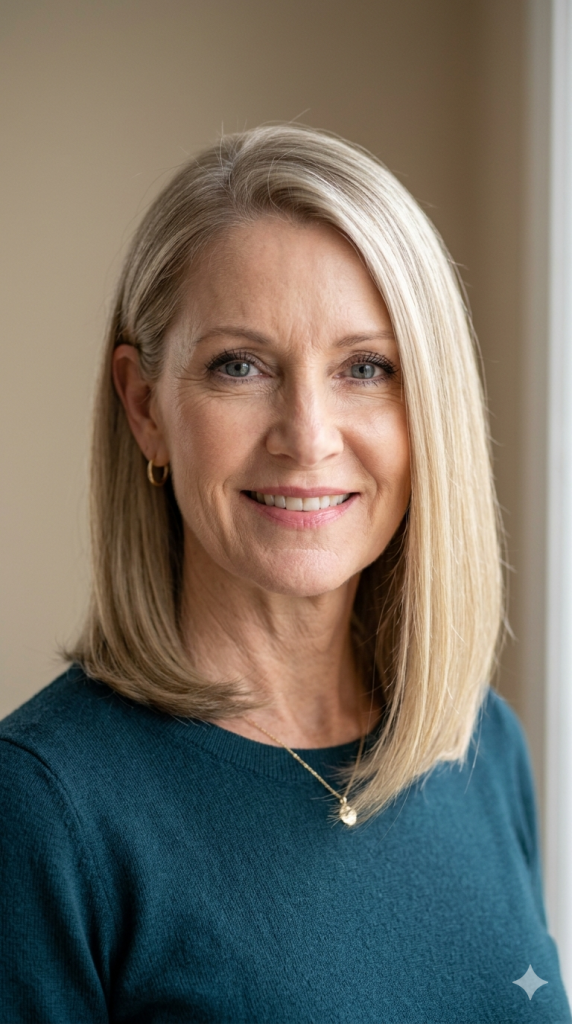
Last but certainly not least, the tucked under lob delivers maximum sophistication with minimum effort.
This cut is a long bob — typically grazing the collarbone — that is styled asymmetrically by tucking one side behind the ear while the other side falls forward. That simple asymmetry, like the asymmetrical bob mentioned earlier, creates visual interest that distracts from any lack of density. But the tucked under lob adds one more benefit: it showcases the jawline and neck on the exposed side, drawing the eye to bone structure rather than hair volume.
The tucked under lob works beautifully with very fine, straight hair because it does not require any volume whatsoever. A sleek, flat finish is actually desirable here. Think less "big hair" and more "polished architectural shape." This is the cut for evenings out, professional headshots, or any time you want to look deliberate and composed.
To style, flat iron the entire head smoothly, then tuck the shorter side (or the side with less hair) behind your ear. Secure with a single clear elastic or a small decorative clip if needed. Mist with a lightweight hairspray to hold the tucked position.
Who it flatters most: Women with defined jawlines or elegant necklines. This cut puts those features on display, so wear it proudly.
Styling time: Twelve minutes for flat ironing, plus thirty seconds to tuck and secure.
Final Thoughts
The ten hairstyles above share one common thread: none of them try to fake what isn’t there. They do not rely on teasing, backcombing, extensions, or heavy products. Instead, they work with fine hair’s natural characteristics — its lightness, its movement, its honesty — and build a shape around those qualities.
As you consider which cut to try next, remember that the best hairstyle is not the one that looks the fullest in a magazine. It is the one that makes you feel most like yourself when you look in the mirror. If you have been hiding your fine hair under heavy lengths or fighting it with hot tools every morning, give one of these ten options a chance. You might be surprised how much better your hair behaves when you stop fighting its nature and start working with it.
Ask your stylist for a consultation before any cut. Bring pictures. And do not be afraid to say these words: "I have fine hair. I want shape, not volume. Work with my texture, not against it."
Your best cut is out there. It is probably on this list.
Leave a Reply