
The Length That Gives You Room to Play
You have survived the too-short phase. You are not ready for ponytail territory. You are right in the middle — and that is exactly where you want to be.
Medium length hair for men gets a bad reputation. People call it awkward. They say it is just a stage you have to push through. I disagree completely. Medium length is not a waiting room. It is a destination with its own rules, its own shapes, and its own attitude.
I have cut medium hair on guys with straight strands that stick to everything. On guys with waves that have a mind of their own. On guys with curls that shrink up the second they dry. The secret is not growing through it. The secret is cutting it into something intentional.
Here are 15 medium hairstyles for men that make the in-between length look like the main event.
Know Your Medium: A Quick Reference
Before you pick a style, understand what medium means for your specific hair type.
Straight hair: Medium starts at your eyebrows and goes to your chin. Straight hair shows every fraction of an inch, so precision matters.
Wavy hair: Medium starts at your nose and goes to your jaw. Waves add width, not just length. Account for the bend.
Curly hair: Medium starts at your forehead and goes to your collarbone when pulled straight. Curls can shrink by half. Cut longer than your target length.
Now let us get into the cuts.
The 15 Medium Hairstyles for Men
1. The Brushed-Forward Crop
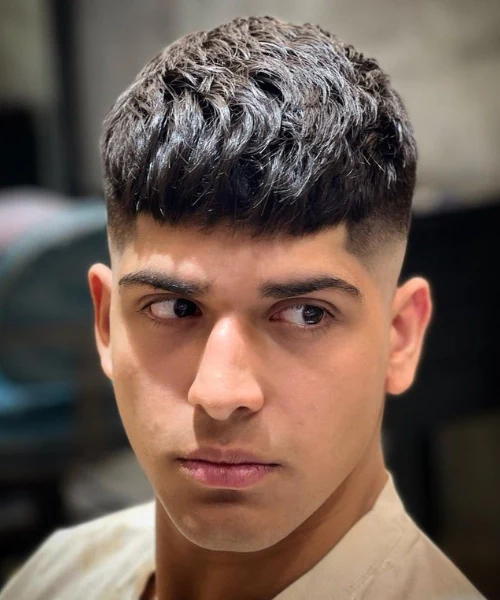
Shorter on the sides and back. The top is cut so it naturally falls forward toward your forehead. The front pieces sit just above your brows.
The right approach: Ask for a #3 or #4 guard on the sides. The top should be about two inches long. A lightweight texture spray keeps it from looking heavy.
How to describe it: "I want a brushed-forward crop. Short sides. Top falls forward toward my forehead. The front should hit just above my eyebrows."
What to skip: A heavy product that glues the hair down. This style needs movement.
2. The Loose Center Part
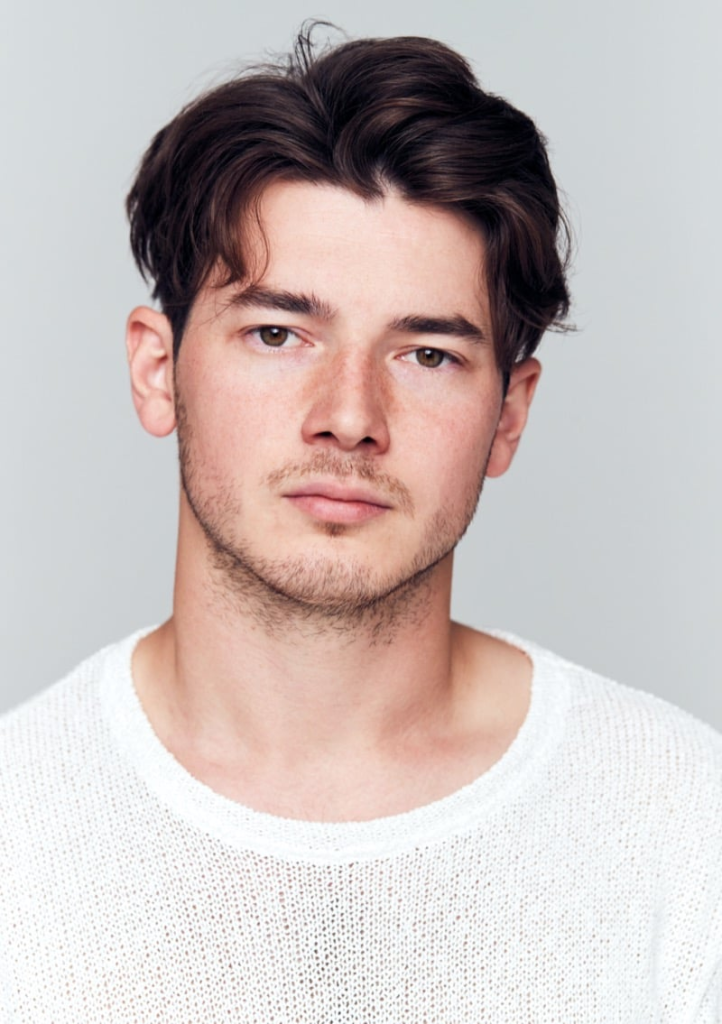
Hair is evenly cut all around, landing somewhere between your nose and your chin. A natural center part lets it fall to both sides.
The right approach: Ask for even length throughout. The part should follow your natural hair pattern, not be forced. A dab of lightweight cream keeps flyaways in check.
How to describe it: "I want a loose center part. Even length around my nose. Let my hair fall where it wants naturally."
What to skip: A part that looks carved in. It should look effortless, not drawn on.
3. The Tousled Fringe Cut
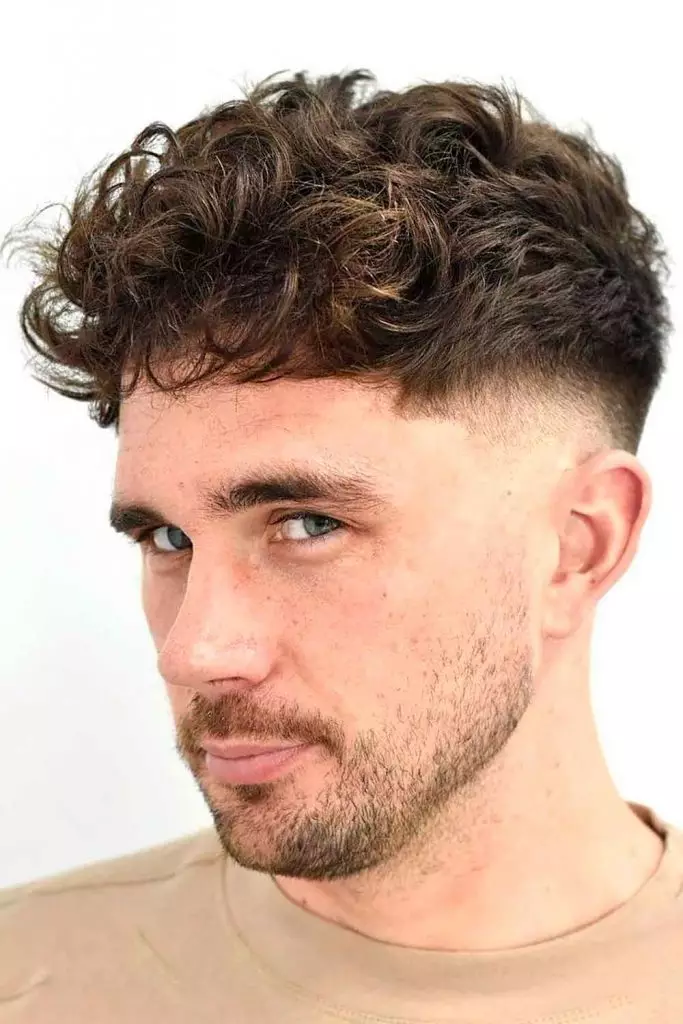
A shorter fringe that stops right at your eyebrows. The rest of the top is cut with plenty of texture. The sides are faded or tapered.
The right approach: Ask for the fringe to be cut with vertical scissors so the ends look soft. The sides should be tight but not bald.
How to describe it: "I want a tousled fringe cut. Short fringe at my eyebrows. Textured everywhere else. Soft edges, not blunt."
What to skip: A fringe that is perfectly straight across. Tousled means irregular.
4. The Wave-Enhancing Layer Cut (For Wavy Hair)
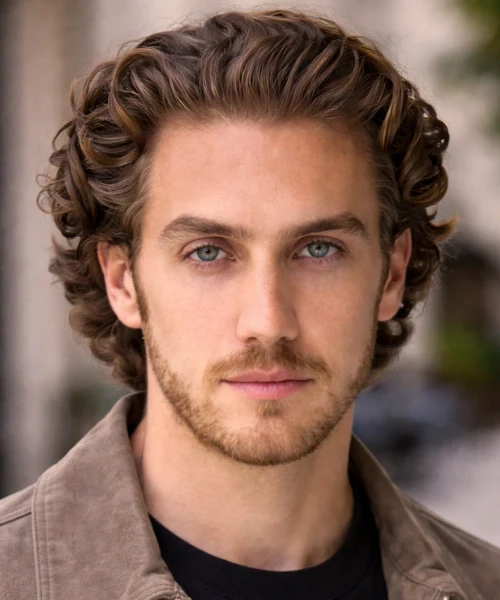
Designed specifically for wavy texture. Layers are cut throughout to remove bulk and let your waves sit without puffing out to the sides.
The right approach: Ask for layers that start at your crown and continue to your ends. No blunt lines anywhere. A curl cream encourages the wave pattern.
How to describe it: "I want a wave-enhancing layer cut. Layers from crown to ends. My waves should sit down, not puff out."
What to skip: One-length waves. That is how you get triangle head.
5. The Swept-Back Shape
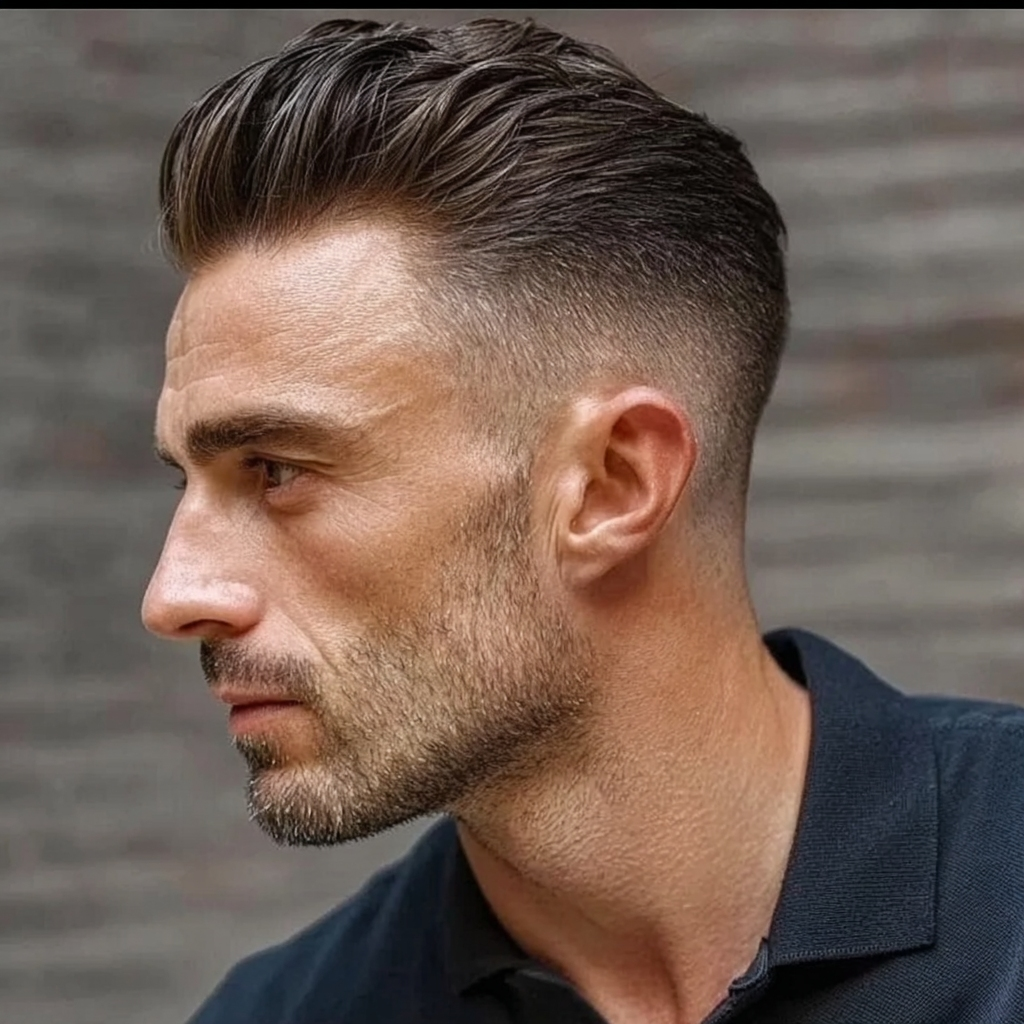
All hair brushed away from your face. The top is long enough to reach your nose when pulled forward. The sides are blended but not shaved.
The right approach: Ask for top length to your nose. Sides tapered gradually. A water-based product gives hold without looking greasy.
How to describe it: "I want a swept-back shape. Top long enough to reach my nose. Sides blended. I will sweep it back away from my face."
What to skip: An oil-based product. It will look greasy within an hour.
6. The Jaw-Length Wave Cut (Men's Bob)
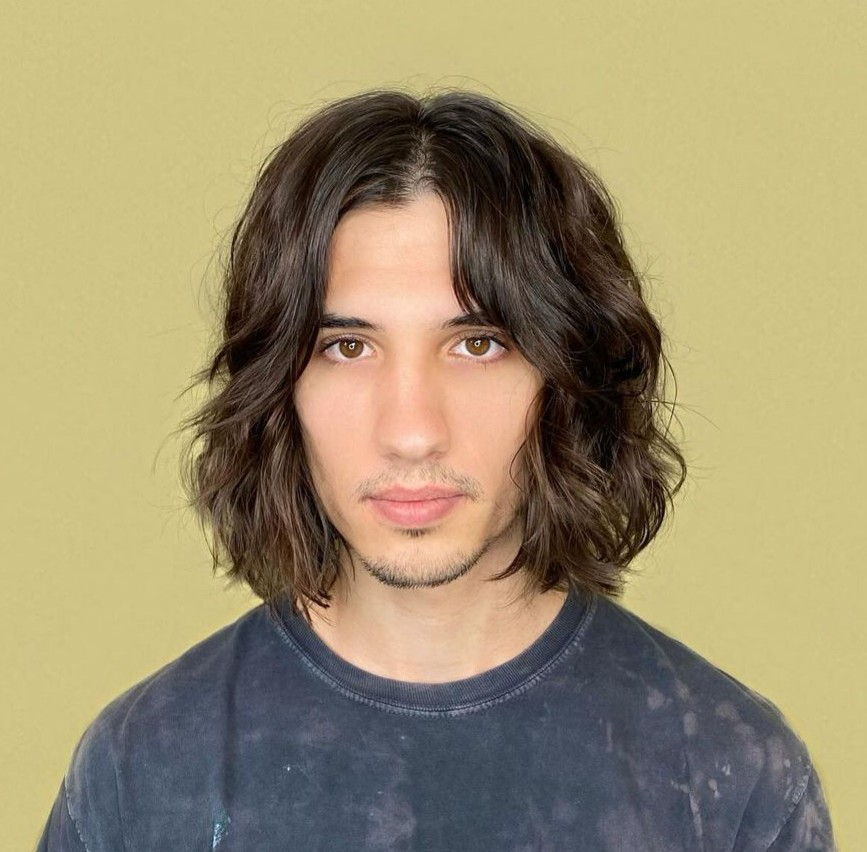
A bob cut designed for men with waves or curls. Hits right at your jawline. Soft, rounded, and completely intentional.
The right approach: Ask for jaw-length with light layering. No blunt edges. A leave-in conditioner keeps definition without crunch.
How to describe it: "I want a jaw-length wave cut. Hits my jaw. Soft and rounded. Work with my natural wave pattern."
What to skip: A blunt bob. That is a different look for a different person.
7. The High-Contrast Undercut
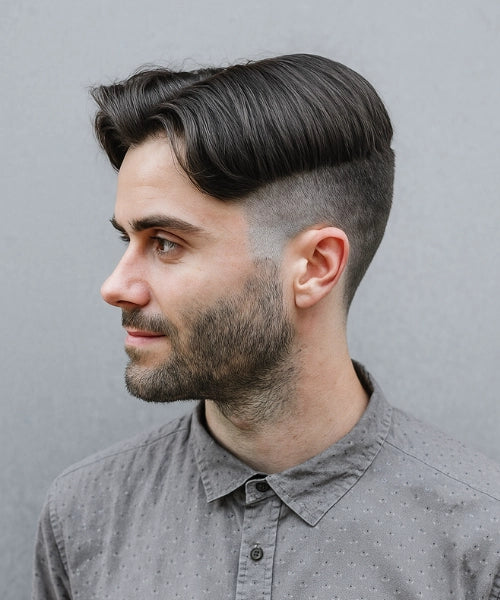
Sides and back are shaved very short. The top is left long — past your eyes, almost to your nose. A clean line separates the two.
The right approach: Ask for a #2 guard on the sides and back. The top should be at least three inches long. A matte product gives texture without shine.
How to describe it: "I want a high-contrast undercut. Sides and back shaved with a #2. Top long to my nose. Clean line between them."
What to skip: A crooked disconnect line. The line should be sharp and even all around.
8. The Finger-Combed Push Back
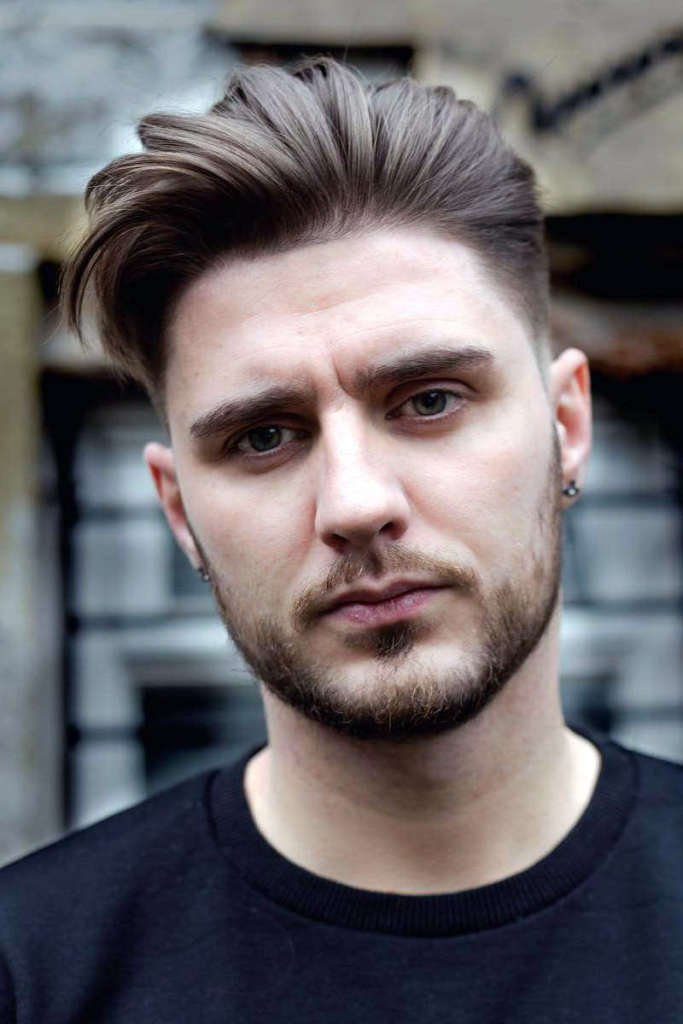
Similar to a swept-back shape but softer. You push the hair back with your fingers, not a brush. More texture, less polish.
The right approach: Ask for top length to your nose. Sides tapered. A matte paste applied to damp hair and pushed back by hand.
How to describe it: "I want a finger-combed push back. Top to my nose. Sides tapered. I will push it back with my fingers, no comb."
What to skip: A comb. Fingers only. Combs make it too neat.
9. The Tailored Mullet (Medium Length)
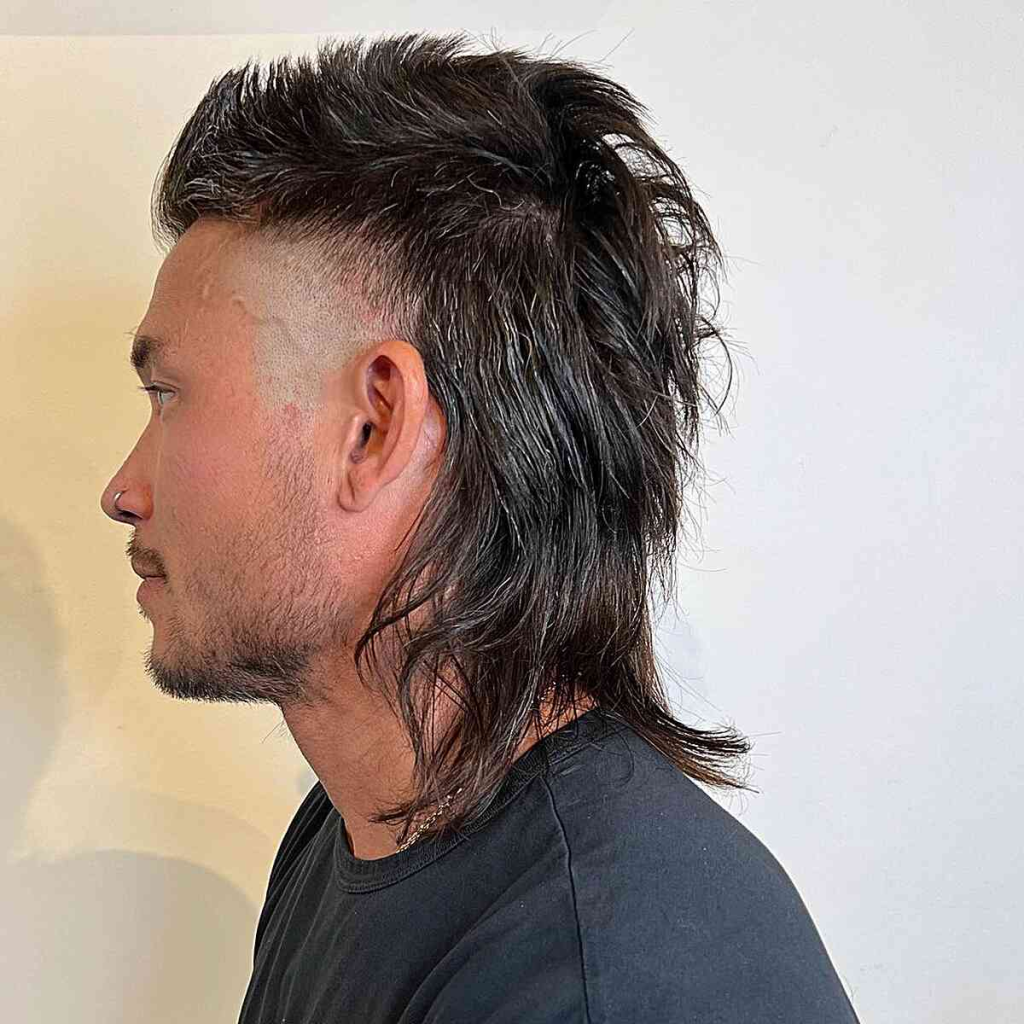
Short on top and around the ears. Longer in the back. The back hits your collar. Clean, shaped, and intentional — not wild.
The right approach: Ask for a textured top. Tapered sides that show your ears. Length in the back to your collar.
How to describe it: "I want a tailored mullet. Textured top. Tapered sides. Back to my collar. Clean and shaped."
What to skip: A mullet that looks neglected. Tailored means maintained.
10. The Curl-Defined Fade
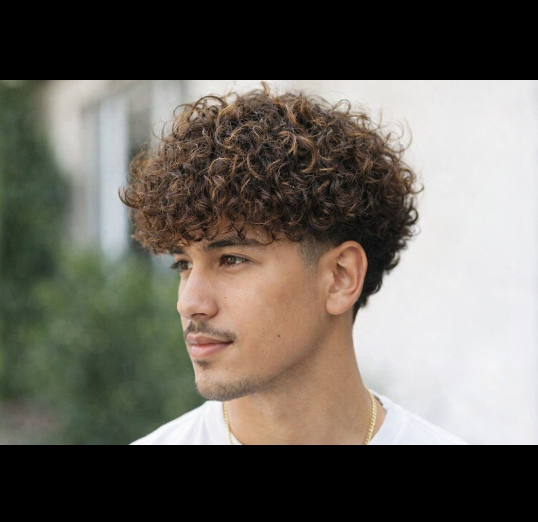
Faded or tapered sides. Longer curls on top. The curls are left natural and defined, not stretched or picked out.
The right approach: Ask for a fade that starts at a #1 or #2. The top should be long enough for your curls to form their natural shape. A curl cream defines without stiffness.
How to describe it: "I want a curl-defined fade. Faded sides. Top left long enough for my curls to form. Work with my natural pattern."
What to skip: Cutting curls wet. Always cut curly hair dry so you see where the curls fall.
11. The Styled Bedhead
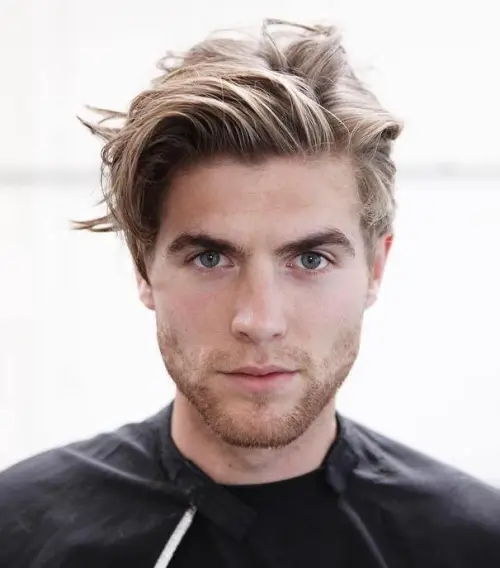
Longer on top. Pushed back or to the side. Not wild. Not messy. Just intentionally undone.
The right approach: Ask for nose-length on top. No defined part. A lightweight cream keeps it controlled without stiffness.
How to describe it: "I want a styled bedhead. Top to my nose. No part. Intentional, not messy."
What to skip: A style that looks like you just woke up. Styled is the key word.
12. The Raised Front (Textured Pomp)
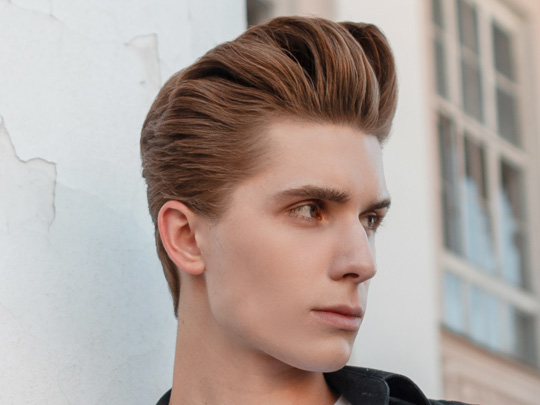
Volume at the front. Height at your forehead. The rest of the hair is shorter or tapered. Modern, not greaser.
The right approach: Ask for length at the front to reach your nose. Sides tapered. A blow dryer and round brush build the height. A matte product finishes.
How to describe it: "I want a raised front. Volume at the front. Tapered sides. Height without looking like a pompadour."
What to skip: Too much product. The height should come from drying, not from glue.
13. The Collarbone Grazer
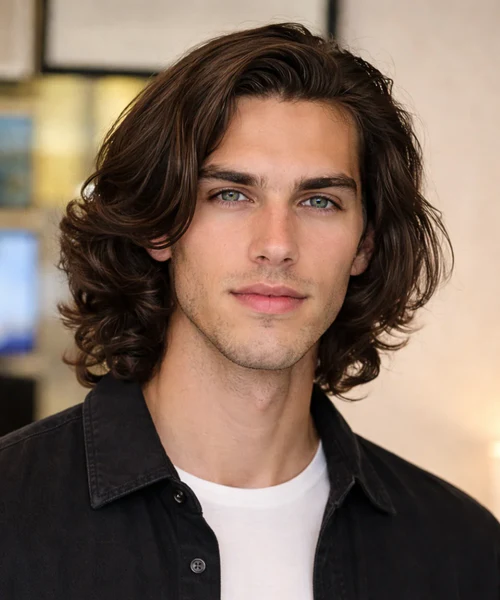
Actual collarbone-length hair. Layers throughout to remove weight. Works best on straight or gently wavy hair.
The right approach: Ask for length to your collarbone. Layers that start at your chin. A lightweight conditioner prevents frizz.
How to describe it: "I want a collarbone grazer. Length to my collarbone. Layers starting at my chin. Light and movable."
What to skip: One-length hair. That is a curtain, not a hairstyle.
14. The Messy Texture Cut
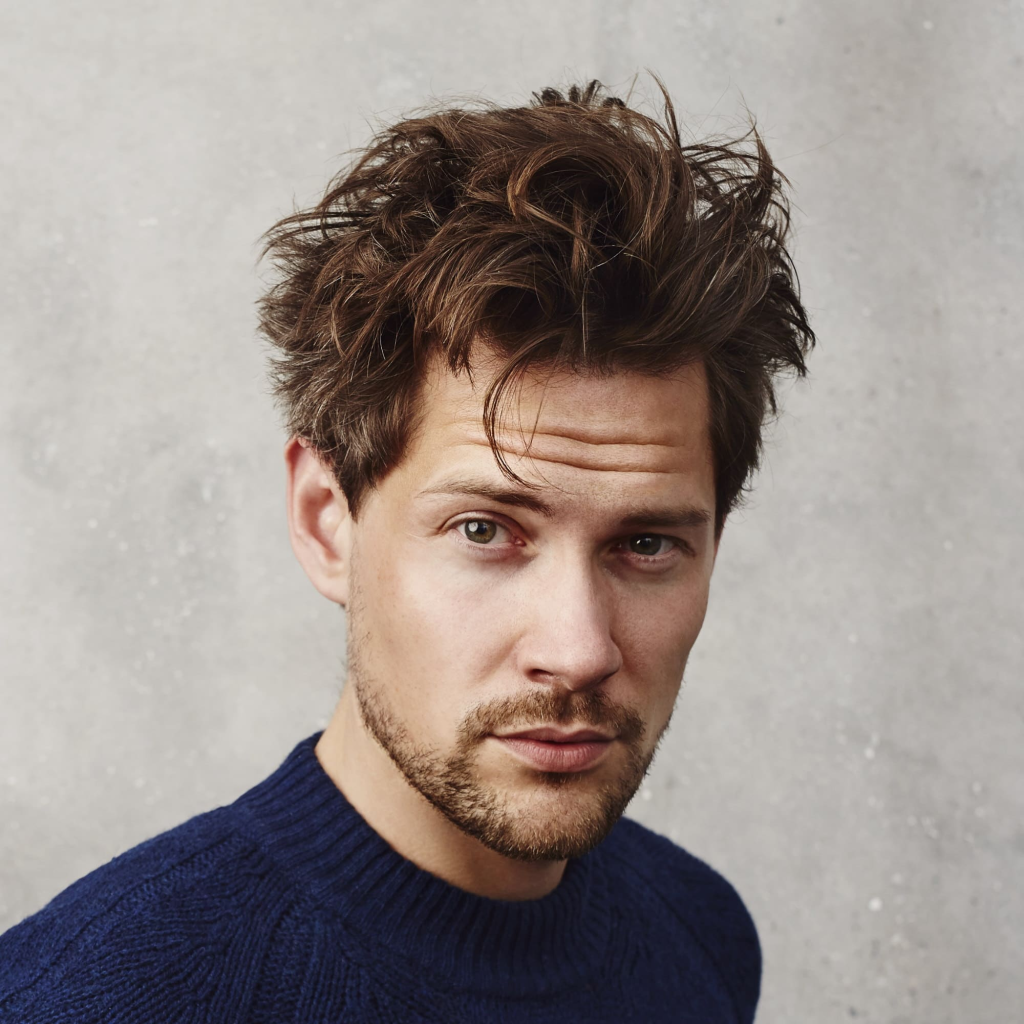
Shorter sides. The top is cut with maximum texture so it stands up in soft, separated pieces. No product needed — the cut does the work.
The right approach: Ask for point-cut texture throughout the top. Sides faded or tapered. A sea salt spray adds grip if you want it.
How to describe it: "I want a messy texture cut. Short sides. Maximum texture on top. The cut should do the work, not product."
What to skip: A smooth top. Texture is the whole point.
15. The Low-Maintenance Shape
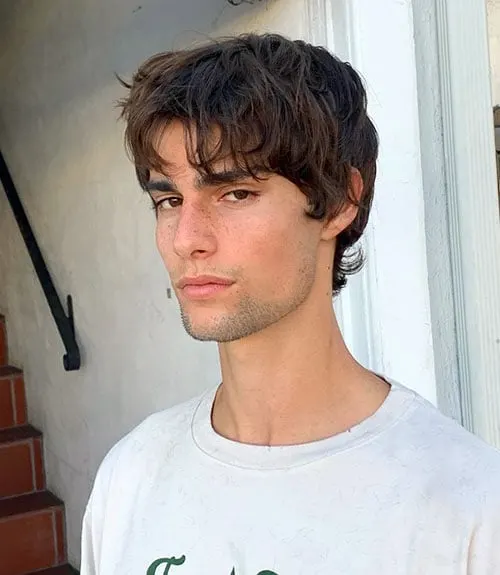
A simple, rounded shape with minimal layering. Designed for guys who want to wash, dry, and go. No complicated routines.
The right approach: Ask for a rounded perimeter. Very light internal layering just to remove bulk. A leave-in conditioner is your only product.
How to describe it: "I want a low-maintenance shape. Rounded perimeter. Very light layers. I want to wash and go."
What to skip: Over-layering. Too many layers create frizz on low-maintenance hair.
What to Tell Your Barber
Bring a photo from the 15 above. Say: "This is the length and shape I want. My hair is [straight / wavy / curly]. I need it to work with my daily routine."
A good barber will ask about your lifestyle. How much time do you want to spend styling? Do you need your hair out of your face for work? Answer honestly.
Product Guide for Medium Men's Hair
For texture: Matte clay, sea salt spray, texture powder
For hold: Water-based pomade, styling paste
For waves and curls: Curl cream, leave-in conditioner, diffuser attachment
What to skip: Gel (crunchy), heavy oils (greasy), cheap pomade (does not wash out)
The Final Word
Medium hair for men is not an awkward stage. It is a length with its own styles, its own rules, and its own confidence. Brushed-forward crops. Loose center parts. Tailored mullets. Collarbone grazers. Fifteen options. One of them is yours.
Stop waiting to grow through it. Cut it into something intentional.
Leave a Reply