
Let me tell you about the most common curly hair complaint I hear. "My hair is big on the sides and flat on top." That is the triangle. It happens when someone cuts curly hair like it is straight. Layers in the wrong places. Weight left at the ends. No understanding of shrinkage.
Medium length is where curls get complicated. Too short and your curls spring up to nothing. Too long and they weigh themselves down. But when you get it right — when the layers hit the right spots and the shape works with your texture — medium length curls are magic.
I have fixed more triangle heads than I can count. I have also seen what happens when you respect the curl. Volume at the crown. Shape that follows your head, not fights it. Curls that look intentional, not accidental.
Here are 15 curly medium length hairstyles that actually work with your texture.
The Shrinkage Rule (Do Not Skip This)
Curly hair does not behave like straight hair. When you cut it, you have to account for how much it will bounce up.
- Wavy (type 2): Shrinks 10-25%. Cut one inch longer than your desired dry length.
- Curly (type 3): Shrinks 25-40%. Cut two to three inches longer than your desired dry length.
- Coily (type 4): Shrinks 40-60%. Cut three to five inches longer than your desired dry length.
Always cut curly hair dry. A wet cut is a guessing game. You will lose.
Now let us get into the 15 styles.
The 15 Curly Medium Length Hairstyles
1. The Globe Shape
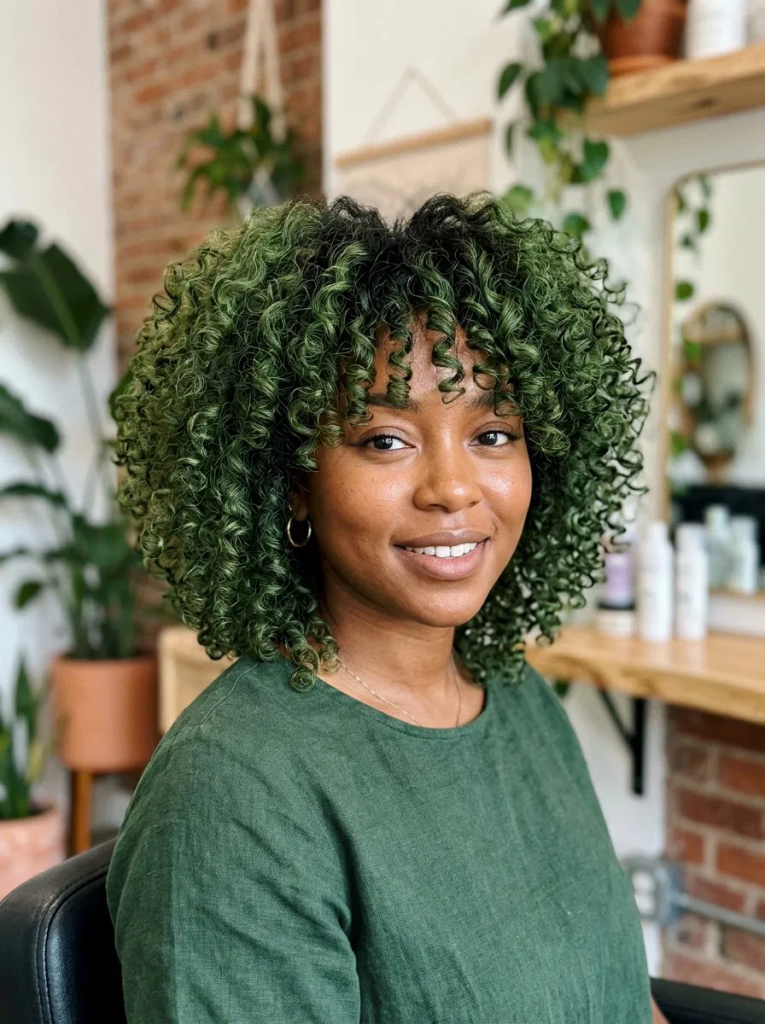
A rounded shape with layers starting at the crown. No triangle point at the bottom. The perimeter is soft and curved.
The right approach: Ask for layers cut into the hair, not just at the ends. The shape should be round, not flat on the sides.
How to describe it: "I want a globe shape. Layers from my crown down. Rounded all the way around. No triangle."
What to skip: One-length curls. That is triangle city.
2. The Curly Shag (Soft Version)
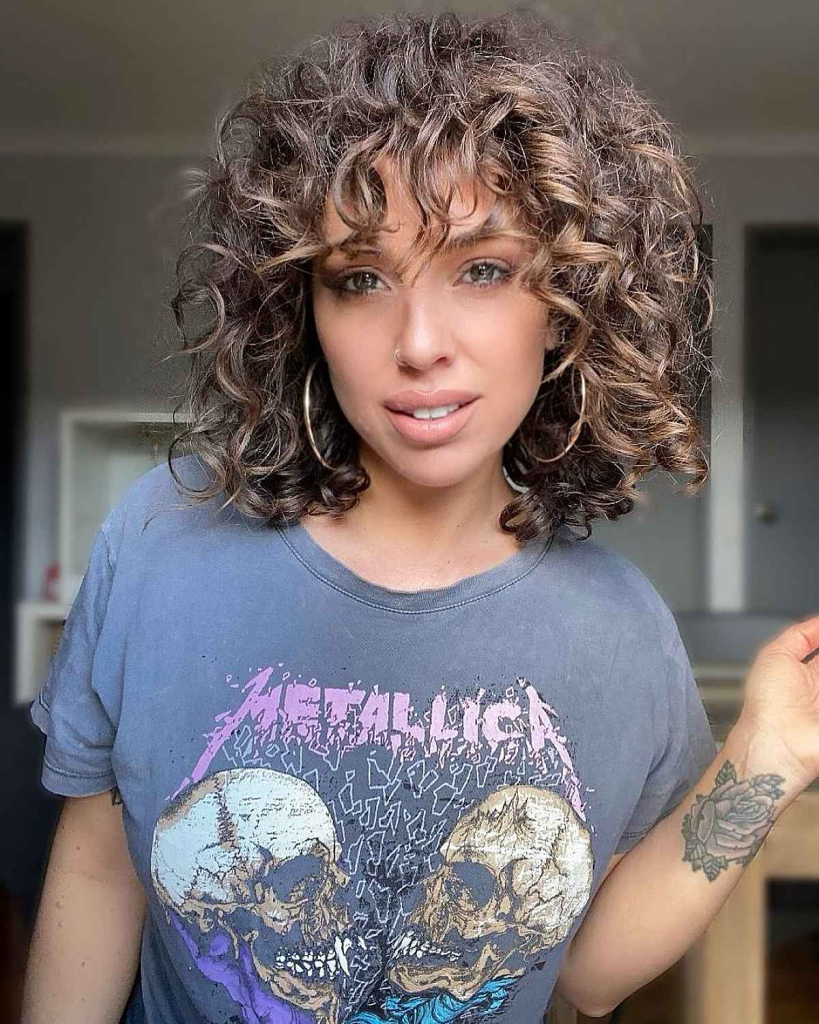
A shag haircut made for curls. Lots of internal layers. A softer, more lived-in shape. Curtain bangs that blend into the sides.
The right approach: Ask for layers that start high (at your crown or higher). The bangs should melt into the rest of your hair.
How to describe it: "I want a soft curly shag. Lots of internal layers. Curtain bangs that blend into my curls."
What to skip: A shag that is too heavy on top. That will weigh your curls down.
3. The Curly Long Bob (Lob)
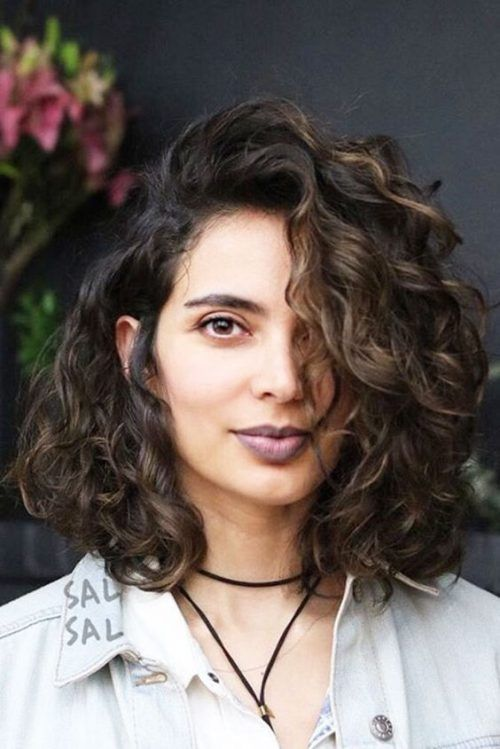
A curly lob hits between your chin and your shoulders when dry. Because of shrinkage, this means cutting it longer when wet.
The right approach: Ask for a rounded perimeter, not blunt. Soft layers to remove bulk. Length that lands at your collarbone when dry.
How to describe it: "I want a curly lob. Should hit my collarbone when dry. Rounded shape. Soft layers."
What to skip: A blunt lob. On curls, blunt means bulky at the bottom.
4. The Tapered Curly Mullet
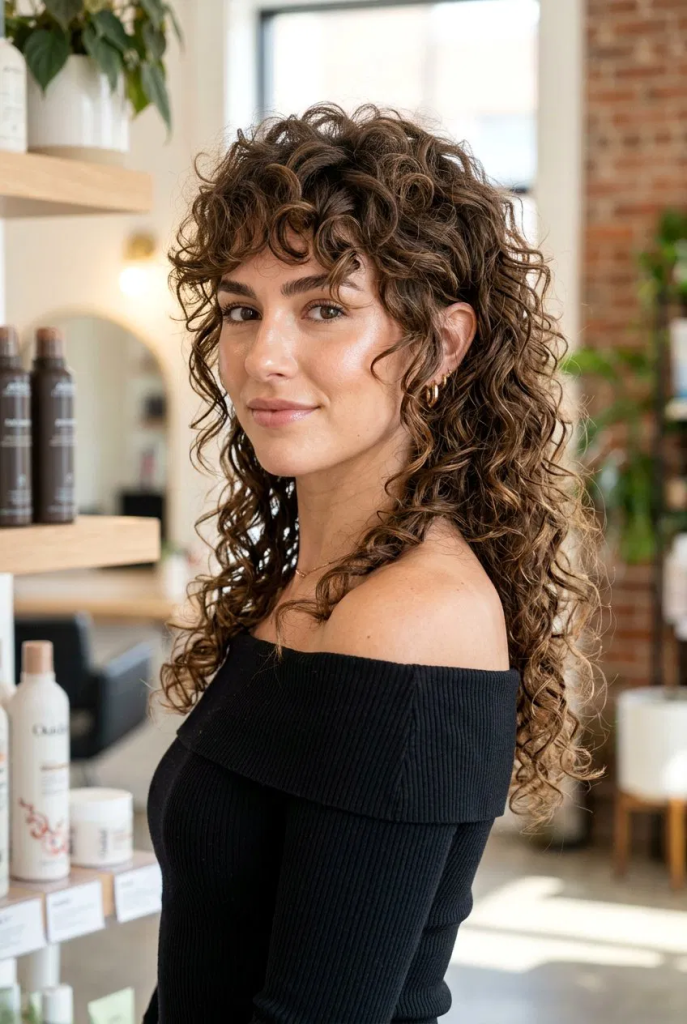
Short on top and around the ears. Longer in the back. On curls, "short" means the curls are still there but compact. The back has visible length.
The right approach: Ask for a textured top. Tapered sides that show your ears. Length in the back that hits your collar.
How to describe it: "I want a tapered curly mullet. Textured top. Tapered sides. Back to my collar. Clean, not wild."
What to skip: A mullet that looks like an afterthought. Keep it shaped.
5. The Curly Pixie (Medium Length Version)
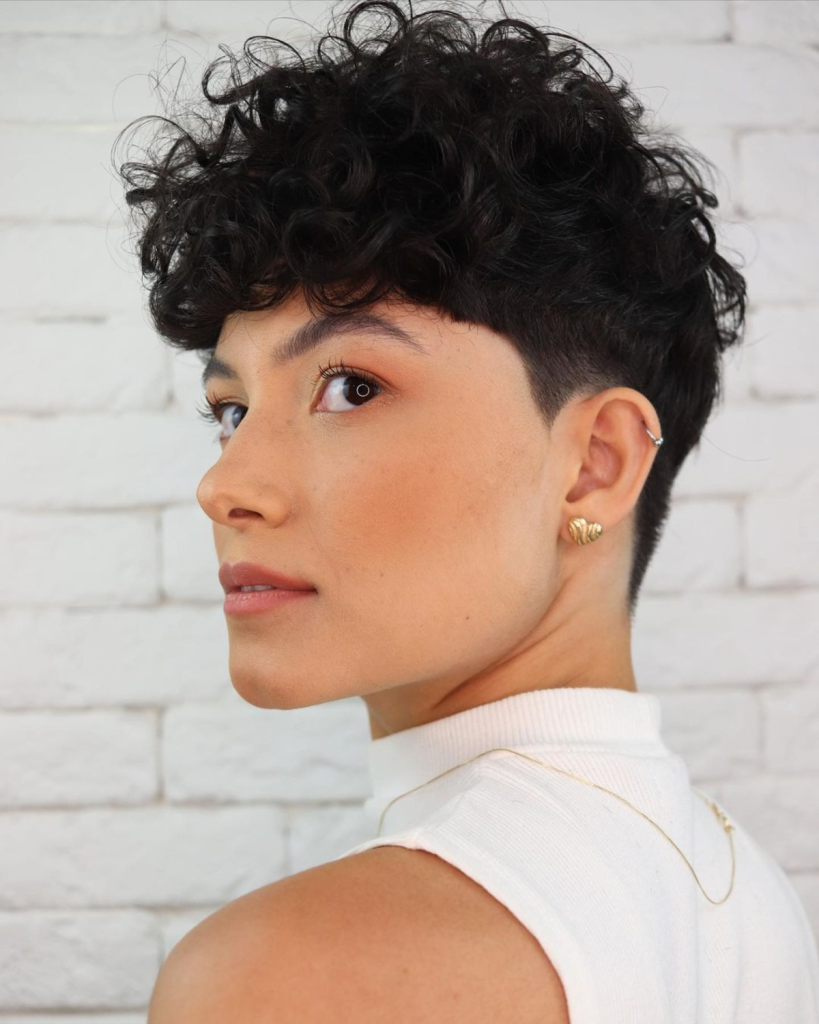
A pixie cut on curls is not as short as it sounds. Medium length means the top hits your forehead or brows when dry.
The right approach: Ask for a tapered nape. The top should be stretched length to your nose. A curl cream defines without crunch.
How to describe it: "I want a curly pixie. Tapered nape. Top long enough to hit my brows when dry. Soft and rounded."
What to skip: A pixie that is too short. Your curls will spring up to nothing.
6. The Deep Side Volume Cut
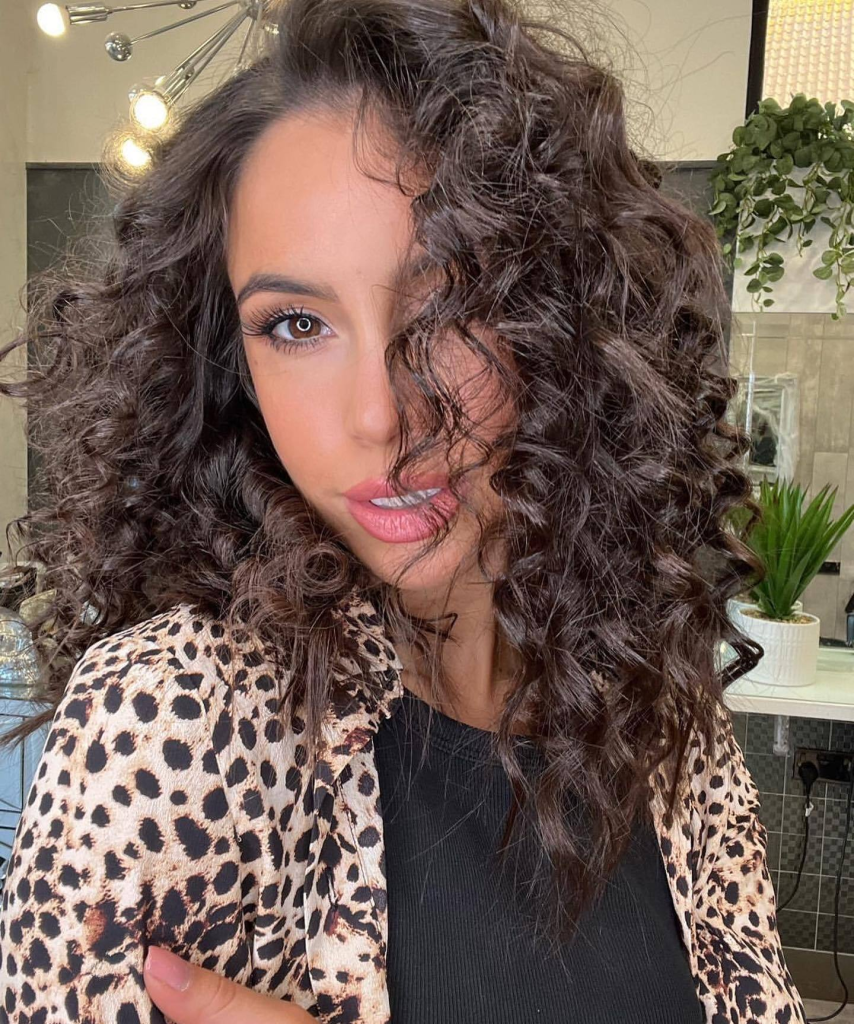
A deep side part. Curls swept to one side. Volume built at the crown. The rest of the hair is layered and rounded.
The right approach: Ask for a deep side part. Layers that lift at the crown. A diffuser when drying builds volume.
How to describe it: "I want a deep side volume cut. Deep side part. Volume at my crown. Rounded shape."
What to skip: A part that fights your natural curl pattern. Let your curls decide.
7. The Curly Bubble Shape
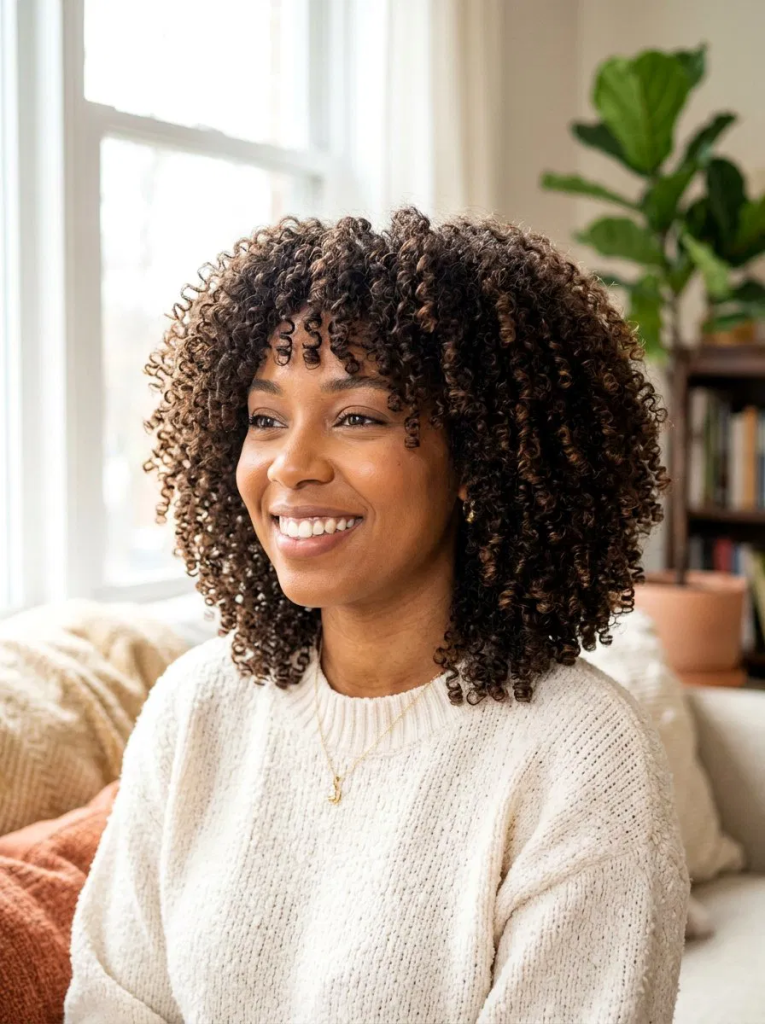
A rounded, fluffy shape. Layers throughout. No harsh lines. Very soft, very 1970s, very cool.
The right approach: Ask for layers that start at your crown. A rounded perimeter. A lightweight mousse for volume without crunch.
How to describe it: "I want a curly bubble shape. Soft and rounded. Layers everywhere. No harsh lines."
What to skip: A shape that is too heavy. Lightweight products only.
8. The Graduated Curly Cut
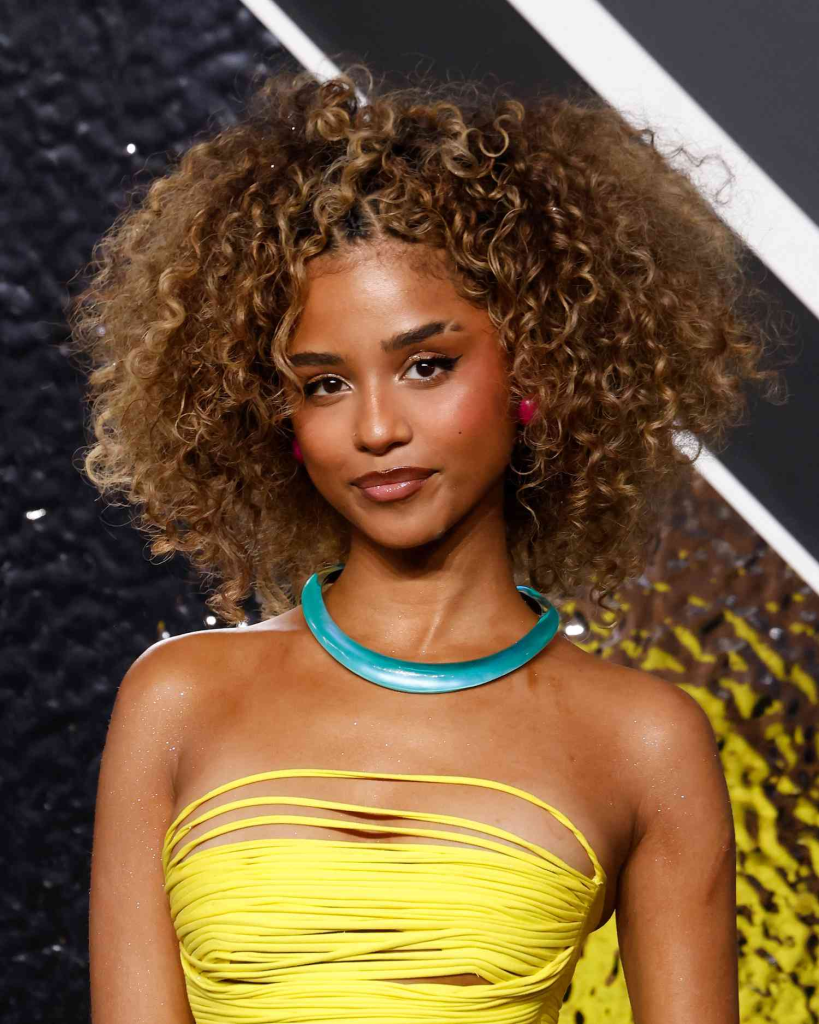
Shorter at the nape and sides, gradually longer toward the crown. A smooth graduation, not a harsh undercut.
The right approach: Ask for a taper that removes bulk at the bottom. The top should have longer curls. A curl cream for definition.
How to describe it: "I want a graduated curly cut. Shorter at my nape and sides. Gradually longer to my crown. Smooth."
What to skip: A graduation that is too aggressive. You want shape, not a disconnect.
9. The Curly Bob with Fringe
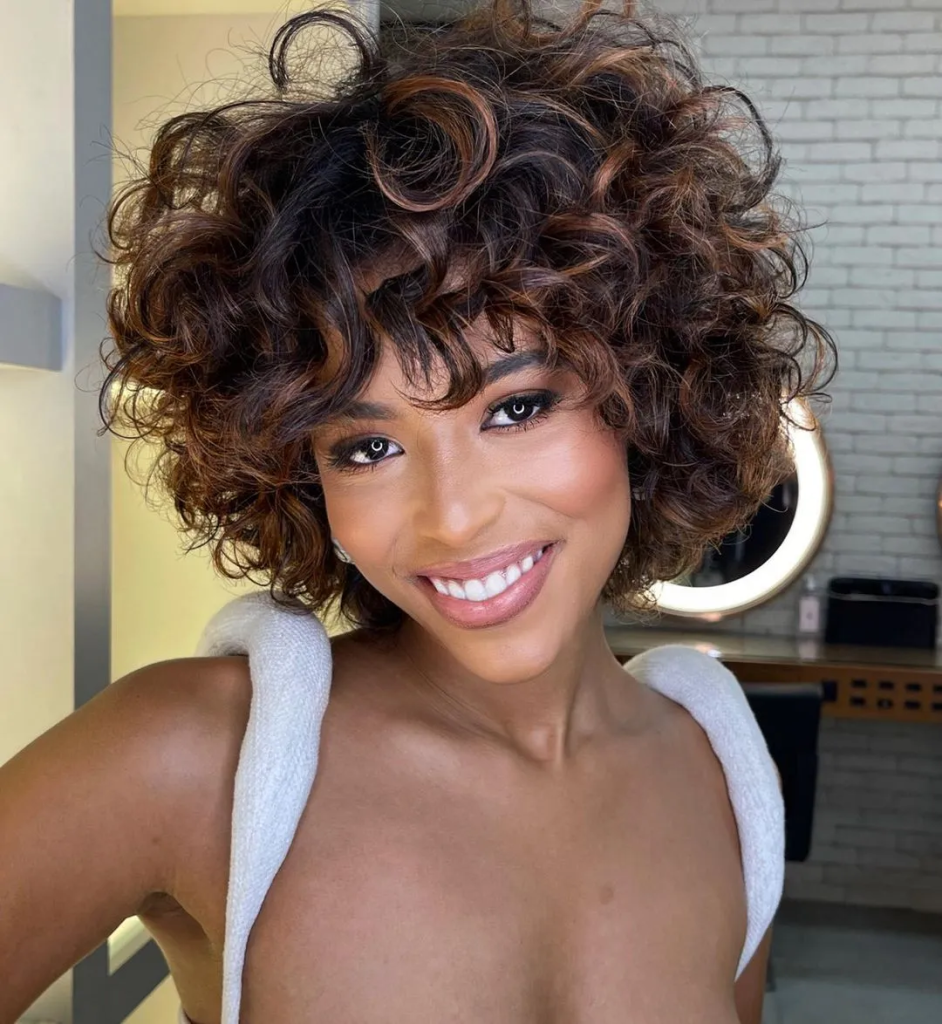
A classic bob shape on curls — rounded, chin to shoulder length — with bangs. The bangs can be curtain style, wispy, or full across.
The right approach: Ask for bangs cut longer than you think (they will shrink). A rounded bob shape. A curl cream for definition.
How to describe it: "I want a curly bob with fringe. Rounded shape. Bangs cut longer — they will shrink."
What to skip: Bangs that are too short. They will spring up to your hairline.
10. The Face-Framing Layer Cut
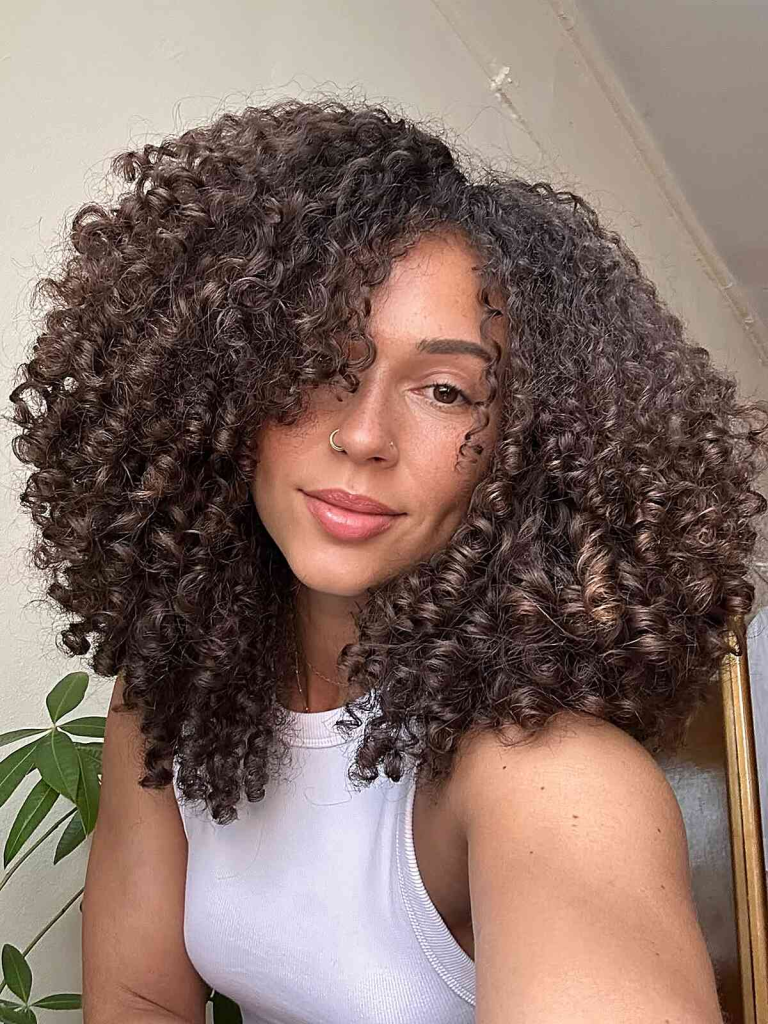
Layers throughout, with shorter pieces around your face. The face-framing pieces hit your chin or cheekbones when dry.
The right approach: Ask for layers that start at your cheekbones. Gradual lengthening toward the back. A lightweight curl cream.
How to describe it: "I want a face-framing layer cut. Layers starting at my cheekbones. Shorter pieces around my face."
What to skip: Face-framing pieces that are too short. They will spring up past your chin.
11. The Curly Wolf Cut
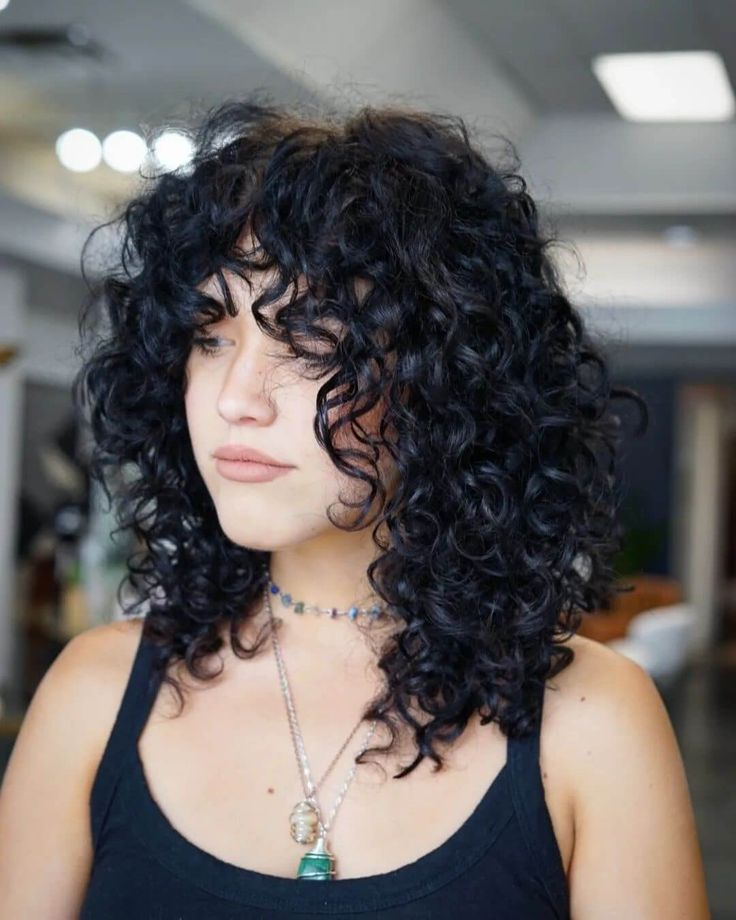
A wolf cut is a shag-mullet hybrid. Lots of volume on top. Layers throughout. Longer in the back. On curls, it is dramatic.
The right approach: Ask for a voluminous top. Aggressive layers. Length in the back that hits your shoulders or below.
How to describe it: "I want a curly wolf cut. Volume on top. Layers everywhere. Longer in the back. Edgy."
What to skip: A wolf cut that is too heavy on top. Your curls need lightness.
12. The Double-Layer Butterfly Cut
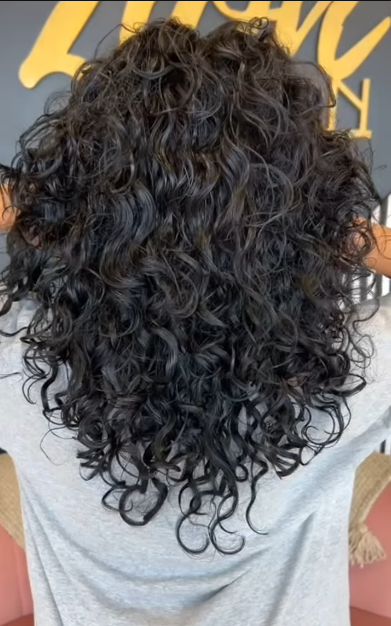
Two distinct layers — a shorter top layer and a longer bottom layer. The shorter layer creates volume. The longer layer keeps length.
The right approach: Ask for a top layer that hits your chin or shoulders. A bottom layer that hits your collarbone or below.
How to describe it: "I want a double-layer butterfly cut. Shorter on top, longer on bottom. Volume at my crown."
What to skip: Layers that are too disconnected. They should blend, not look like two cuts.
13. The Pointed V-Back
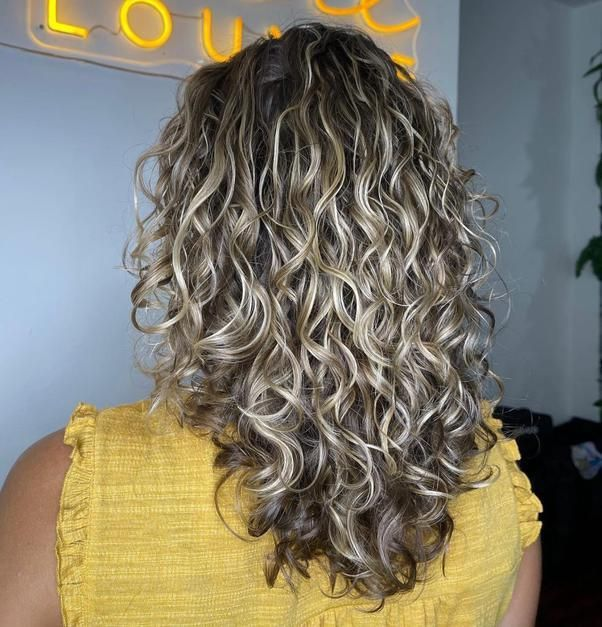
The back is cut into a V shape instead of a straight or rounded line. The V creates movement and removes bulk.
The right approach: Ask for a V shape that starts at your shoulders. Layers that follow the V. A lightweight curl cream.
How to describe it: "I want a pointed V-back. V shape in the back. Layers that follow the V. Movement at the bottom."
What to skip: A V that is too deep. It will look like a costume.
14. The Stacked Curly Bob
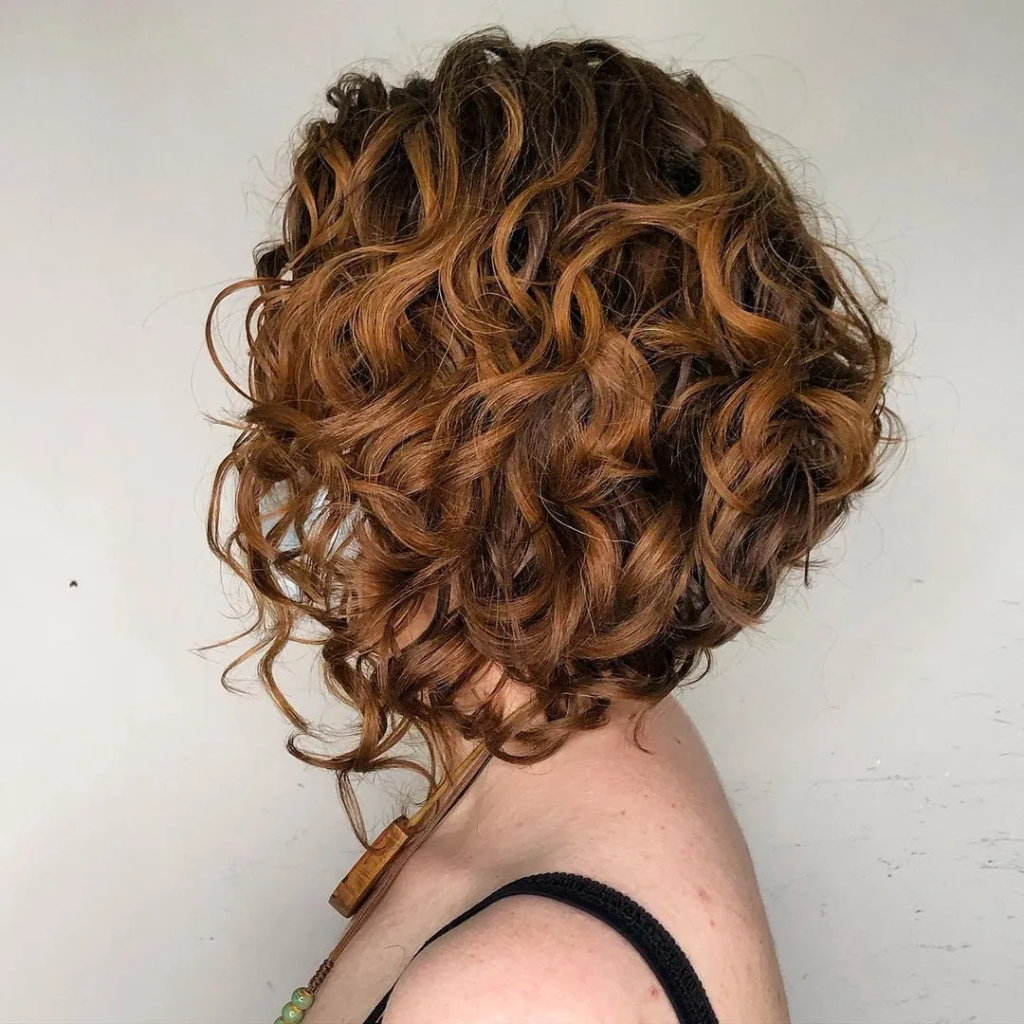
Shorter in the back, longer in the front. The stacked back creates a gentle lift at your nape. The front curls reach your collarbone.
The right approach: Ask for a stacked back that graduates to longer front pieces. The front should be two to three inches longer.
How to describe it: "I want a stacked curly bob. Shorter in back, longer in front. Gentle stack at my nape."
What to skip: A stack that is too severe. You want soft graduation, not a shelf.
15. The Wash-and-Go Shape
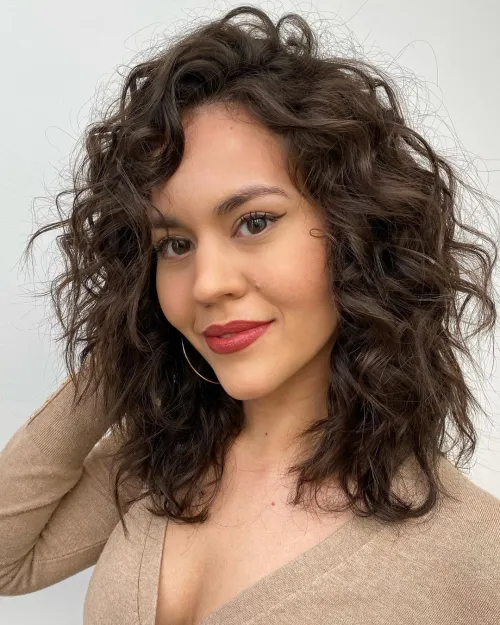
A simple, rounded shape with minimal layers. Designed for people who want to wash, dry, and go. No complicated styling.
The right approach: Ask for a rounded perimeter. Very light internal layering just to remove bulk. A leave-in conditioner is your only product.
How to describe it: "I want a wash-and-go shape. Rounded perimeter. Very light layers. I want to wash and go."
What to skip: Over-layering. Too many layers create frizz.
What to Tell Your Stylist
Bring a photo from the 15 above. Say: "I have curly hair. I want this shape. Please cut it dry so we can see where the curls fall."
If your stylist insists on cutting your curly hair wet, find another stylist. Wet cuts on curls are a gamble.
The Curly Hair Routine for Medium Length
Wash: Once or twice a week. Any more and you will dry out your curls.
Condition: Every wash. Leave some conditioner in. Do not rinse it all out.
Product order: Leave-in → curl cream → gel or mousse. Apply to soaking wet hair.
Drying: Microfiber towel or cotton t-shirt. Never a regular towel. Diffuser if blow-drying.
Refresh: Water + a tiny bit of leave-in conditioner in a spray bottle. Scrunch. Go.
The Final Word
Curly medium length hair is not a problem. It is a texture with its own rules. The right layers remove bulk where you do not want it and add volume where you do. Fifteen cuts. One of them is yours.
Leave a Reply