
For brunette women, grey blending highlights offer the most natural and low-maintenance way to transition into silver without the harsh line of demarcation or constant root touch-ups. As dark-haired women begin to notice those first silver strands appearing at the temples and along the part line, the instinct is often to reach for permanent hair dye. But grey blending takes a different approach—one that works with your natural grey pattern rather than fighting it. By strategically placing lighter highlights throughout your brown base, grey blending creates a seamless, sun-kissed effect that camouflages regrowth while celebrating the silver. In this guide, you’ll discover 15 grey blending highlight techniques specifically designed for brunette women, from subtle babylights to bold silver balayage, each with styling tips, face shape advice, and maintenance schedules.
Why Grey Blending Is Better Than Fighting Your Greys
Traditional all-over color creates a stark line as your roots grow out—usually every 3 to 4 weeks. Grey blending highlights eliminate that problem entirely. Here’s why this approach is transforming how brunette women embrace their natural silver:
- No more harsh grow-out lines – Highlights are painted in a graduated pattern, so regrowth blends invisibly for 12–16 weeks between appointments
- Less damage than full color – Only select strands are lightened, leaving the majority of your dark hair untouched and healthier
- Works with your natural grey pattern – Instead of covering silver, highlights connect with it, creating a dimensional, expensive-looking result
- Softer transition as you go fully grey – If you eventually decide to stop coloring entirely, the highlights have already blurred the line between brown and silver
- Reduces appointment frequency – Traditional root touch-ups every 4–6 weeks become 3–4 month salon visits, saving both time and money
- Adds volume and movement – The contrast between dark base and lighter highlights creates the illusion of thicker, fuller hair
The 15 Grey Blending Highlight Styles
1. Classic Babylights

Why it works: Babylights are ultra-fine highlights painted along your natural part and hairline, mimicking the way children’s hair naturally lightens in the sun. For brunette women with less than 20% grey coverage, babylights blend silver strands into a soft, halo-like effect that adds brightness without looking overly highlighted.Blog
How to style it: Apply a purple shampoo once weekly to prevent brassiness in the lightened strands. Style your hair as usual—these fine highlights are designed to blend seamlessly, so no special technique is needed. For best visibility, blow-dry smooth with a round brush to reflect light off the highlighted pieces.
Best face shapes: All face shapes (babylights are universally flattering since they concentrate around the face)
Maintenance needs: Touch-up every 12–16 weeks. The fine, natural placement means grow-out is virtually invisible.
2. Heavy Section Highlights (40–50% Grey Coverage)
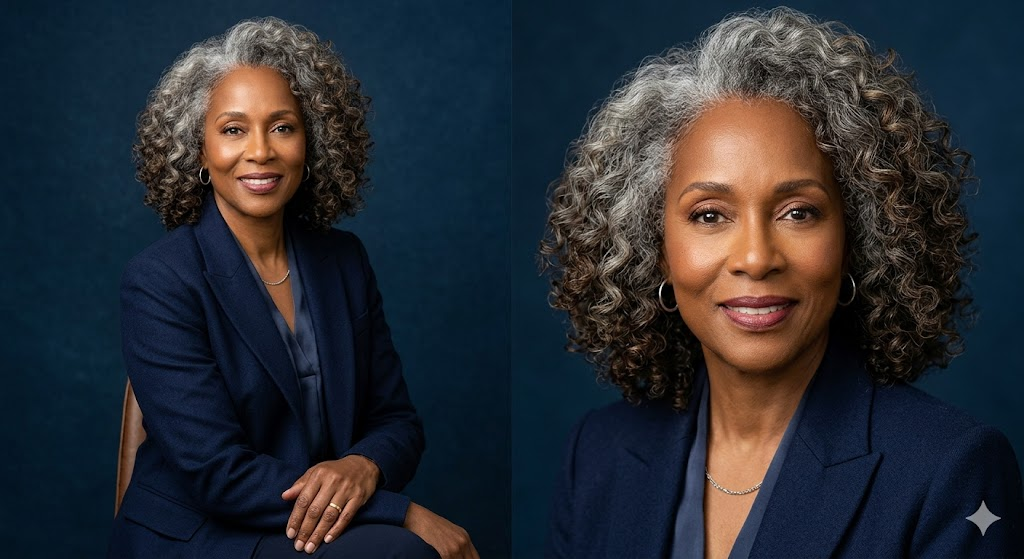
Why it works: For brunettes with substantial grey (40–50% of total hair), heavy section highlights use thicker slices of lightener to match your natural silver density. This technique creates an even, all-over blend where brown and grey read as intentional, dimensional color rather than regrowth.
How to style it: Use a glossing spray to add shine, as the contrast between light and dark shows every bit of dullness. A mid-length part (not too deep) shows off the highlight distribution best. Air-drying works well because the varied tones create natural texture visually.
Best face shapes: Oval, oblong, heart (heavier highlights add width to narrow faces)
Maintenance needs: Touch-up every 10–12 weeks. The higher percentage of lightened hair means slightly more visible grow-out, but still far less than all-over color.
3. Silver Money Piece (Face-Framing Only)

Why it works: A money piece refers to the two thick sections of hair on either side of your face. By lightening only these strands to a cool silver or platinum, brunettes can test-drive grey blending without committing to a full head of highlights. This technique draws attention to your eyes and cheekbones beautifully.
How to style it: Apply a toning mask (silver or violet) to the money pieces weekly to maintain a cool, non-brassy tone. Style these pieces forward using a flat iron with a slight bend away from the face. Tuck the rest of your dark hair behind your ears to showcase the bright face-framing strands.
Best face shapes: Oval, heart, round (the brightness opens up the face)
Maintenance needs: Touch-up every 8–10 weeks. Because these are thick sections, regrowth is noticeable sooner than with finer highlights.
4. Low and Slow Grey Blending (Minimal Lift)

Why it works: Low and slow blending uses a low-volume developer (10 or 15 volume) to lift brown hair just 1–2 levels—from dark brown to medium brown—rather than all the way to platinum. This creates a subtle, lived-in grey blend perfect for women who want to soften their grey without dramatic contrast.
How to style it: No special styling required. This technique looks best with textured, piecey styles like a shag or layered bob where the subtle tonal variation shows through. Use a texturizing spray to enhance separation between the slightly different shades.
Best face shapes: All face shapes (most natural-looking option on this list)
Maintenance needs: Touch-up every 14–18 weeks. The minimal lift means grow-out is exceptionally forgiving.
5. Chunkier Ribbon Highlights
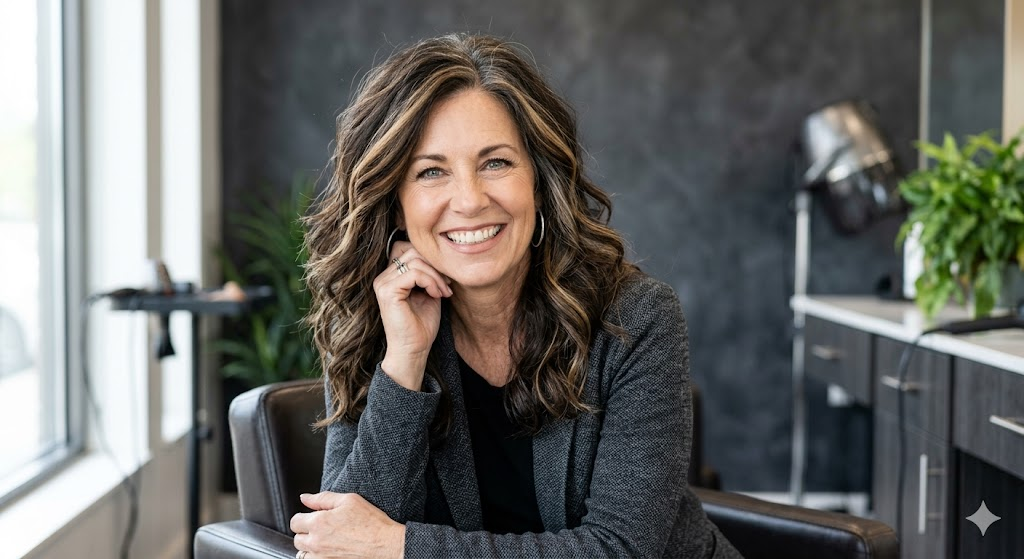
Why it works: Ribbon highlights are wider than babylights but softer than traditional chunky highlights—think the width of a fettuccine noodle. For brunettes with coarse or thick hair, these larger sections of dimensional color prevent the hair from looking one-dimensional and heavy while blending with natural grey strands.
How to style it: Blow-dry with a large round brush to create smooth, reflective surfaces that show off the ribbon-like color placement. For curly hair, diffuse upside down to distribute the ribbons evenly throughout your curl pattern. Finish with shine serum to emphasize the dimensional contrast.
Best face shapes: Oval, square, diamond (ribbons soften angular jawlines)
Maintenance needs: Touch-up every 10–12 weeks. Ribbon highlights grow out as soft, diffused lines rather than hard bands.
6. Shadow Root with Grey Ends
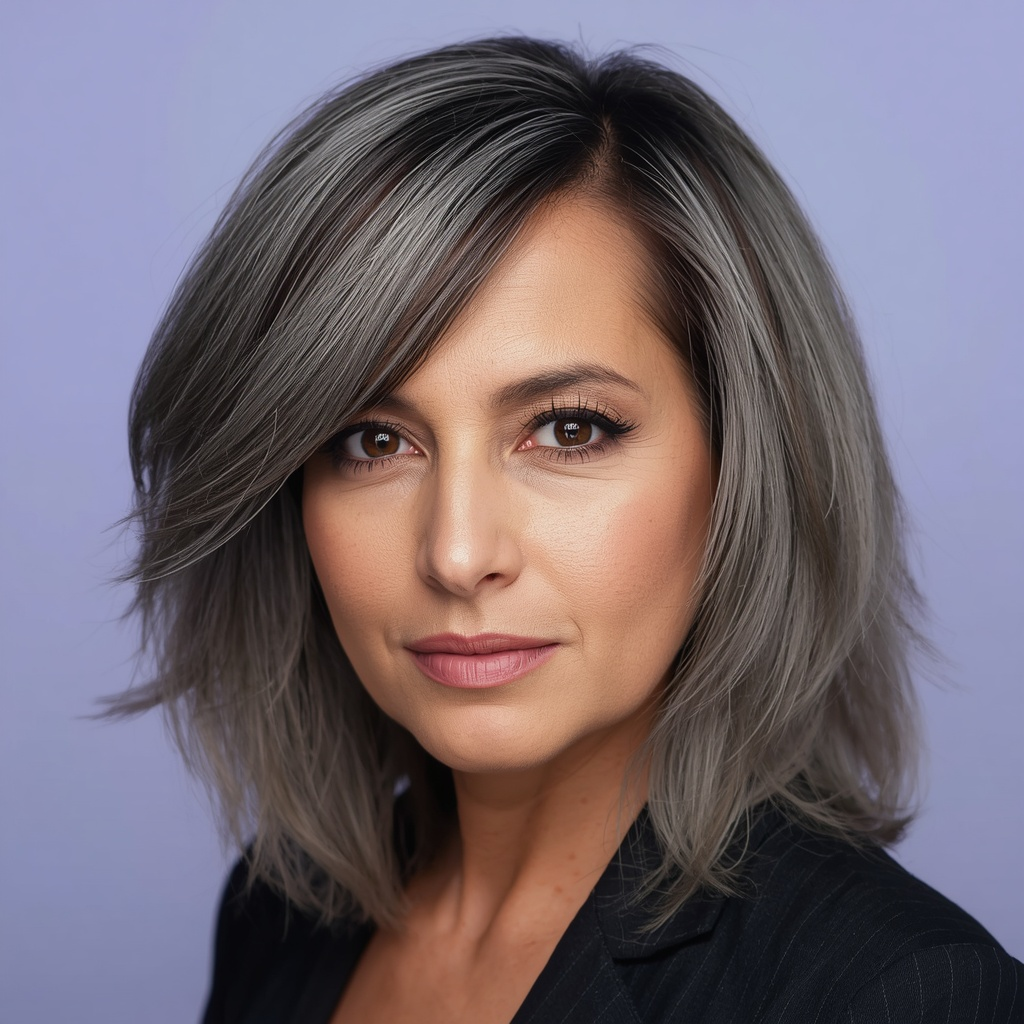
Why it works: This technique leaves your natural dark root untouched (or adds a semi-permanent shade close to it) while lightening the mid-lengths and ends to a cool grey or silver. The shadow root eliminates regrowth lines entirely, making it the ultimate low-maintenance grey blend for brunettes.
How to style it: Apply a root touch-up powder only if you want extra camouflage—but you genuinely don’t need it. Style with loose waves using a 1.5-inch curling iron; waves show the transition from dark to grey more artistically than straight hair. Air-drying also works beautifully.
Best face shapes: All face shapes (the root darkness adds depth universally)
Maintenance needs: Touch-up every 16–20 weeks—the longest interval on this list. Only the ends need refreshing periodically.
7. Salt and Pepper Balayage
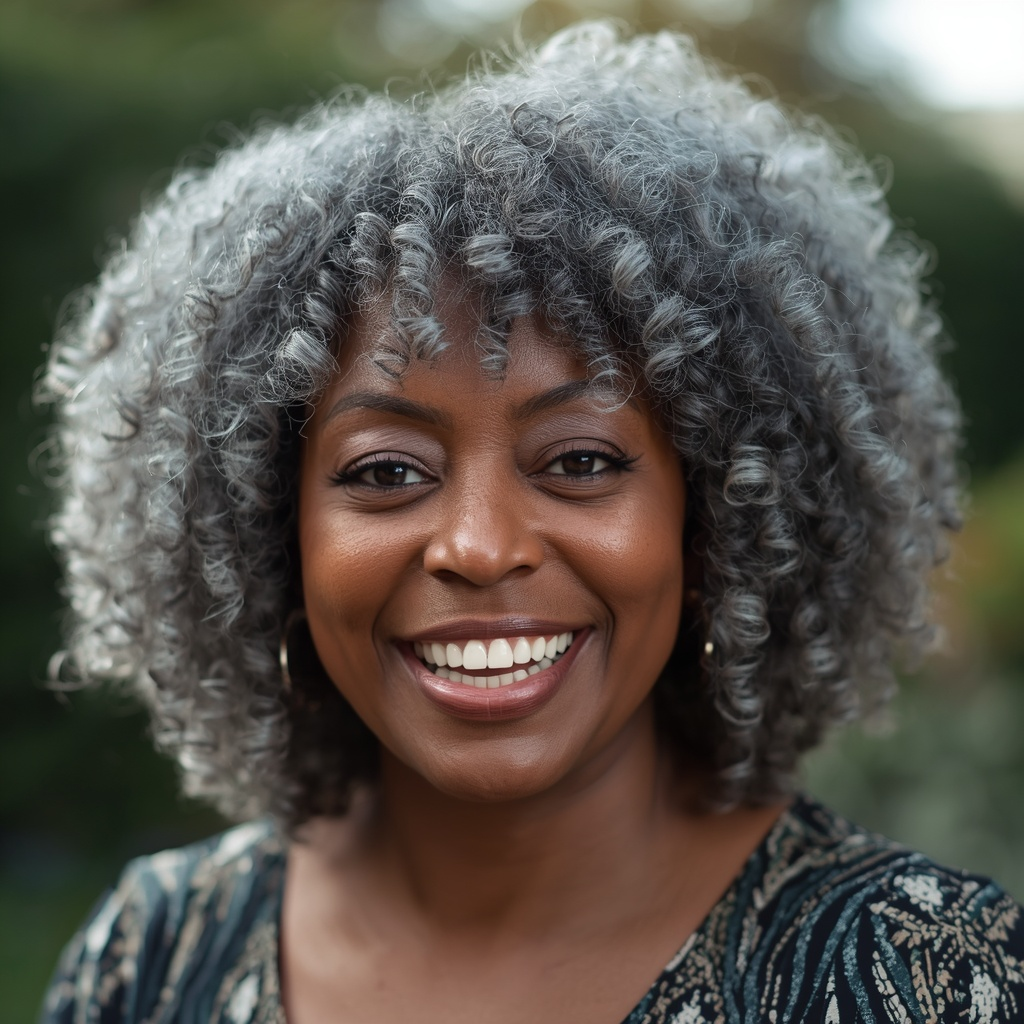
Why it works: Balayage is a hand-painted highlighting technique with no foils, creating a sun-kissed, grown-out effect from the start. For salt-and-pepper brunettes, balayage allows the colorist to paint individual silver strands and lightened pieces exactly where natural grey is most concentrated, resulting in a custom, artistic blend.
How to style it: Air-dry completely—balayage is designed to look effortless and undone. Scrunch with a curl cream if you have natural wave. For straight hair, run a flat iron quickly over just the ends to create a slight bend. The less polished, the better.
Best face shapes: Oval, heart, round (the soft, diffused edges flatter all)
Maintenance needs: Touch-up every 12–16 weeks. Balayage has no hard grow-out line by design.
8. Icy Silver Foilayage
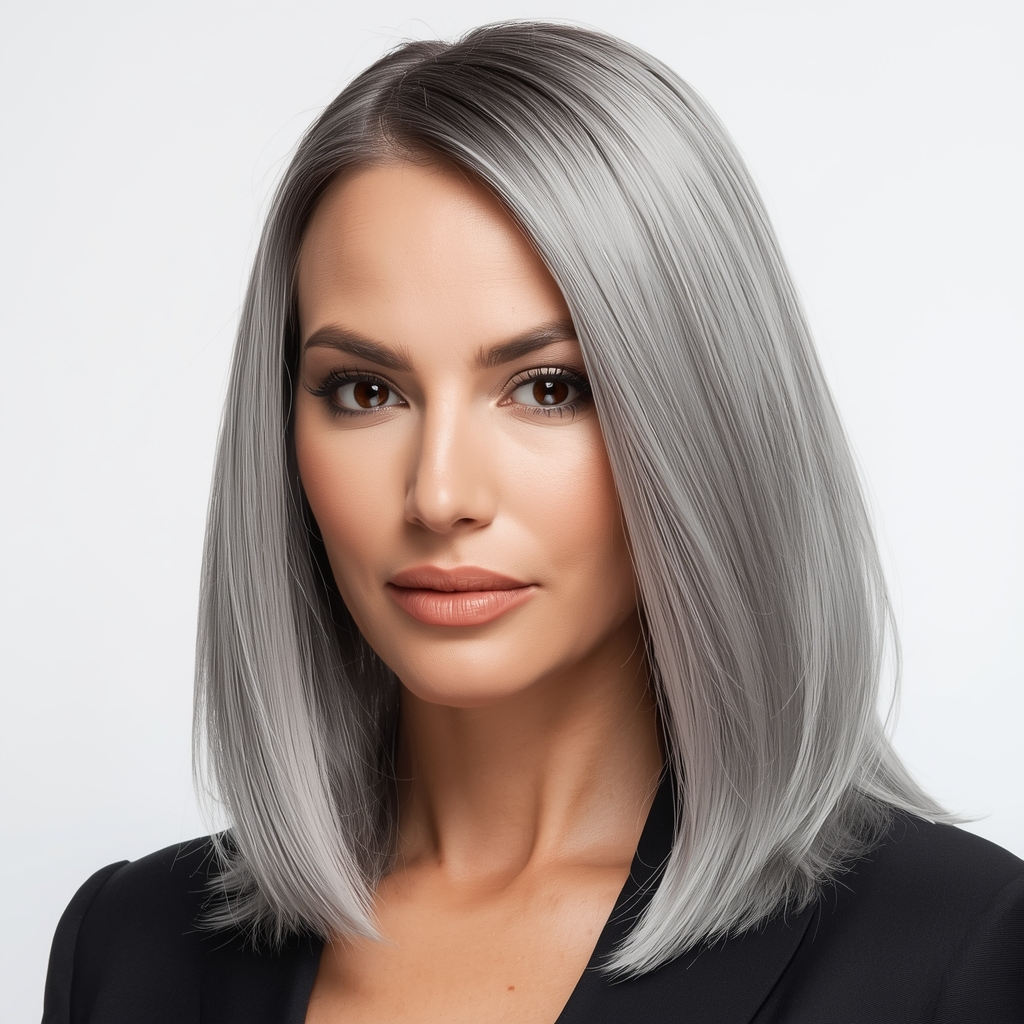
Why it works: Foilayage combines precision foiling (for maximum lift) with balayage placement (for natural-looking distribution). The result is a cool, icy silver that blends seamlessly with natural grey strands. This is the best choice for brunettes who want their grey blending to read as intentionally silver, not just highlighted brown.
How to style it: Use a purple shampoo and conditioner system exclusively—blue shampoos are not strong enough for icy tones. Cold water rinses only, as warm water opens the cuticle and allows brassiness to develop. Style smooth and straight to show off the high-shine silver finish.
Best face shapes: Oval, square, oblong (the brightness suits stronger bone structure)
Maintenance needs: Touch-up every 8–10 weeks. Maximum lift requires more frequent toning appointments (every 4–6 weeks) to maintain coolness.
9. Dimensional Mushroom Brown
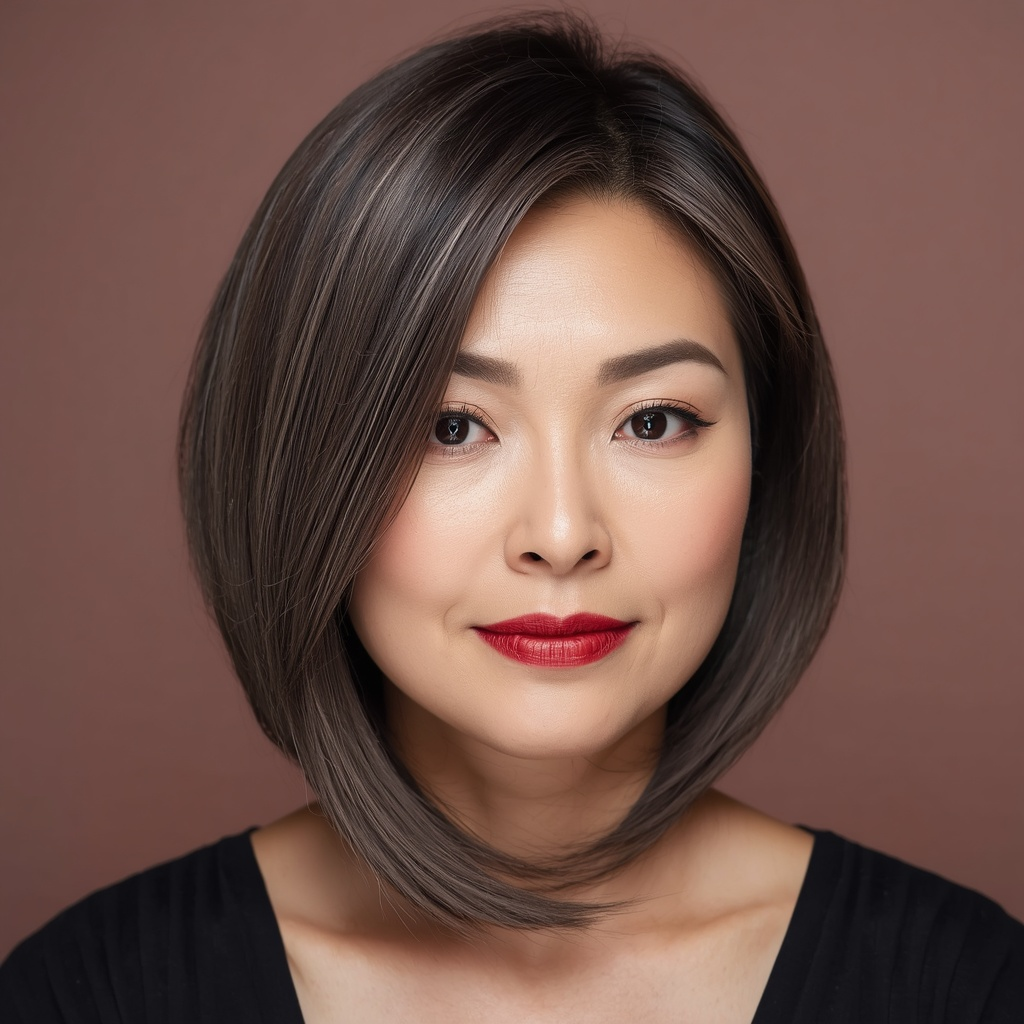
Why it works: Mushroom brown is a cool, ashy brown base with subtle taupe and grey undertones—neither fully brown nor fully grey. For brunettes with 20–30% natural grey, adding mushroom-toned highlights creates a monochromatic, sophisticated blend that reads as expensive and modern, not “colored.”
How to style it: Use glossing products formulated for cool tones (look for “ash” or “pearl” on labels). Avoid any products with amber or gold in the name. A sleek, straight style shows off the multidimensional grey-brown blend best. Shine is essential.
Best face shapes: All face shapes (most universally flattering of all grey blends)
Maintenance needs: Touch-up every 10–12 weeks for highlights; gloss treatments every 6 weeks to refresh tone.
10. Grey Ombré Highlights
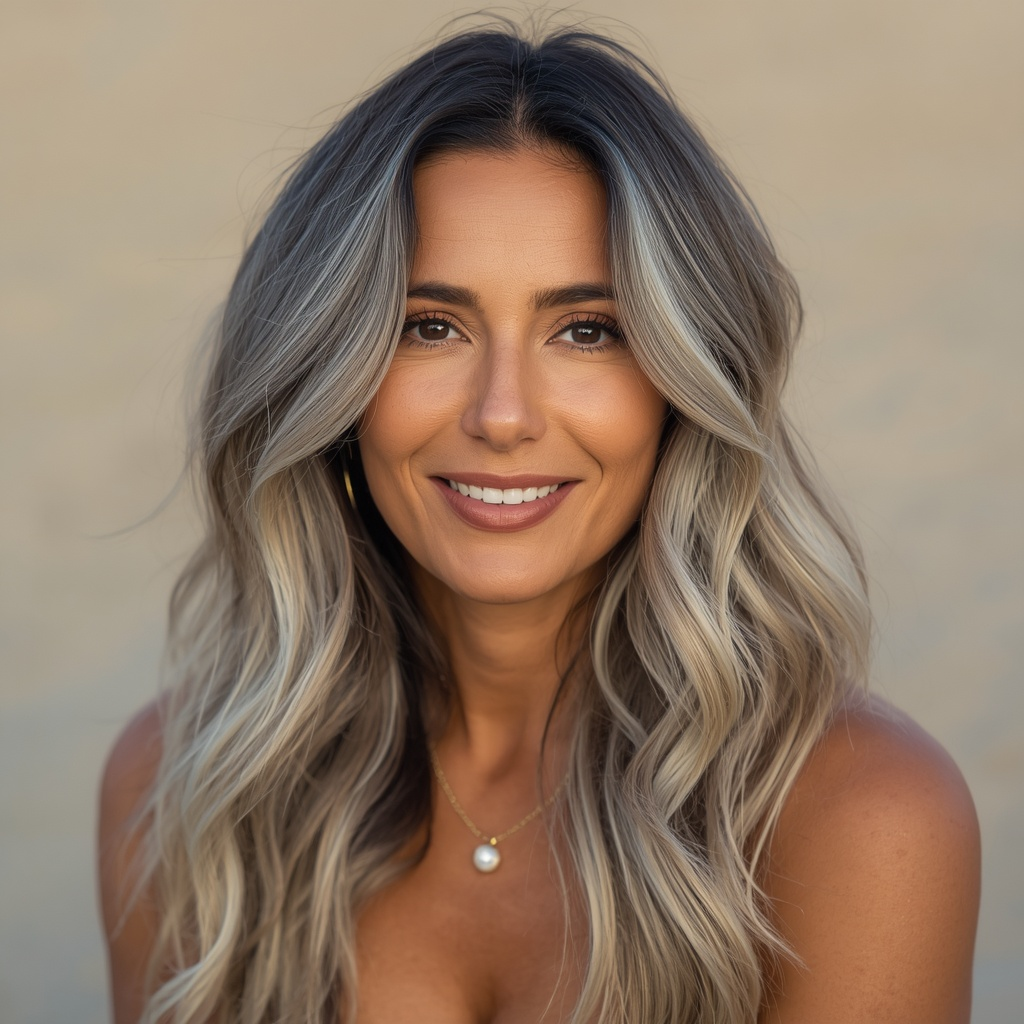
Why it works: Ombré highlights concentrate all the lightness at the ends, graduating from your natural dark root to silver tips. This creates a dramatic, fashion-forward grey blend perfect for brunettes who want to make a statement while still enjoying low maintenance. The dark roots mean you can go months between appointments.
How to style it: Loose beach waves are essential for ombré—straight hair makes the transition look too harsh, while waves blur the line between dark and silver. Use a 1.25-inch curling iron, wrap sections away from your face, and brush out with a wide-tooth comb. Finish with texture spray.
Best face shapes: Oval, heart, long (the darkness at top anchors longer faces beautifully)
Maintenance needs: Touch-up every 14–18 weeks. Only the ends need occasional refreshing; roots are untouched by design.
11. Fine Weave Highlights

Why it works: Fine weave highlights use extremely thin sections woven out of every foil, creating a delicate, lacy pattern of lightness throughout the hair. This technique is ideal for brunettes with very fine or thin hair because the fine weave adds the illusion of density and movement without overwhelming the base color.
How to style it: Volumizing mousse applied to roots before blow-drying lifts the fine weave pattern so it catches light. Use a small round brush (1 inch) to create subtle bends throughout. Avoid heavy oils or butters, which can darken the fine highlight strands.
Best face shapes: Oval, round, diamond (adds length to round faces)
Maintenance needs: Touch-up every 12–14 weeks. The delicate pattern grows out extremely softly.
12. Rooted Grey (Reverse Blending)
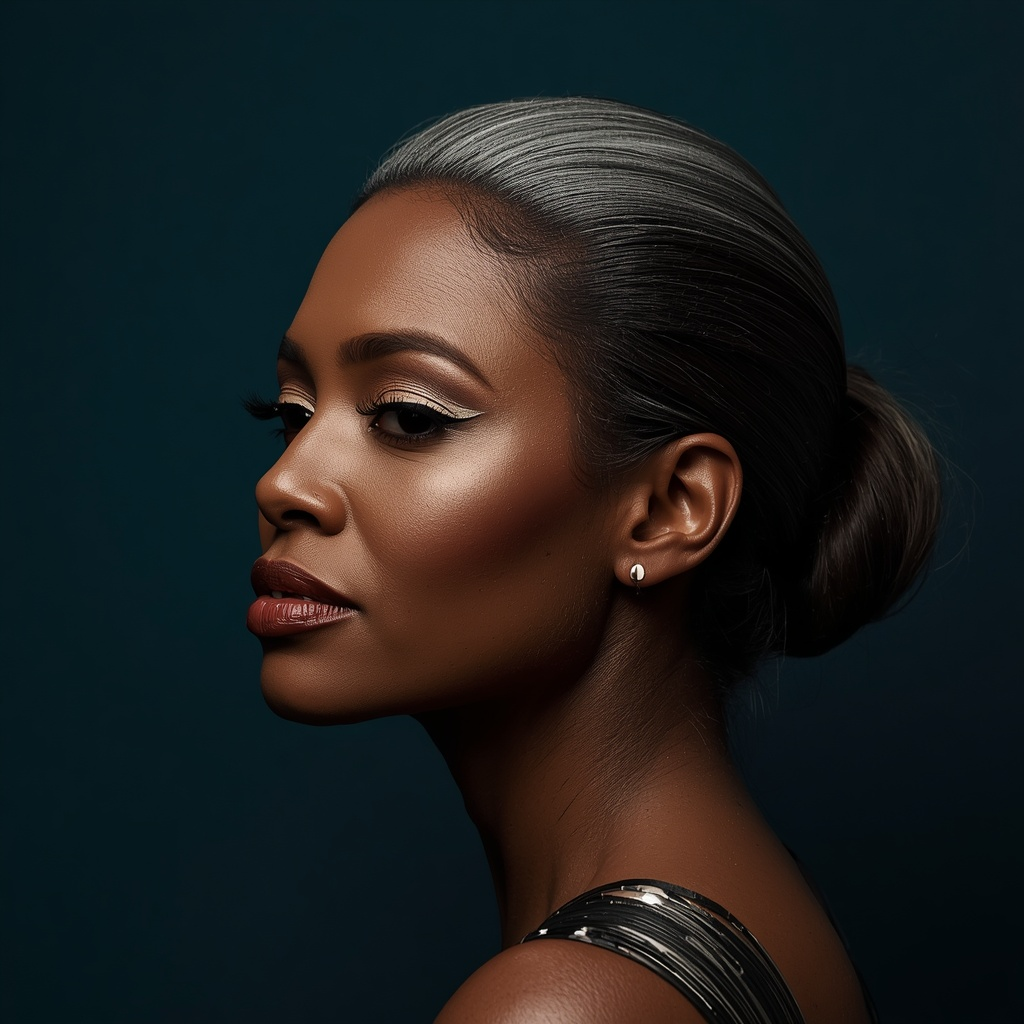
Why it works: Rooted grey leaves the first 1–2 inches of your root in a darker brown shade (either natural or tinted) while the rest of the hair is lightened to a cool grey or silver. This reverses the typical highlight pattern and creates a bold, editorial grey blend that announces your silver with confidence.
How to style it: Volume at the crown is key—tease the roots gently or use a root-lifting spray before blow-drying. The dark root needs lift to balance the lighter lengths. Style with straight or gently waved textures; curls can hide the intentional root shadow.
Best face shapes: Oval, square, heart (the darkness at top suits prominent cheekbones)
Maintenance needs: Touch-up every 12–16 weeks. The rooted effect means you only touch up when you want to refresh the dark root, not because of grow-out.
13. Pearl and Platinum Accents
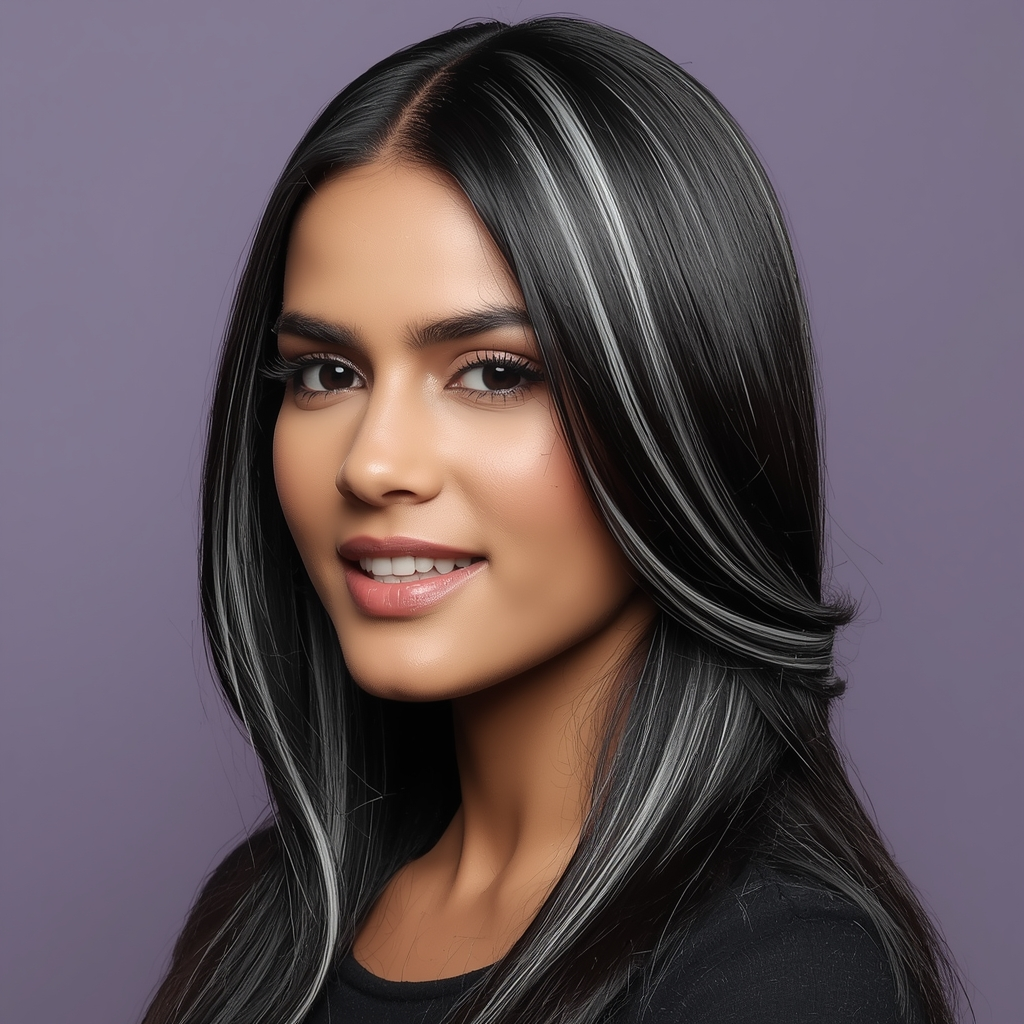
Why it works: Instead of blending grey throughout, this technique adds concentrated streaks of pearl-white and platinum within a brown base that already has natural silver. The effect is high-contrast and striking—perfect for brunettes whose natural grey is still sparse but who want a more dramatic grey-blended look.
How to style it: Sleek, straight styles make the contrast most visible. Use a pearl-infused finishing spray to add extra luminosity to the lightest pieces. Avoid braids or updos that hide the accent streaks. A center part shows off the balanced distribution best.
Best face shapes: Oval, oblong, diamond (high contrast elongates rounder faces)
Maintenance needs: Touch-up every 6–8 weeks for the heavy streaks; they grow out faster than blended techniques.
14. Candlelight Grey Blend (Warm Tones)
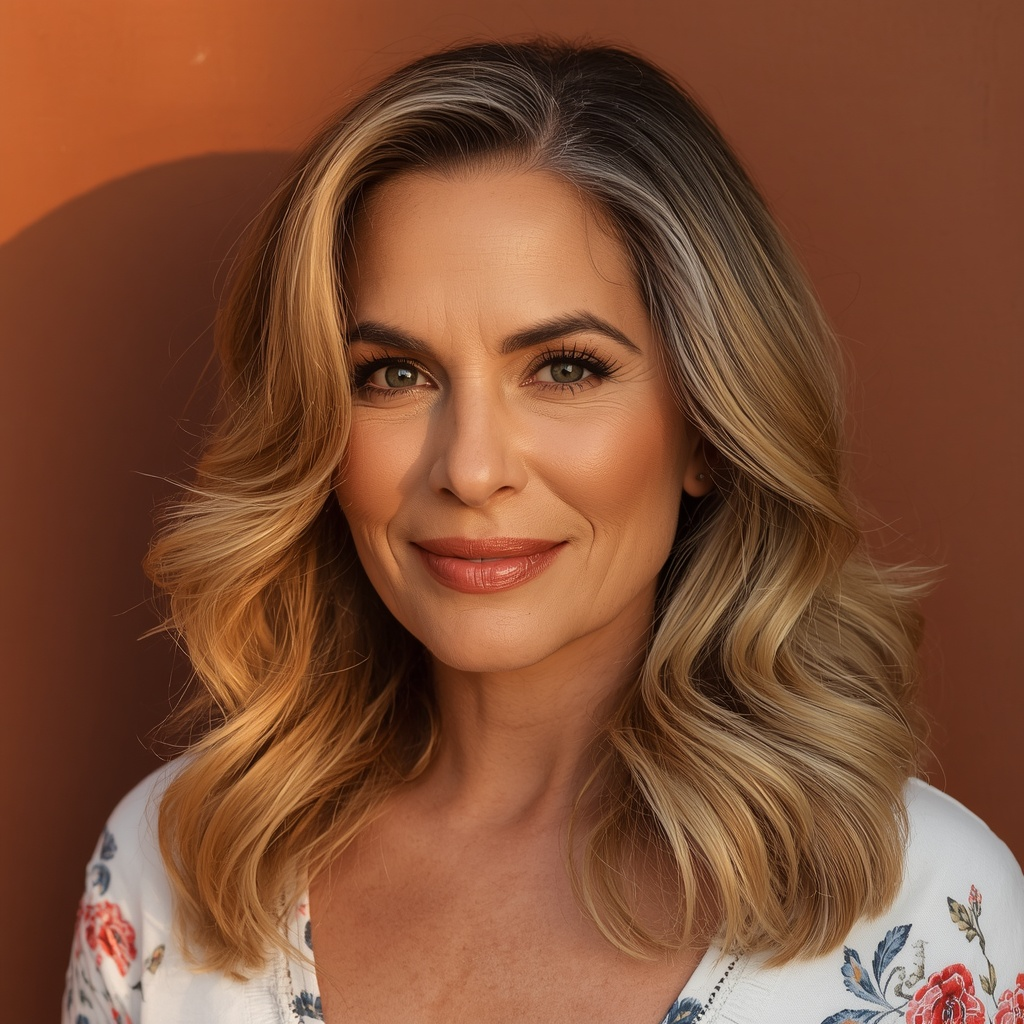
Why it works: Most grey blending focuses on cool tones, but candlelight blending uses warm honey, champagne, and buttery blonde highlights to blend with grey. This approach works well for brunettes with warm skin undertones (yellow, peach, or olive) who find that cool silver washes them out.
How to style it: Glossing treatments with warm pearl or champagne tones every 6 weeks keep the warmth from fading. Style with soft, romantic waves and avoid anything too sleek or severe. A side part shows the warm highlights cascading across the crown.
Best face shapes: Heart, round, oval (warmth softens angular features)
Maintenance needs: Touch-up every 10–12 weeks. Warm tones fade faster than cool tones, so expect more frequent glossing.
15. Full Silver Transformation (Multi-Appointment)
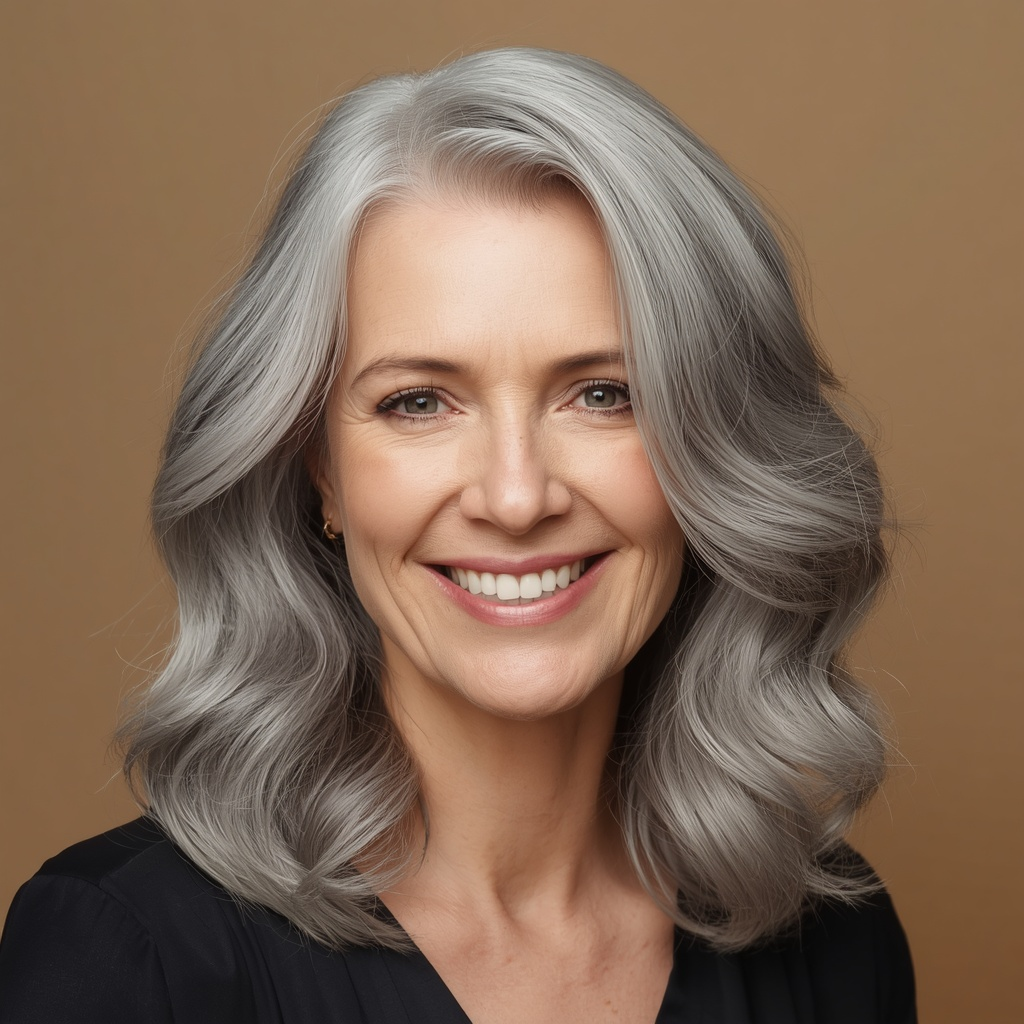
Why it works: For brunettes ready to fully embrace silver but wanting to avoid the “skunk stripe” of grow-out, a multi-appointment full silver transformation uses progressively more grey blending highlights over 3–4 sessions. Each appointment adds more lightness until the final result is a stunning, head of silver and white with no line of demarcation.
How to style it: During the transition months, wear textured, tousled styles that camouflage varying levels of lightness. Use purple shampoo daily (leave on for 3–5 minutes) to keep all strands in the same cool family. Once fully silver, a weekly mask keeps the white strands from yellowing.
Best face shapes: All face shapes (fully customizable)
Maintenance needs: During transition, touch-up every 8–10 weeks for 3–4 appointments. After full silver, root maintenance every 10–12 weeks or embrace the all-over silver with no further appointments.
How to Style Grey Blending Highlights (Daily Routine)
Maintaining your grey blending highlights between salon visits is simple with the right products and techniques. Here’s your daily roadmap:
- Purple shampoo is non-negotiable – Use once or twice weekly to cancel yellow and brass. Apply to wet hair, leave for 3–5 minutes (longer for more toning), then rinse with cold water. Fanola No Yellow and Amika Bust Your Brass are top choices.
- Cold water only – Warm water opens the hair cuticle, allowing brassiness to develop. Cold water seals the cuticle, locking in cool silver tones. Yes, it’s uncomfortable. Yes, it works.
- Weekly toning mask – Between purple shampoo days, use a silver or violet mask for 10 minutes. This prevents the gradual yellowing that happens from heat styling and environmental exposure.
- Heat protectant with UV filter – Sunlight yellows grey hair just like chlorine does. Spray a heat protectant that includes UV protection before any heat styling or outdoor exposure.
- Dry shampoo at the roots – As your roots grow (and they will, gloriously), a brown-tinted dry shampoo camouflages the contrast between dark regrowth and lightened ends. Apply before bed so it absorbs overnight.
- Gloss every 6 weeks – A clear or silver glossing treatment (done at home or salon) smooths the cuticle, adds shine, and refreshes tone. This single step doubles the life of your highlights.
- For curly brunettes – Apply purple curl cream (Curlsmith has an excellent one) to soaking wet hair and scrunch. The purple pigment tones while defining your curl pattern.
Quick Maintenance Cheat Sheet
| Highlight Style | Trim Frequency | Toning Needed | Special Notes |
|---|---|---|---|
| Classic Babylights | 10–12 weeks | Every 6–8 weeks | Most natural, lowest contrast |
| Heavy Section Highlights | 8–10 weeks | Every 4–6 weeks | Best for 40–50% natural grey |
| Silver Money Piece | 8–10 weeks | Every 4 weeks | Purple shampoo on money pieces only |
| Low and Slow Blending | 10–12 weeks | Every 8 weeks | Minimal maintenance required |
| Chunky Ribbon Highlights | 8–10 weeks | Every 6 weeks | Best for thick or coarse hair |
| Shadow Root with Grey Ends | 10–12 weeks | Every 6–8 weeks | Longest between salon visits |
| Salt and Pepper Balayage | 10–12 weeks | Every 6 weeks | Air-dry friendly |
| Icy Silver Foilayage | 6–8 weeks | Every 4 weeks | Most high-maintenance, biggest impact |
| Dimensional Mushroom Brown | 8–10 weeks | Every 6 weeks | Works on all skin tones |
| Grey Ombré Highlights | 10–12 weeks | Every 8 weeks | Roots never need touching up |
| Fine Weave Highlights | 8–10 weeks | Every 6 weeks | Best for fine or thin hair |
| Rooted Grey | 10–12 weeks | Every 8 weeks | Editorial, bold look |
| Pearl and Platinum Accents | 6–8 weeks | Every 4 weeks | High contrast, frequent toning |
| Candlelight Grey Blend | 8–10 weeks | Every 4–6 weeks | For warm skin undertones only |
| Full Silver Transformation | 8–10 weeks (transition) | Every 4 weeks | Multi-appointment process |
Final Thoughts
Grey blending highlights offer brunette women a liberating alternative to the endless cycle of all-over color. Whether you choose subtle babylights or a dramatic ombré, these 15 techniques prove that silver isn’t something to hide—it’s something to highlight. The key is working with your natural grey pattern, not against it, and choosing a maintenance schedule that fits your lifestyle. Take this guide to your colorist, have an honest conversation about your percentage of grey and your ideal appointment frequency, and get ready to discover how gorgeous those silver strands can look when they’re part of a intentional, dimensional blend.
Leave a Reply