
The 15 short hairstyles for thin fine hair in this guide prove that having fine or thinning hair does not mean you have to settle for flat, lifeless styles. Short hair is actually your best ally when it comes to creating the illusion of density, volume, and movement. By removing weight and adding strategic texture, a well-chosen short cut can make fine hair look twice as full. Whether you are dealing with genetic fine hair, age-related thinning, or hair loss, there is a short style here that will boost your confidence and simplify your mornings. In this guide, we will explore fifteen short hairstyles for thin fine hair, complete with why each works, how to style it, best face shapes, and maintenance needs.
Why Short Hair Works for Thin Fine Hair
Fine hair has unique challenges that longer lengths often make worse. Here is why short hair is the solution:
- Removes weight that pulls fine hair flat against the scalp
- Creates lift at the crown where thin hair needs volume most
- Hides sparse areas with texture and strategic layering
- Dries faster and requires less product to maintain body
- Prevents the stringy look that longer fine hair often gets
The 15 Short Hairstyles for Thin Fine Hair
1. Textured Pixie Cut
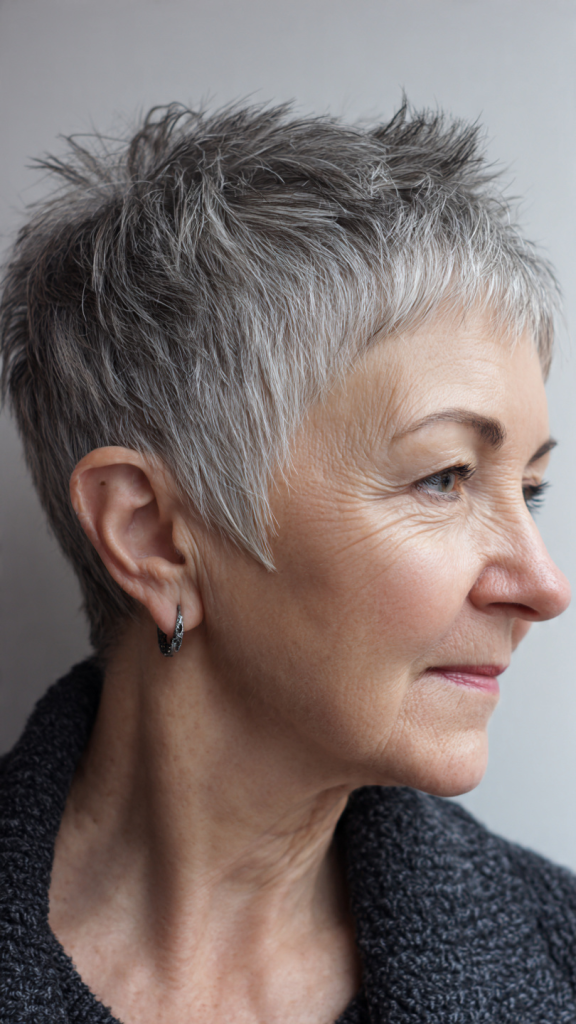
The textured pixie is short on the sides and back with choppy, piece-y layers on top. The texture is key—blunt lines do not work for fine hair.
Why it works: The choppy layers create the illusion of density by adding separation and movement. The short length removes weight so hair can lift at the root.
How to style it: Apply volumizing mousse to damp hair. Blow-dry upside down for two minutes. Flip back and use your fingers to piece out the top. Finish with a dry texture spray.
Best face shapes: Oval, heart, oblong. The height on top balances longer face shapes.
Maintenance needs: Trim every 4–6 weeks. Fine hair shows split ends quickly.
2. Layered Pixie Bob (Pixie-Bob Hybrid)
The pixie bob is shorter than a traditional bob but longer than a pixie—usually hitting at the ear or just below. Layers throughout add movement.
Why it works: This cut gives you the volume of a pixie with slightly more length to play with. The layers prevent the flatness that often happens with one-length bobs.
How to style it: Apply root-lifting spray to damp hair. Blow-dry using a round brush, lifting at the crown. The ends should be soft and textured, not blunt.
Best face shapes: Oval, round, square. The length elongates round faces.
Maintenance needs: Trim every 5–7 weeks.
3. Short Shag
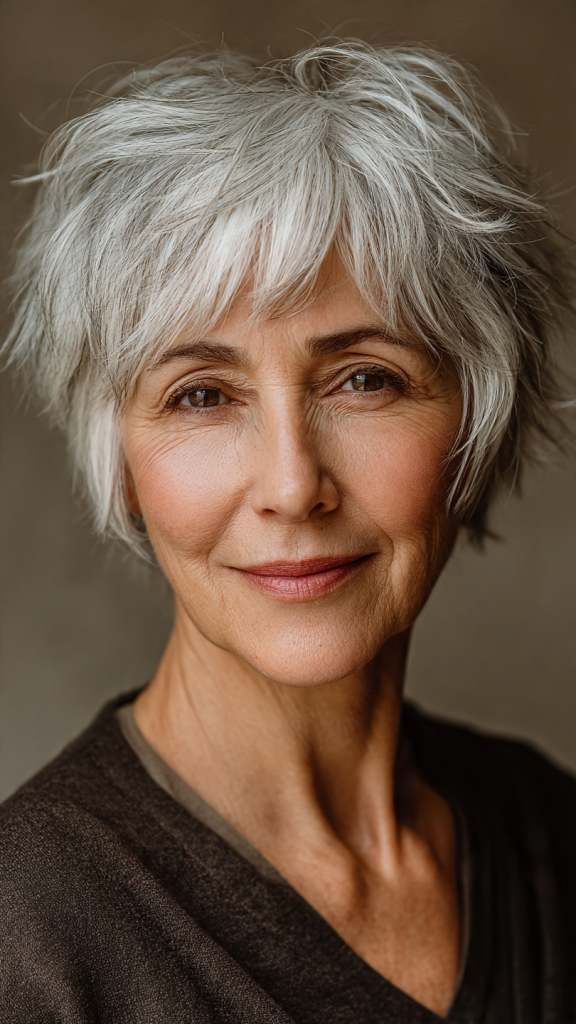
The short shag features choppy, disconnected layers throughout, with the shortest layers at the crown and longer pieces around the face.
Why it works: The shag is a volume powerhouse for fine hair. The choppy layers create texture that hides thin areas and gives the illusion of much thicker hair.
How to style it: Apply texturizing spray to damp hair. Scrunch as you blow-dry with a diffuser. Do not over-brush. The messier, the better.
Best face shapes: Oval, heart, round. The crown volume balances round faces.
Maintenance needs: Trim every 6–8 weeks. The shag looks better slightly grown out.
4. Tapered Cut with Volume at Crown
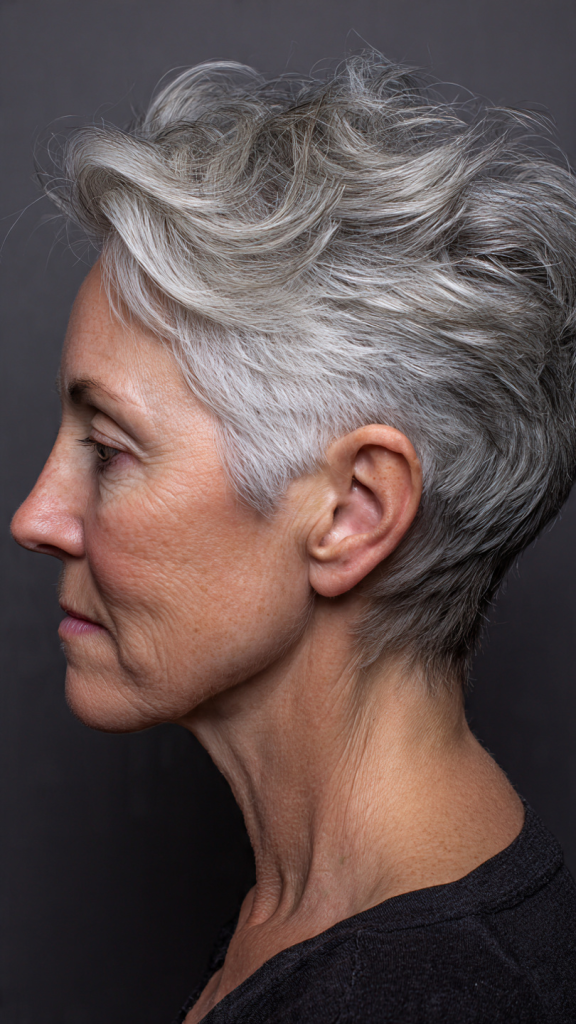
This cut keeps the sides and back very short while concentrating length and volume at the crown. The crown is layered heavily.
Why it works: Thin hair needs volume exactly where it matters most—at the crown. By removing bulk from the sides, all the attention goes to the lifted top.
How to style it: Use a root-lifting spray or volumizing powder at the crown. Blow-dry the crown straight up using a small round brush. The sides need no styling.
Best face shapes: Oval, round, heart. The crown height elongates round faces.
Maintenance needs: Sides every 3–4 weeks. Crown every 5–6 weeks.
5. Short Blunt Bob with Internal Layers
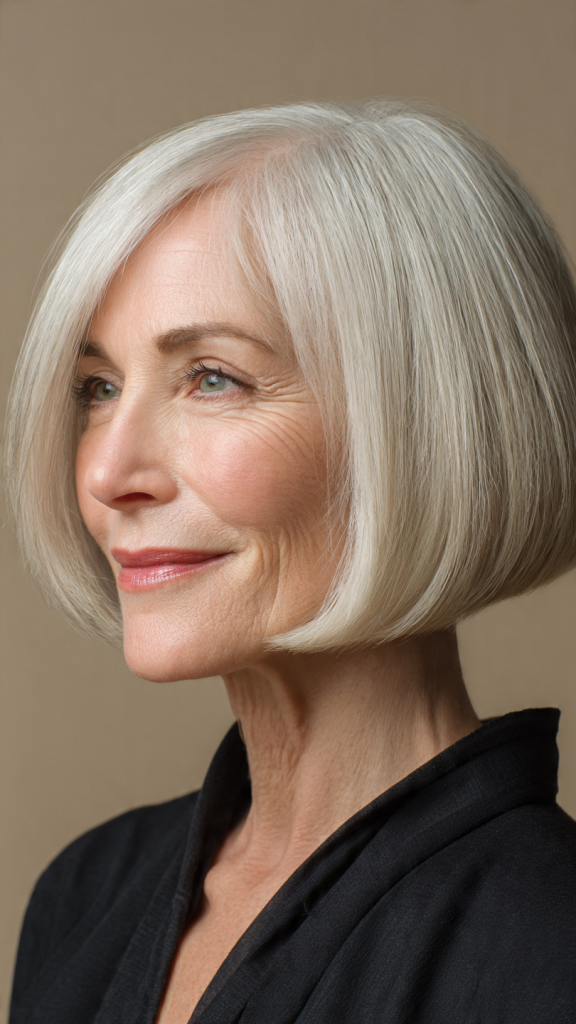
This bob looks blunt from the outside but has hidden internal layers that add movement. The perimeter is a clean line, but the inside is carved out.
Why it works: Fine hair often looks thinner with visible choppy layers. The blunt perimeter gives the illusion of thick ends, while internal layers prevent the cut from looking heavy.
How to style it: Blow-dry smooth using a paddle brush to emphasize the blunt line. A drop of serum on the ends adds shine and the appearance of density.
Best face shapes: Oval, square, oblong. The blunt line adds width to longer faces.
Maintenance needs: Trim every 6–7 weeks. Blunt lines show uneven growth quickly.
6. Asymmetrical Pixie
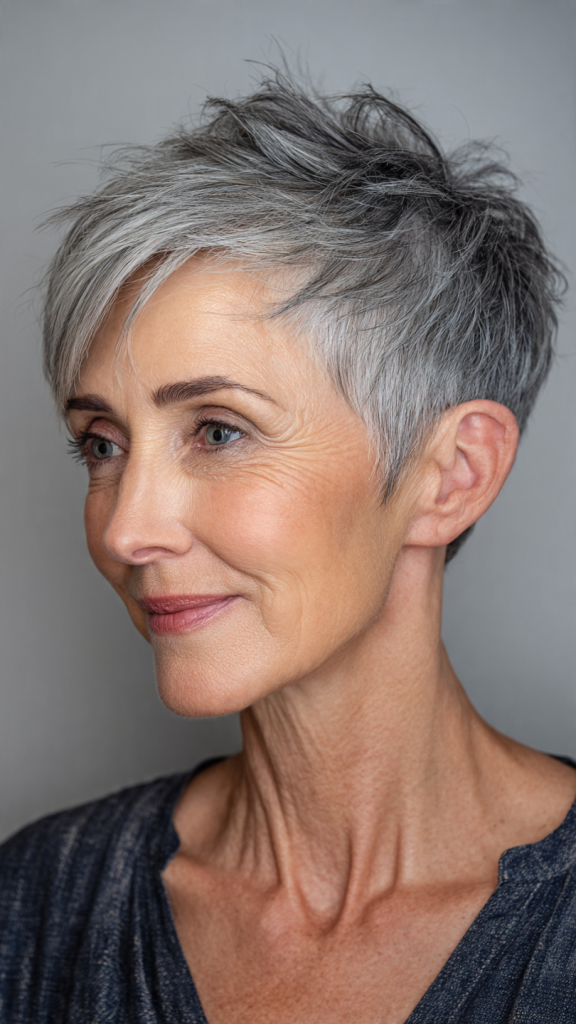
One side is slightly longer than the other—usually by 1–2 inches. The asymmetry adds visual interest and draws the eye diagonally.
Why it works: Asymmetry creates the illusion of more hair because the eye travels across the shape rather than settling on thin areas. It also adds modern edge.
How to style it: Style as a standard pixie. The asymmetry does the work. No need to over-style.
Best face shapes: Oval, heart, diamond. Avoid if you have a very round face.
Maintenance needs: Trim every 5–6 weeks. Asymmetrical cuts lose contrast as they grow.
7. Curly Short Crop for Fine Curls

For women with fine curly or wavy hair, a short crop removes weight and allows curls to spring up with more definition.
Why it works: Fine curls get weighed down easily. A short crop removes that weight, allowing each curl to bounce up and create the appearance of more density.
How to style it: On soaking wet hair, apply lightweight leave-in conditioner and curl cream. Scrunch upward. Diffuse or air-dry. Do not brush.
Best face shapes: All face shapes. Fine curls can be customized with or without bangs.
Maintenance needs: Trim every 8–10 weeks. Deep condition weekly.
8. Side-Swept Pixie

This pixie features longer layers on top that are swept to one side, creating a diagonal line across the forehead. The sides are short.
Why it works: The diagonal line creates a slimming effect and draws attention away from any thin areas. The sweeping motion also adds the appearance of movement and fullness.
How to style it: Apply volumizing mousse to damp hair. Blow-dry the top sweeping to one side using a round brush. A light hairspray keeps the sweep in place.
Best face shapes: Round, square, heart. The diagonal line elongates round faces.
Maintenance needs: Trim every 5–6 weeks.
9. Textured Crop with Piece-Y Ends
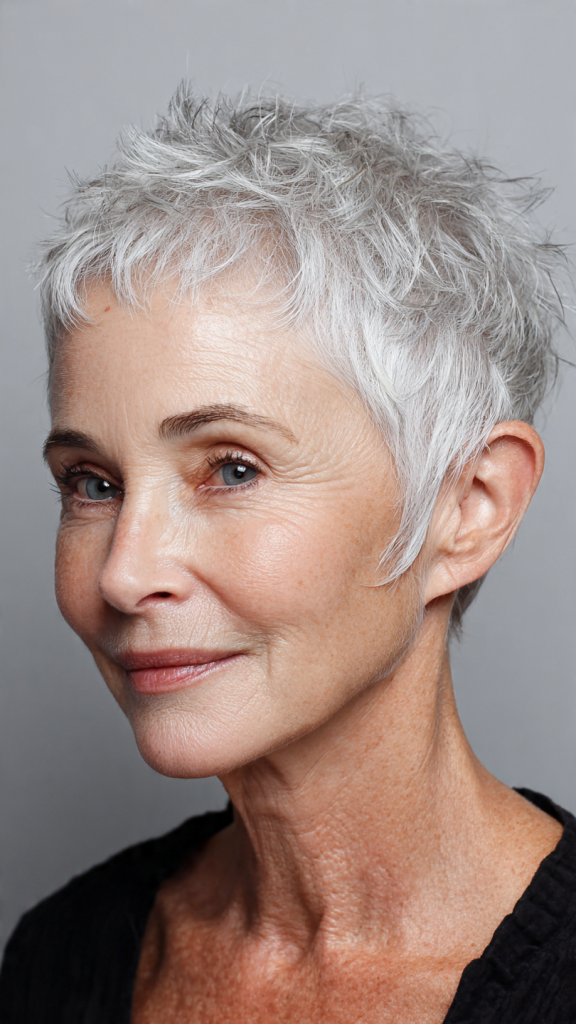
This cut is very short—usually 1–2 inches all over—but the ends are heavily point-cut to create piece-y, separated texture.
Why it works: Fine hair looks thicker when it is not all lying in the same direction. The piece-y ends create separation that tricks the eye into seeing more hair.
How to style it: Apply a small amount of texturizing paste to dry hair. Use your fingers to pull small sections into piece-y peaks. No blow-dryer needed.
Best face shapes: Oval, heart, square. The texture softens all face shapes.
Maintenance needs: Trim every 4–5 weeks. The piece-y ends need refreshing.
10. Short Bob with Face-Framing Layers
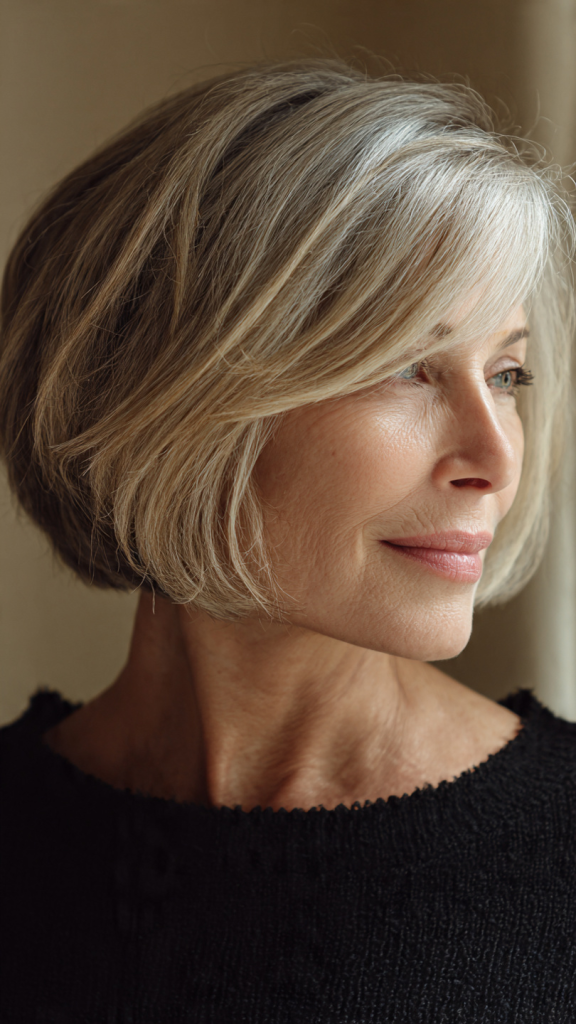
This chin-length bob has softer, longer layers around the face that start at the cheekbones or chin.
Why it works: Face-framing layers draw attention to your best features and away from any thin areas on the crown or sides. The contrast between the face-framing pieces and the shorter back adds dimension.
How to style it: Blow-dry using a round brush, directing the face-framing pieces away from your face. The rest of the bob stays smooth or slightly textured.
Best face shapes: Oval, round, square. The layers soften jawlines.
Maintenance needs: Trim every 6–8 weeks.
11. Sleek Short Pixie
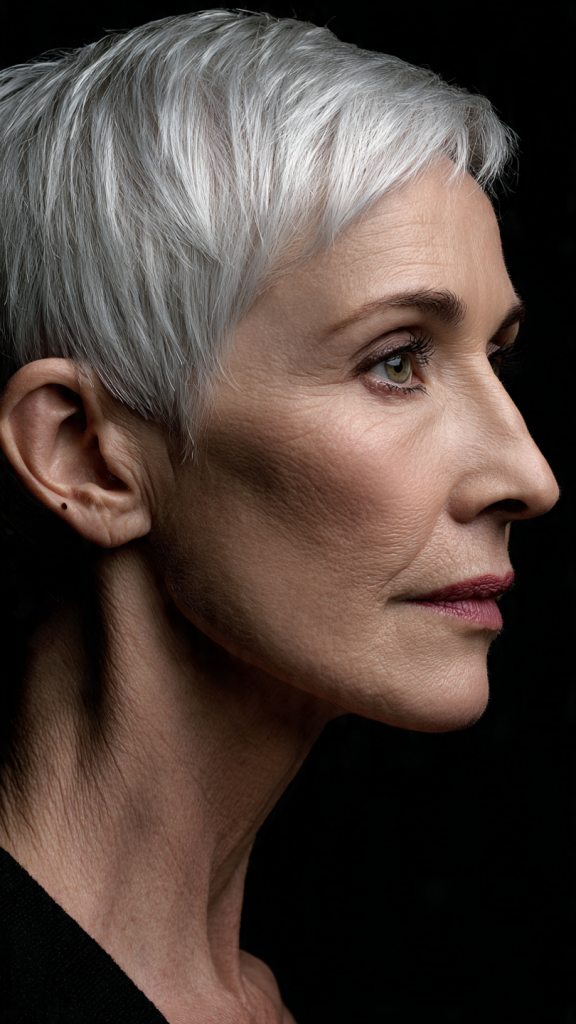
For women who prefer a polished, smooth finish, the sleek pixie delivers. The hair is cut short and styled flat against the head.
Why it works: Contrary to what you might think, a sleek finish can actually make fine hair look more intentional and healthy than a messy style that highlights thinness.
How to style it: Apply smoothing serum and heat protectant to damp hair. Blow-dry using a paddle brush, then flat-iron for maximum sleekness. Finish with a light shine spray.
Best face shapes: Oval, heart, diamond. The sleekness highlights bone structure.
Maintenance needs: Trim every 4–5 weeks. Sleek styles show uneven growth faster.
12. Short Shaggy Bob (Shob)

The shaggy bob is a hybrid between a short shag and a bob. It has the choppy layers of a shag with the perimeter shape of a bob.
Why it works: This cut gives you the volume of a shag with slightly more length than a traditional short shag. The choppy layers hide thin areas effectively.
How to style it: Apply texturizing spray to damp hair. Scrunch as you blow-dry with a diffuser. The shaggier, the better.
Best face shapes: Oval, heart, round. Crown volume balances round faces.
Maintenance needs: Trim every 6–8 weeks.
13. Cropped Pixie with Micro Bangs
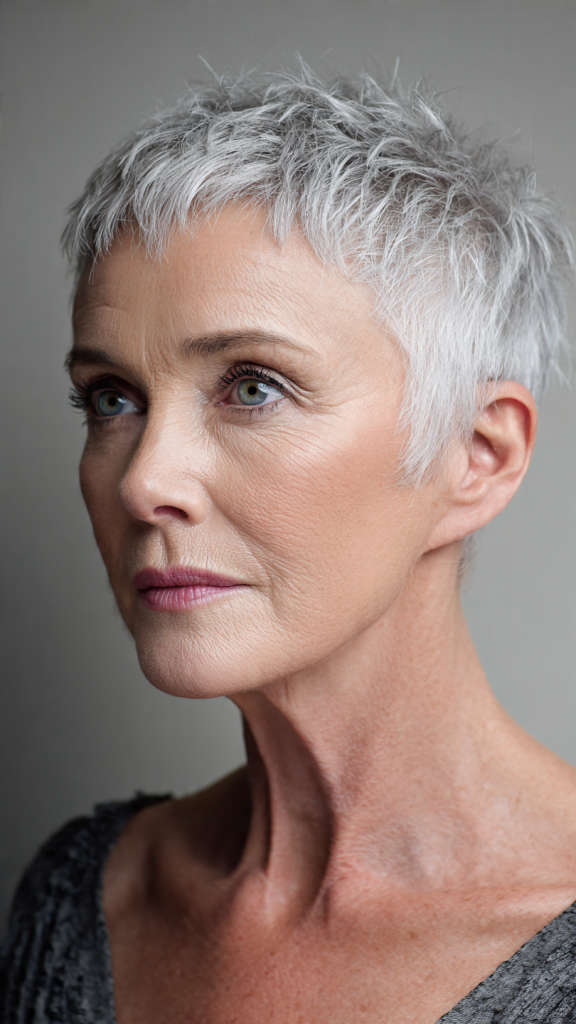
Micro bangs sit 1–2 inches above the eyebrows. The rest of the pixie is very short and textured.
Why it works: Micro bangs draw immediate attention to your eyes and away from any thin areas on the crown. The boldness of the bangs makes the whole cut look intentional.
How to style it: Keep micro bangs pin-straight or slightly piece-y with a dab of texturizing paste. The rest of the pixie stays textured and messy.
Best face shapes: Oval, heart, diamond. Avoid if you have a round face.
Maintenance needs: Micro bangs every 2–3 weeks. Rest of cut every 4–5 weeks.
14. Wispy Layered Pixie

This pixie features soft, wispy layers throughout rather than choppy, disconnected ones. The ends are feathery and light.
Why it works: Some fine hair cannot handle harsh choppy layers that create visible gaps. Wispy layers blend together, creating a softer, more continuous look that still has movement.
How to style it: Apply lightweight mousse to damp hair. Blow-dry using a round brush, keeping the ends soft and flicked slightly outward. Avoid heavy texturizing products.
Best face shapes: Oval, heart, round. The softness flatters all face shapes.
Maintenance needs: Trim every 5–6 weeks. Wispy ends need refreshing.
15. Low-Maintenance Wash-and-Wear Crop

This cut is shaped so that air-drying looks intentional and polished. No blow-dryer required. No complex products.
Why it works: Not every woman wants to spend time styling. This cut respects that. The layers are cut to fall naturally when air-dried, so you can wash and go.
How to style it: Wash and condition. Towel-dry gently. Apply a lightweight leave-in conditioner. Use your fingers to push the hair in the direction you want it to dry. Air-dry completely. That is it.
Best face shapes: Oval, round, heart. The softness flatters all.
Maintenance needs: Trim every 8–10 weeks. This cut looks better slightly grown out.
How to Style Short Thin Fine Hair for Maximum Volume
The daily routine (5 minutes):
- Apply volumizing mousse or root-lifting spray to damp roots
- Blow-dry upside down for 2–3 minutes
- Flip back and use your fingers to style—do not use a brush
- Apply dry shampoo to dry roots for instant lift
- Finish with a light texture spray at the ends
Products that help fine hair:
- Volumizing mousse
- Root-lifting spray
- Dry shampoo (apply to dry hair)
- Texturizing spray
- Lightweight hairspray
Products to avoid:
- Heavy creams and butters
- Oils and serums (use only a drop on ends)
- Thick gels and pomades
- Leave-in conditioners that are not labeled "lightweight"
Quick Maintenance Cheat Sheet for Thin Fine Hair
| Cut Type | Trim Frequency | Special Notes |
|---|---|---|
| Textured pixie | 4–6 weeks | Fine hair shows split ends quickly |
| Layered pixie bob | 5–7 weeks | Layers need refreshing |
| Short shag | 6–8 weeks | Looks better grown out |
| Tapered with crown volume | Sides: 3–4 weeks / Crown: 5–6 weeks | Crown volume fades |
| Short blunt bob with internal layers | 6–7 weeks | Blunt line shows growth |
| Asymmetrical pixie | 5–6 weeks | Loses contrast |
| Curly short crop | 8–10 weeks | Deep condition weekly |
| Side-swept pixie | 5–6 weeks | Sweep needs refreshing |
| Textured crop with piece-y ends | 4–5 weeks | Piece-y ends need upkeep |
| Short bob with face-framing layers | 6–8 weeks | Front pieces grow faster |
| Sleek short pixie | 4–5 weeks | Shows growth fast |
| Short shaggy bob | 6–8 weeks | Grows out gracefully |
| Cropped pixie with micro bangs | Bangs: 2–3 weeks / Rest: 4–5 weeks | Bangs need constant attention |
| Wispy layered pixie | 5–6 weeks | Wispy ends need refreshing |
| Low-maintenance crop | 8–10 weeks | Looks better grown out |
Final Thoughts
Thin fine hair does not have to limit your style. The right short haircut can transform flat, lifeless strands into a voluminous, textured style that looks intentionally full and healthy. The key is removing weight, adding texture, and choosing a cut that lifts at the crown. Work with a stylist who understands fine hair. Bring photos from this guide. And get ready to love how full your hair can look.
Leave a Reply